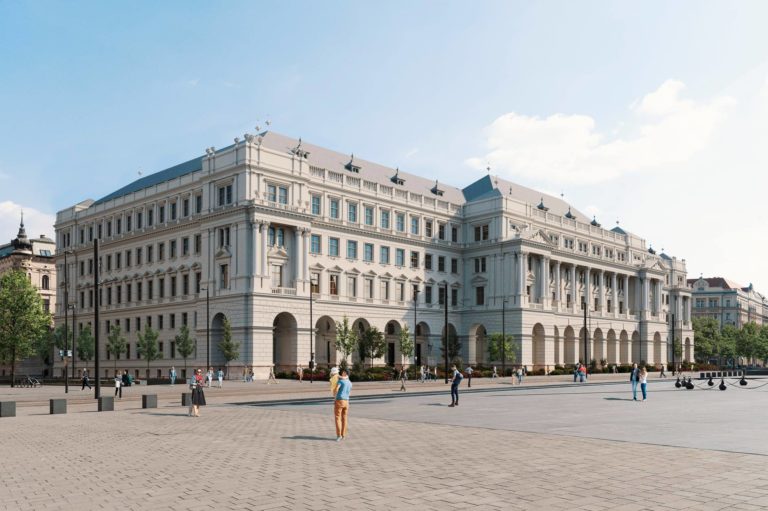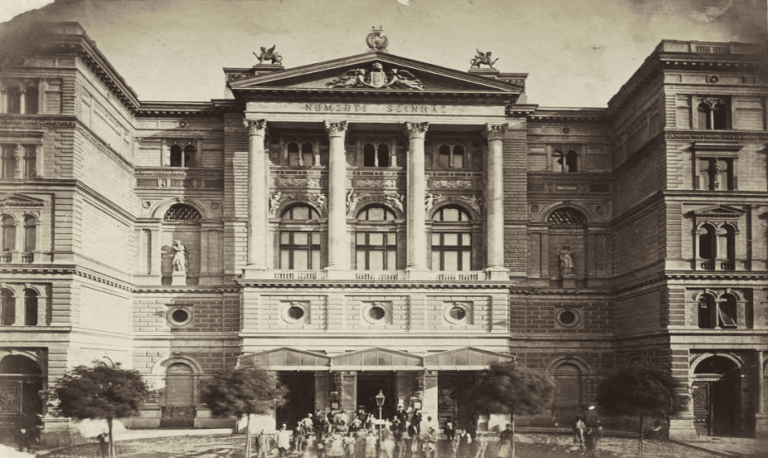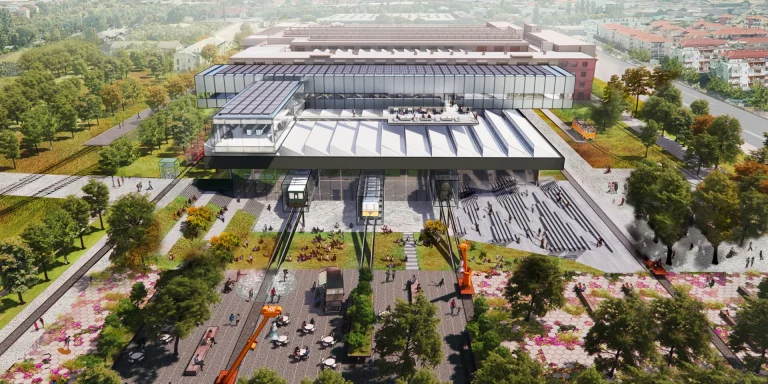
If you walk through Budapest’s Városliget (City Park) today, it is impossible to miss the striking structure rising smoothly from the ground like a massive half-pipe. After a century and a half of wandering, the Museum of Ethnography (Néprajzi Múzeum) finally opened the doors to its custom-built, permanent home in May 2022. Designed by Marcel Ferencz of the Hungarian firm NAPUR Architect, who beat out architectural heavyweights like Zaha Hadid and Rem Koolhaas for the commission, the building acts as a physical and visual gateway between the bustling city and the tranquility of the park. By placing the vast exhibition buildings below ground level, this building achieves the perfect balance between preserving the old scale of City Park and offering a large amount of space for one of the most important cultural collections in Europe. A 150-Year Journey Home The museum’s collection now boasts over 250,000 items from the Carpathian…
Budapest is blessed with a geological jackpot. As the city lies at the intersection of a fault line that connects the Buda Hills with the Great Hungarian Plain, it boasts of a tremendous number of sources of both thermal and filtered water. No matter if you use the water supplied by the municipality or look for mineral-laden spring waters, the city provides some of the best waters available in Europe. Here you will find all that you need to know about the water quality in the city, where to find natural spring water, and make sure that the water you are consuming is completely pure. The Municipal Supply: Is the Tap Water Safe? The water coming out of Budapest taps is among the cleanest and purest in the world and can be consumed without any fear of any adverse effects on health. The reason behind its exceptional quality lies in…
Picture yourself entering a generic-looking public library, passing through the turnstile after flashing your membership card, browsing some of the modern shelving units, and suddenly finding yourself inside an elaborate gold-painted, 19th-century neo-baroque palace by simply opening one of the many glass doors on the fourth floor. This scene does not belong to any fiction novel but is an everyday phenomenon at the Metropolitan Ervin Szabó Library (Fővárosi Szabó Ervin Könyvtár), which serves as the core of the library network in Budapest. Situated in the heart of the Palace District (Palotanegyed), this unique building represents one of the greatest mysteries of the city – the perfect combination of a university study room and an aristocratic mansion. 1. From Aristocratic Playground to Public Sanctuary In the middle of this exceptional collection is the **Wenckheim Palace**, an imposing neo-baroque mansion designed by the distinguished architect Arthur Meinig and constructed for Count Frigyes…
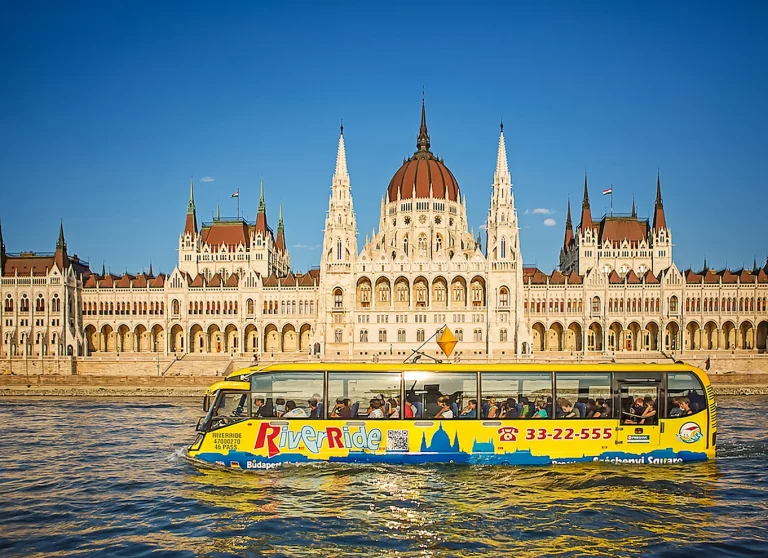
Walking along the Danube River, you can’t help but notice the most striking part of Budapest’s skyline: the Széchenyi Chain Bridge. With its amazing feat of engineering and two sturdy ends in Buda and Pest, it’s more than just a bridge—it represents Hungarian pride and unity. Now, underneath its fancy look and hefty chains is a popular tale locals adore. This story is about a nearly flawless design, a big embarrassment, and someone taking a tragic jump off the bridge into the icy water. People love sharing this intriguing mix of despair and mystery that sits alongside its glorious architecture. Why the Bridge Was Built The Chain Bridge’s size makes sense once you know about Buda and Pest before its construction. From 1849 on, these two cities were connected by the new bridge. Before that, during summertime, folks could use a floatable bridge to get across the Danube. Yet in…
When walking through Budapest’s City Park (Városliget), just a stone’s throw from the grand monuments of Heroes’ Square, you suddenly stumble upon a sweeping architectural wonderland rising from the water. With its mix of sharp gothic spires, heavy Romanesque arches, and elegant pastel walls, the complex looks like a historic royal citadel that has guarded the city for centuries. This spectacular site is Vajdahunyad Castle (Vajdahunyad vára), a place where multiple eras of European history collide in a single courtyard. But the true story behind this fairytale fortress is one of the most bizarre, fascinating, and beloved pieces of urban lore in Central Europe. It is a massive monument that was never meant to last, built by an architect who essentially created a giant piece of historical copy-pasting. The 1000-Year Celebration: A Castle Made of Cardboard The story begins in 1896, a monumental year for Hungary. The country was celebrating…
In Budapest’s City Park, right near the big Széchenyi Thermal Bath, there’s a spot that’s both mysterious and captivating. When you first look at the bronze statue, it can give you a small shiver. It shows a lone monk cloaked in a hood that fully hides his face. This is the Anonymous Statue, honoring an incredibly significant but totally unknown person in Hungarian history. Even if you don’t care much for history or are just a myth enthusiast, or if you’re wandering around Vajdahunyad Castle, you shouldn’t miss this odd statue. Who Was “Anonymus”? To understand the statue, you kinda have to begin with the man behind it, or really with the strange fog around him. “Anonymus” wasn’t only some bedtime tale, it actually existed , but almost nobody keeps the real name in mind anymore. He served as a notary and as a chronicler for a Hungarian king, a…
Budapest isn’t crowned the “City of Baths” simply because it boasts over 100 natural springs. Beneath the rising steam and grand architectural domes lies a millennia-old narrative, stretching from the Roman legions of Aquincum, to the beautiful Ottoman baths The Roman Foundations: Aquincum and the Birth of Bath Culture The history of the Budapest thermal baths dates back almost 2,000 years to the times of Rome. When the Roman Empire founded the town of Aquincum in what today is known as Óbuda (Part of Budapest), their selection of the site was primarily influenced by its rich sources of geothermal springs on the Danube fault line. For the ancient Romans, taking baths was an essential part of their routine, cleaning habits, and recovery after wars. Numerous archaeological digs have revealed a total of 14 different baths in this region. The biggest one, called the Thermae Maiores, was a huge military bathhouse…
Located in central Budapest, Liberty Square is far more than a public plaza, it is a layered landscape of monuments and historic buildings that reflect Hungary’s turbulent past and evolving identity. From politically charged memorials to striking architectural landmarks, the square offers a compelling narrative in stone and bronze. This article explores the statues and structures that define Liberty Square, revealing the stories they tell about war, power, memory, and national transformation. Ronald Reagan Statue Honoring a Cold War Architect In June 2011, a seven-foot bronze statue of Ronald Reagan was unveiled in Budapest’s Liberty Square, commemorating the 100th anniversary of his birth. Though Reagan never visited Hungary, his leadership during the Cold War is credited with aiding the country’s liberation from Soviet influence. Hungarian Prime Minister Viktor Orbán emphasized Reagan’s role in “creating a new world for Central Europe” by supporting the dismantling of communist regimes. Symbolic Placement and…
Memento Park, located on the outskirts of Budapest, is a space dedicated to preserving statues and symbols of Hungary’s communist period. Far from being a traditional park, this place offers a direct look at the country’s recent past, through monuments that once occupied public spaces during the socialist regime. Visiting it is a unique experience: a tour among sculptures of leaders, soldiers and workers that, beyond their artistic value, represent a key period in Hungarian history. The first impact As soon as you arrive at the park, you don’t find an ostentatious entrance like that of the Museum of Fine Arts or the Hungarian National Museum, but a brick wall that already conveys a sense of serenity. Right at the entrance, as if waiting for us, are the statues of Karl Marx and Lenin.The three gates through which you enter the park already allow you to see some of the…
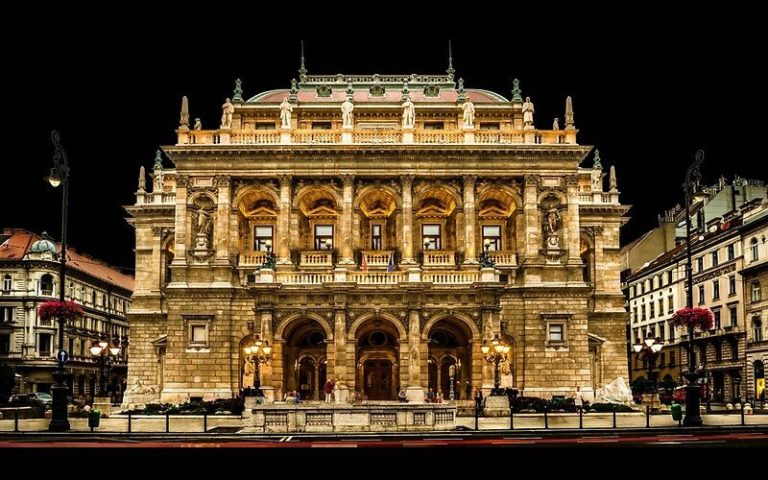
The Hungarian State Opera House, a Neo-Renaissance gem designed by Miklós Ybl, stands as a testament to Budapest’s rich cultural heritage and architectural grandeur. Opened in 1884, this iconic building has been a cornerstone of Hungary’s artistic landscape for over a century. Its opulent design, exceptional acoustics, and historical significance make it one of Europe’s premier opera venues. Beyond its role as a performance space, the opera house symbolizes Hungary’s dedication to the arts and its cultural identity. Whether attending a world-class performance or exploring its ornate interiors, a visit to the Hungarian State Opera House offers a glimpse into the artistic soul of Budapest. Architectural Beauty The Hungarian State Opera House is a masterpiece of Neo-Renaissance architecture, designed by the esteemed Hungarian architect Miklós Ybl. Completed in 1884, it stands as a testament to the grandeur and cultural aspirations of 19th-century Hungary. The building’s façade is adorned with intricate…