Category

Things to Do

Category

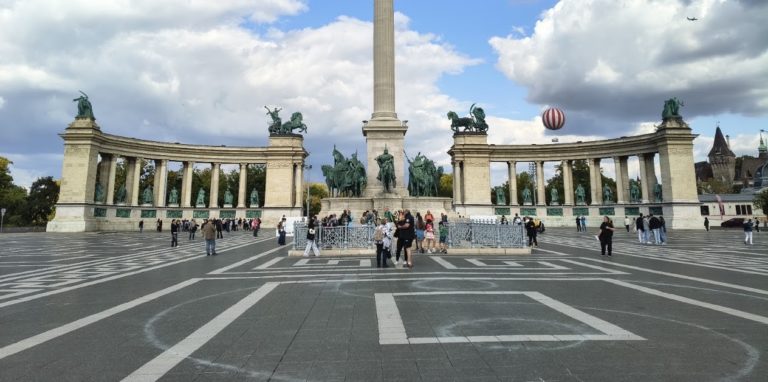
When you step into Heroes’ Square, the sheer scale of the Millennium Monument hits you immediately. It is a massive open space dominated by a soaring 36-meter column topped by the Archangel Gabriel and backed by two giant, semi-circular stone colonnades. Most tourists snap a quick selfie in front of the tribal Magyar chieftains on horseback and move right on, but if you look up, specifically at the very tops of those curved stone colonnades, you will spot something far more dramatic. Standing like epic sentinels at the inner edges of the columns are two massive bronze chariots driven by allegorical figures. On the left, a muscular man drives a war chariot, cracking a whip made of snakes, while on the right, a serene woman rides a chariot of peace, holding a palm branch high in the air. This intentional clash between War and Peace isn’t just decorative; it is…

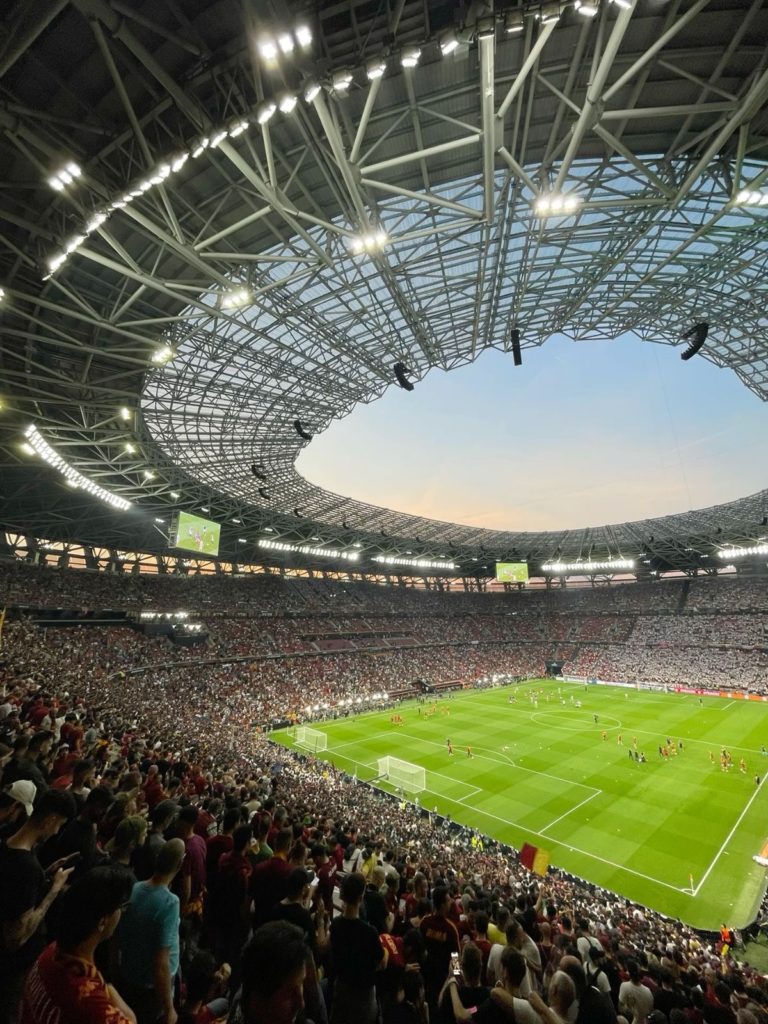
Being in Budapest, it is hard not to get lost in its impressive architecture and rich history. Even though many tourists tend to pay their attention to the iconic buildings built according to the neoclassic style, there is one modern building which dominates the whole city panorama; it is the Puskás Aréna. Whether you are an ardent supporter of football or have a passion for outstanding architecture projects, this place cannot leave anyone indifferent. Allow me to share my experience and guide you through this impressive building with a long history. From the “People’s Stadium” to Honoring a Legend It is impossible to talk about Puskás Aréna without mentioning the past of this place. From 1953 until 2016, it housed the former stadium of the Népstadion (The People’s Stadium). It was an enormous structure, consisting of a concrete bowl able to hold more than 100 thousand spectators who enjoyed watching…

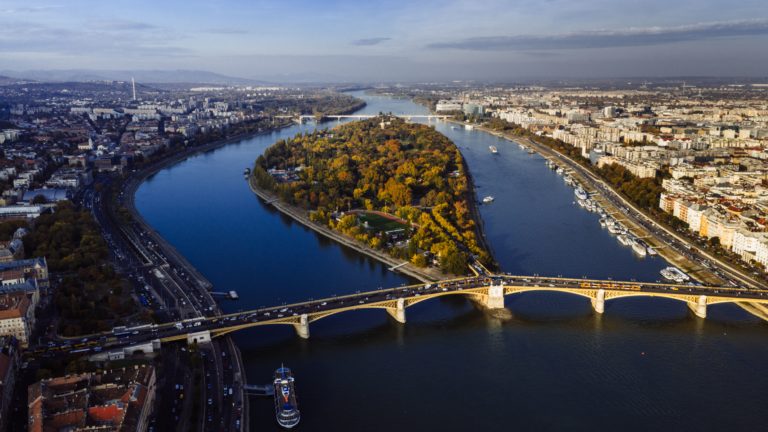
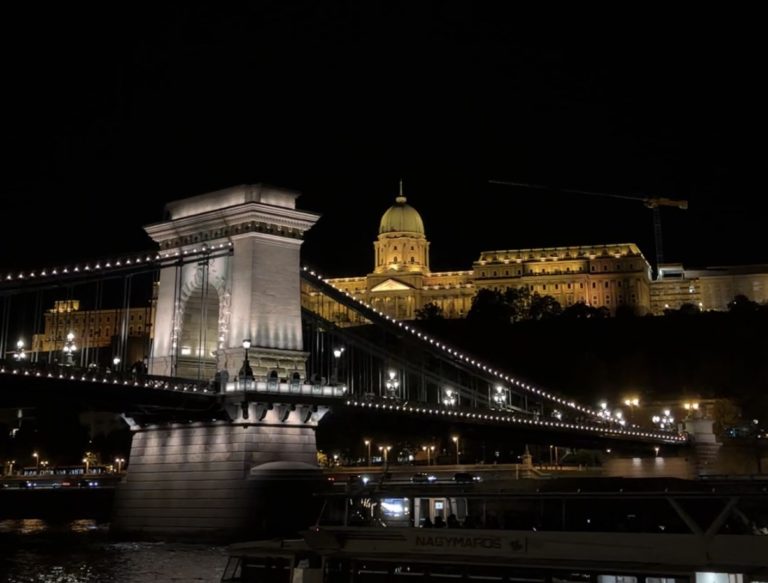
The Danube is the second largest river in the world, it doesn’t just pass through the city; it defines it. It acts as a massive, liquid mirror reflecting centuries of architectural genius, while physically separating the rolling hills of Buda from the flat, pulsing urban sprawl of Pest.But the Danube is far more than a scenic backdrop for a sunset cruise. It is a historic highway, a former militarized border, and the setting for some of the city’s most dramatic and heartbreaking moments. To truly understand Budapest, you have to understand its river and know exactly where to go to catch its most unforgettable views. A Brief History: From Roman Frontier to Golden Age Elegance The Danube (Duna in Hungarian) has been shaping the destiny of this region for thousands of years. Long before Budapest became a unified metropolis, the river served as the Limes; the fortified northern frontier of…

If you are standing on the Pest side of the city and look across the Danube River toward the rocky cliffs of Gellért Hill, there is a tiny detail that is incredibly easy to miss: a small stone portal carved directly into the mountainside, topped by a simple steel cross. From a distance, it looks like nothing more than a scenic lookout point. But if you cross the Liberty Bridge and step inside that cave mouth, you’ll find yourself in one of the most unique, spiritual, and historically dramatic spots in all of Budapest: The Cave Church (Sziklatemplom). The wild thing about this place is that you won’t find the usual polished marble pillars or soaring gothic arches here. The walls are made of raw, dark, unpolished mountain rock. But the real reason this place gives you goosebumps isn’t just the unique architecture—it’s the sheer survival story. This church didn’t…

If you walk through Budapest’s Városliget (City Park) today, it is impossible to miss the striking structure rising smoothly from the ground like a massive half-pipe. After a century and a half of wandering, the Museum of Ethnography (Néprajzi Múzeum) finally opened the doors to its custom-built, permanent home in May 2022. Designed by Marcel Ferencz of the Hungarian firm NAPUR Architect, who beat out architectural heavyweights like Zaha Hadid and Rem Koolhaas for the commission, the building acts as a physical and visual gateway between the bustling city and the tranquility of the park. By placing the vast exhibition buildings below ground level, this building achieves the perfect balance between preserving the old scale of City Park and offering a large amount of space for one of the most important cultural collections in Europe. A 150-Year Journey Home The museum’s collection now boasts over 250,000 items from the Carpathian…

Picture yourself entering a generic-looking public library, passing through the turnstile after flashing your membership card, browsing some of the modern shelving units, and suddenly finding yourself inside an elaborate gold-painted, 19th-century neo-baroque palace by simply opening one of the many glass doors on the fourth floor. This scene does not belong to any fiction novel but is an everyday phenomenon at the Metropolitan Ervin Szabó Library (Fővárosi Szabó Ervin Könyvtár), which serves as the core of the library network in Budapest. Situated in the heart of the Palace District (Palotanegyed), this unique building represents one of the greatest mysteries of the city – the perfect combination of a university study room and an aristocratic mansion. 1. From Aristocratic Playground to Public Sanctuary In the middle of this exceptional collection is the **Wenckheim Palace**, an imposing neo-baroque mansion designed by the distinguished architect Arthur Meinig and constructed for Count Frigyes…

Straddling the Danube River, Budapest sits divided between Buda’s historic slopes and Pest’s flat, wide streets. The city rocks a solid public transportation system, but now e-scooters have made a huge mark too. People use them all the time for that final leg of the journey. These little scooters pop up everywhere in Hungary’s capital. Want to shoot down József körút? Hop on an e-scooter. Need to get to that uni class quick? Easy, grab one. Late night out headed to a ruin bar? Yep, you guessed it, just jump on an e-scooter. For us ride lovers, there’s tons to know about riding safely and right. That means checking out which companies operate in Budapest, what they charge, and big rules like local laws and where to park. All to make your roll around town nice and smooth. Budapest’s Primary E-Scooter Providers Unlike some European capitals that feature a chaotic…

When walking through Budapest’s City Park (Városliget), just a stone’s throw from the grand monuments of Heroes’ Square, you suddenly stumble upon a sweeping architectural wonderland rising from the water. With its mix of sharp gothic spires, heavy Romanesque arches, and elegant pastel walls, the complex looks like a historic royal citadel that has guarded the city for centuries. This spectacular site is Vajdahunyad Castle (Vajdahunyad vára), a place where multiple eras of European history collide in a single courtyard. But the true story behind this fairytale fortress is one of the most bizarre, fascinating, and beloved pieces of urban lore in Central Europe. It is a massive monument that was never meant to last, built by an architect who essentially created a giant piece of historical copy-pasting. The 1000-Year Celebration: A Castle Made of Cardboard The story begins in 1896, a monumental year for Hungary. The country was celebrating…

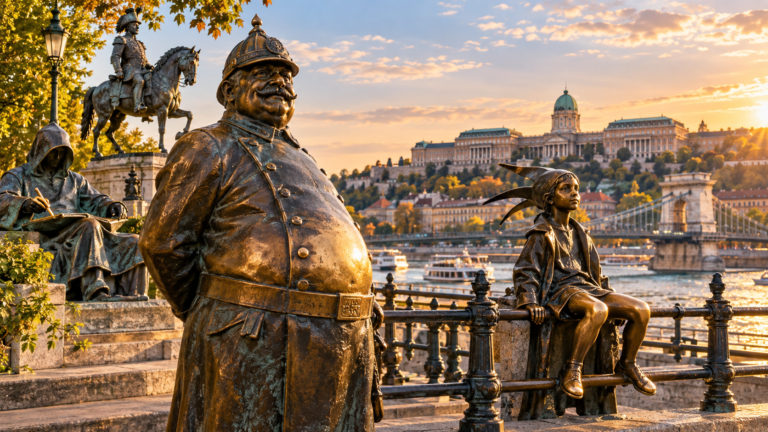
In Budapest’s City Park, right near the big Széchenyi Thermal Bath, there’s a spot that’s both mysterious and captivating. When you first look at the bronze statue, it can give you a small shiver. It shows a lone monk cloaked in a hood that fully hides his face. This is the Anonymous Statue, honoring an incredibly significant but totally unknown person in Hungarian history. Even if you don’t care much for history or are just a myth enthusiast, or if you’re wandering around Vajdahunyad Castle, you shouldn’t miss this odd statue. Who Was “Anonymus”? To understand the statue, you kinda have to begin with the man behind it, or really with the strange fog around him. “Anonymus” wasn’t only some bedtime tale, it actually existed , but almost nobody keeps the real name in mind anymore. He served as a notary and as a chronicler for a Hungarian king, a…

Memento Park, located on the outskirts of Budapest, is a space dedicated to preserving statues and symbols of Hungary’s communist period. Far from being a traditional park, this place offers a direct look at the country’s recent past, through monuments that once occupied public spaces during the socialist regime. Visiting it is a unique experience: a tour among sculptures of leaders, soldiers and workers that, beyond their artistic value, represent a key period in Hungarian history. The first impact As soon as you arrive at the park, you don’t find an ostentatious entrance like that of the Museum of Fine Arts or the Hungarian National Museum, but a brick wall that already conveys a sense of serenity. Right at the entrance, as if waiting for us, are the statues of Karl Marx and Lenin.The three gates through which you enter the park already allow you to see some of the…