
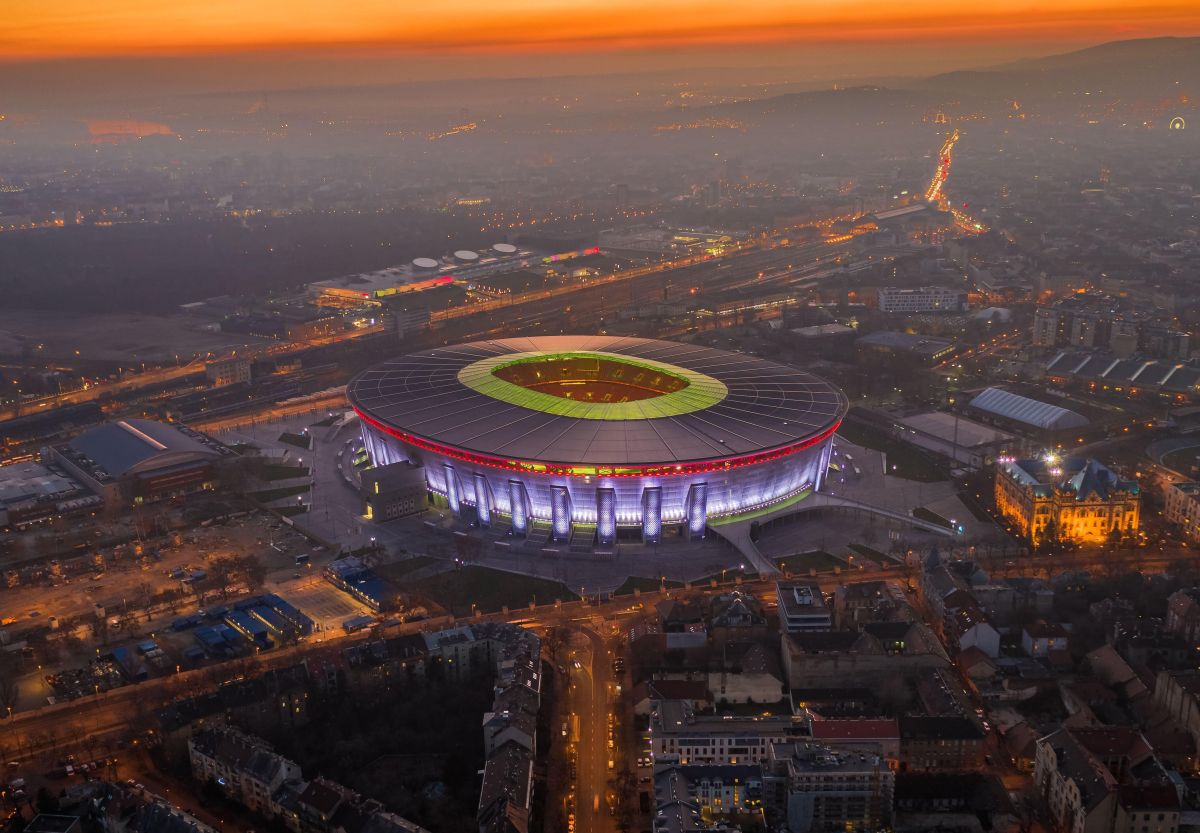
Being in Budapest, it is hard not to get lost in its impressive architecture and rich history. Even though many tourists tend to pay their attention to the iconic buildings built according to the neoclassic style, there is one modern building which dominates the whole city panorama; it is the Puskás Aréna.
Whether you are an ardent supporter of football or have a passion for outstanding architecture projects, this place cannot leave anyone indifferent. Allow me to share my experience and guide you through this impressive building with a long history.
Source: Eumles Awards
From the “People’s Stadium” to Honoring a Legend
It is impossible to talk about Puskás Aréna without mentioning the past of this place. From 1953 until 2016, it housed the former stadium of the Népstadion (The People’s Stadium). It was an enormous structure, consisting of a concrete bowl able to hold more than 100 thousand spectators who enjoyed watching various sports competitions in the epicenter of Hungarian sport.
In 2019, almost three years after the demolition, a new building was inaugurated. It was named in honor of one of the most renowned Hungarian soccer players, namely Ferenc Puskás. Not many people may recognize the name, but he can be described as European Pelé. Puskás starred in the famous Golden Team of Hungary in the fifties and then became a world champion by playing for Real Madrid. Thus, naming the country’s largest sporting venue after the “Galloping Major” is truly a great honor. Besides, there is even a special museum inside where the player’s clothes and medals are kept.
The Structure: A Masterpiece of Steel and Concrete
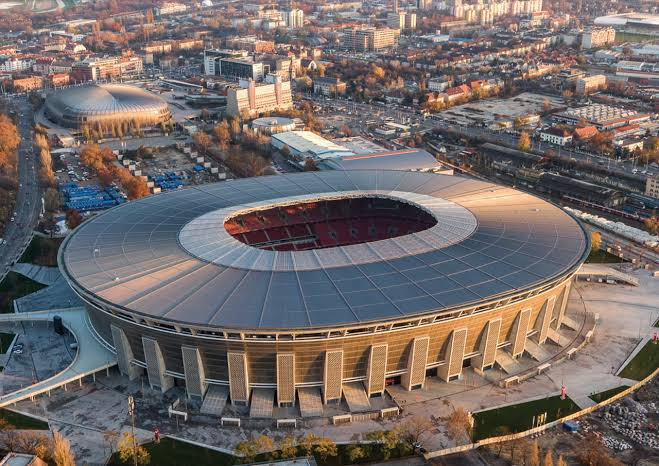
If I were an architect or engineer, I would marvel at the technical details of this arena. As mentioned earlier, the designers decided to incorporate the unique style of the concrete pylon structures of the former stadium into their design scheme, but everything else is highly modern.
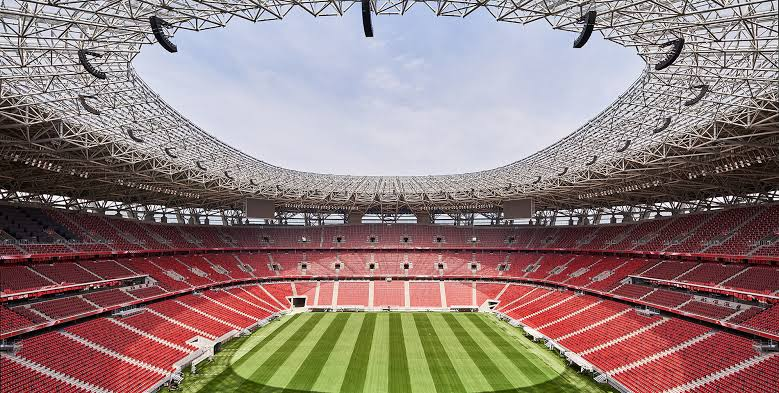
The seating capacity of the stadium is around 67,000 spectators. However, the most amazing thing about this venue is its roof, which is made up of a gigantic steel framework that covers an area of about 60,000 square meters. This roof shields the crowd from adverse weather conditions but allows enough sunlight to pass through to ensure that the pitch remains in excellent condition.
In addition, the stands themselves are exceptionally steep and extremely close to the pitch itself; indeed, the first few rows are only about 7 meters away from the pitch.
Óbuda Group
Champions League Final Hosting
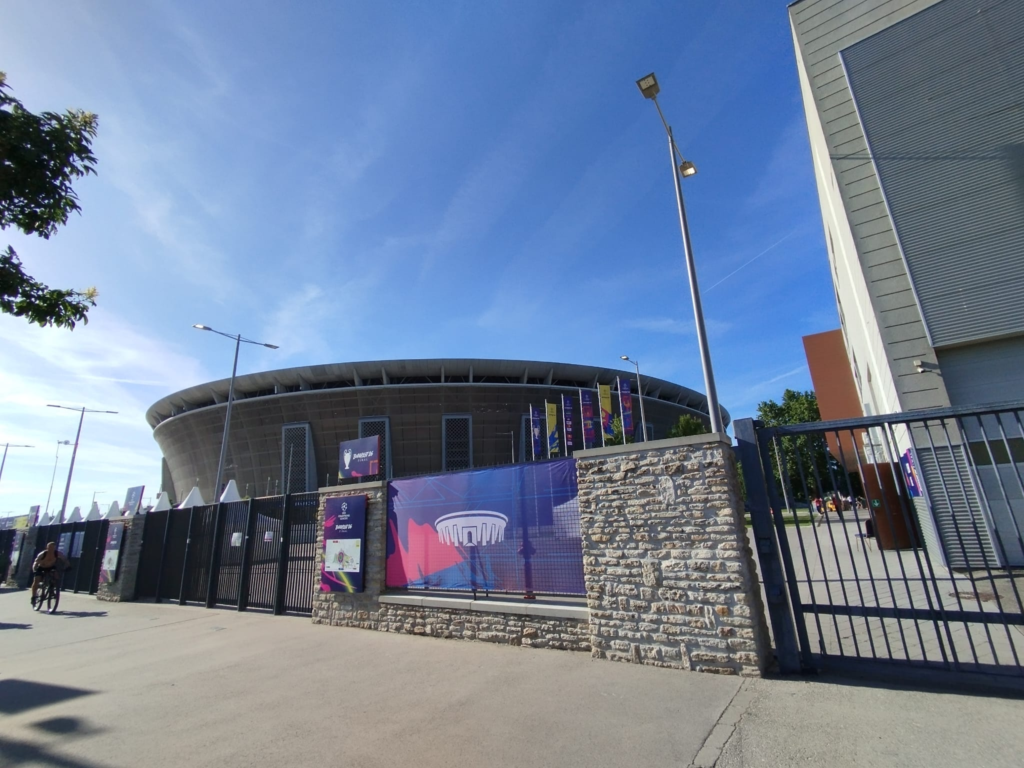
On the first few days staying in Budapest i had the fortune to assist to the UEFA Champions League vibe, since the final match was played in the Puskas Arena, and we saw how all the media people prepared the day before the match and the day of it.
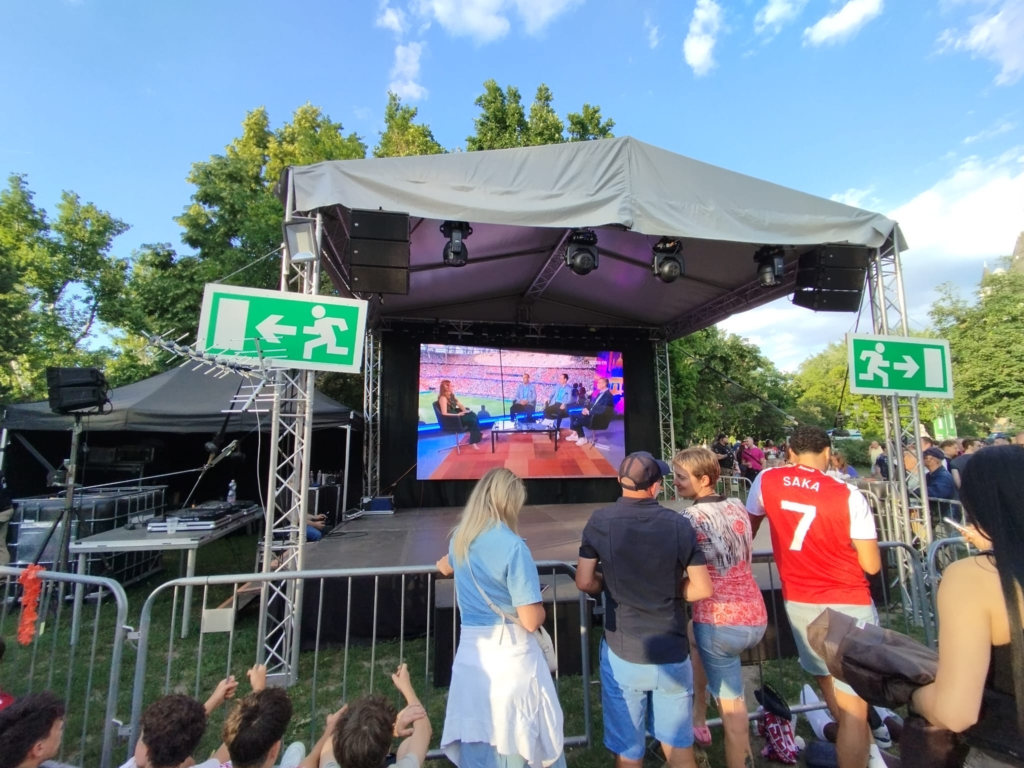
To see Paris Saint-Germain face off against Arsenal right here in our own city was quite a surreal experience. With more than 61,000 spectators in the stands, it was indeed an edge-of-your-seat battle. I personally watched the match near the Champions League Festival in the Heroes’ Square – Hősök tere, on a big screen!
The Vibe at the Stadium
The stadium is situated in the 14th district (Zugló). The last reconstruction project brought about the renewal of the entire surroundings of the arena. The former desolate concrete zone has transformed into one encircled with green plazas, colorful flower beds, and large pedestrian zones.
During games, the entire area becomes one huge party, as fans flock to the neighboring pubs to grab some refreshments before entering the stadium through its gates. The overall atmosphere has a great blend of being relaxed like a park with growing adrenaline until the start of the game.
How to Get There
Getting to the Puskás Aréna is incredibly easy, which is great because driving there on a match day is a terrible idea. Here are the best ways to reach it using the city’s public transit network:
| Transport Type | Route / Line | Where to Get Off | Notes |
|---|---|---|---|
| Metro | M2 (Red Line) | Puskás Ferenc Stadion | Fast and direct; exit escalators lead right to the stadium gates. |
| Tram | Line 1 | Puskás Ferenc Stadion M | Loops around the major city sectors; great for avoiding central traffic. |
| Trolleybus | Lines 75 & 77 | Stefánia út / Aréna | Drops you off right along the lively park paths behind the stadium. |
| Walking | On foot | From Keleti Railway Station | A straightforward, flat 10-to-15-minute walk down the main avenue. |
Local tip: If you are visiting on a non-match day, you can still grab a coffee at the local cafe inside the ground floor area and walk the public paths around the perimeter completely for free to take in the sheer scale of the architecture.
If you are ever exploring Budapest, take a detour to check out the Puskás Aréna. It’s a stunning piece of the city’s modern identity and an absolute must-see for anyone who loves great architecture, sports history, or just an epic view!
Comments are closed.