
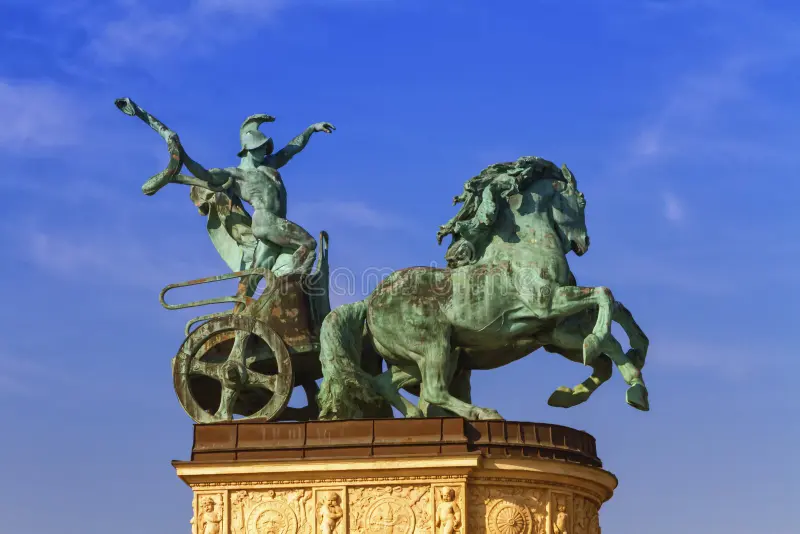
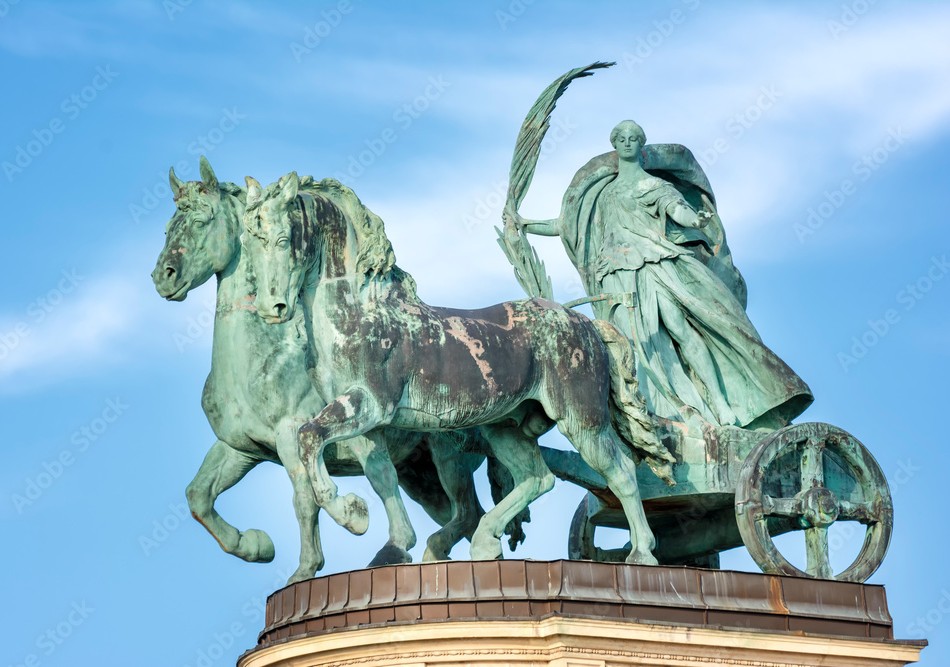
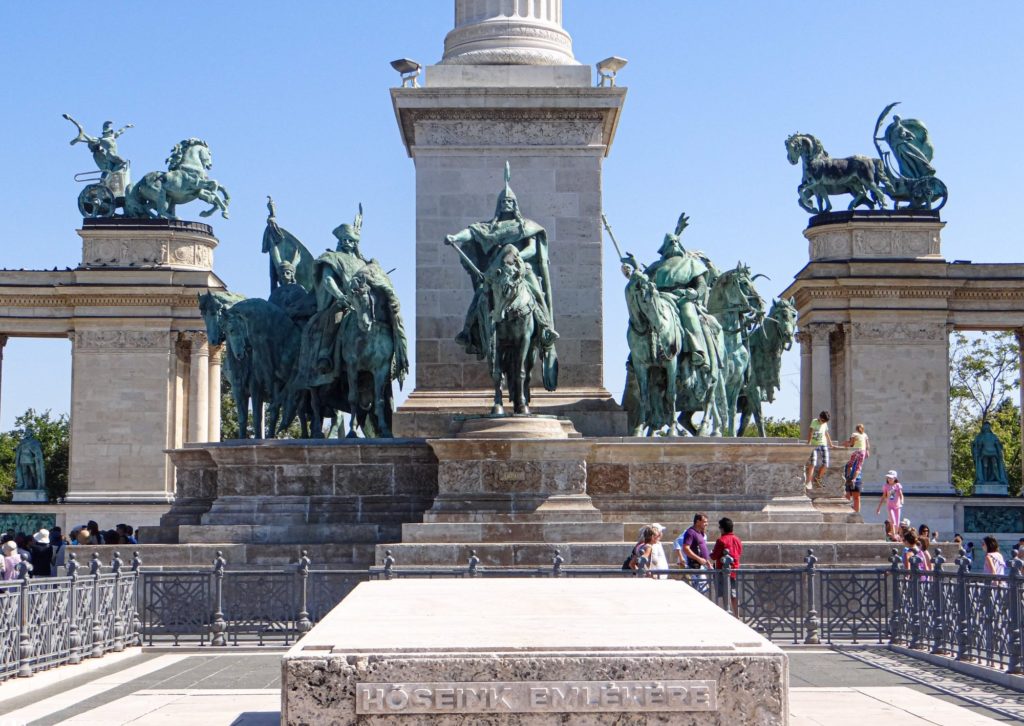
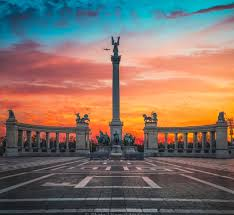
When you step into Heroes’ Square, the sheer scale of the Millennium Monument hits you immediately. It is a massive open space dominated by a soaring 36-meter column topped by the Archangel Gabriel and backed by two giant, semi-circular stone colonnades. Most tourists snap a quick selfie in front of the tribal Magyar chieftains on horseback and move right on, but if you look up, specifically at the very tops of those curved stone colonnades, you will spot something far more dramatic. Standing like epic sentinels at the inner edges of the columns are two massive bronze chariots driven by allegorical figures. On the left, a muscular man drives a war chariot, cracking a whip made of snakes, while on the right, a serene woman rides a chariot of peace, holding a palm branch high in the air. This intentional clash between War and Peace isn’t just decorative; it is the ultimate visual summary of Hungary’s turbulent, bloody, and resilient history.
The Monument and the Kings
The Millennium Monument was built in 1896 to celebrate a massive milestone, which was the 1,000th anniversary of the Hungarian state. The two massive semi-circular colonnades serve as an open-air pantheon, housing statues of the most important kings, princes, and statesmen who shaped the country. However, the sculptors wanted the architecture to say something deeper about the Hungarian soul, which is why they placed the allegorical chariots at the focal points.
The Chariot of War
The male figure driving the chariot on the left side represents War, and he is fierce and aggressive. The horses are wild and straining forward, captured in mid-gallop, which represents the brutal reality of Hungary’s geographical position, a country that for centuries was a battlefield, constantly defending its borders against the Mongol Empire, the Ottoman Empire, and the Habsburgs.
The Chariot of Peace
On the exact opposite end sits the female figure representing Peace; her horses are calm, moving with a rhythmic, controlled grace. She holds a palm branch, the ancient symbol of victory, peace, and reconciliation, representing the golden eras of Hungarian history, the times of architectural booms, artistic flourishing, and European integration. The fact that they face each other across the open square creates a permanent, silent dialogue between destruction and rebirth.
Work, Wealth, Knowledge, and Glory
If you shift your eyes to the outer edges of the very same colonnades, you’ll find two more pairs of allegorical statues that complete the story of what a nation needs to survive after the war is over. On the outer left corner, you’ll see two figures representing Work and Wealth, symbolized by a man with a scythe and a woman sowing seeds. On the outer right corner, you’ll find Knowledge and Glory, symbolized by a man holding a small golden statue and a woman next to him. The message of the monument is highly political for its time, showing that while war might be a historical necessity to defend the homeland, peace is the only environment where work, wealth, knowledge, and glory can actually grow.
Why You Need a Zoom Lens
Because these bronze chariots are perched high above the ground, they can easily blend into the sky if you don’t know where to look. If you’re a photographer, you should stand in the exact center of the square, right near the Stone of Heroes, and use a telephoto lens. This is the absolute best way to capture the incredible details of the horses’ muscles and the intense facial expressions of the figures.
Catching the Golden Hour
It is also a great idea to time your visit with the sunset because these bronze statues face south-west. When the sun goes down, the golden hour light hits the chariots directly, making the metal glow against the evening sky and beautifully highlighting the contrast between the chaotic movement of the War chariot and the smooth, calm lines of the Peace chariot. Heroes’ Square is much more than a tribute to dead kings; through these towering bronze figures, it stands as a reminder that the story of humanity is a constant, delicate balancing act between the violence that tears us apart and the peace that allows us to build something permanent.
Comments are closed.