
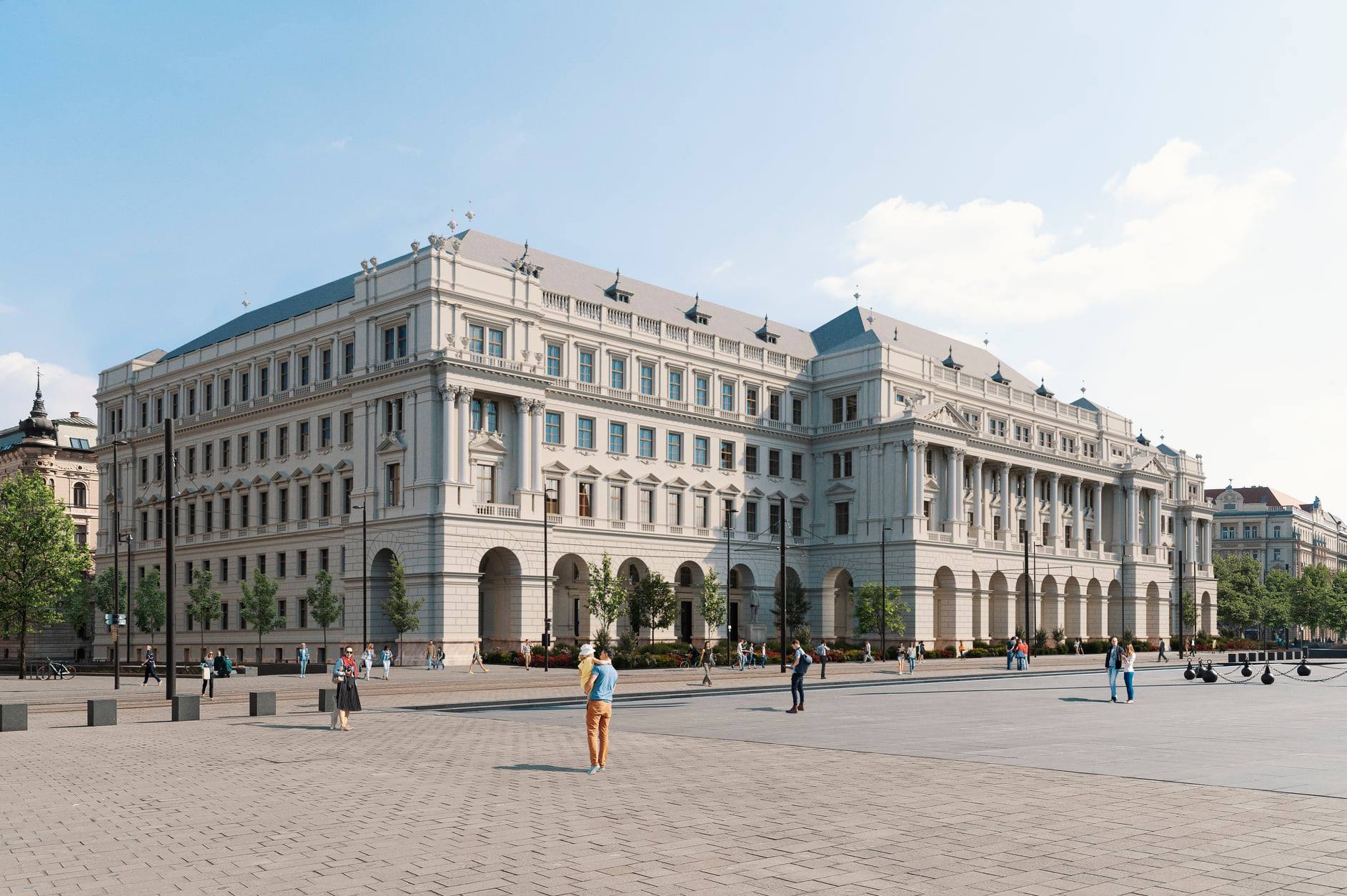
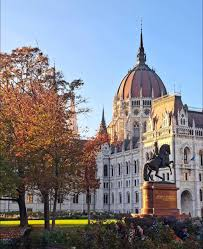
As you walk through Kossuth Square, your attention will automatically be caught by the imposing grandeur of the Hungarian Parliament Building. But, should you turn away from the river and towards the Parliament, you will notice another building, just as imposing as the Parliament, taking up the whole block opposite it. This is the Ministry of Agriculture (Agrárminisztérium). With its long arcades of neo-Renaissance arches, it appears to be a serene and noble palace for bureaucrats, yet this very building has some of the darkest wounds in the history of the city.
Palace for the Country and Its Inhabitants
This palace was built in 1887 by the famous architect, Gyula Bukovics. In the late 19th century, there was an immense growth in the economy in Hungary, where the agriculture played a major role. The government wanted a building to represent the significance, and thus they did not hesitate in the expenses for the design.
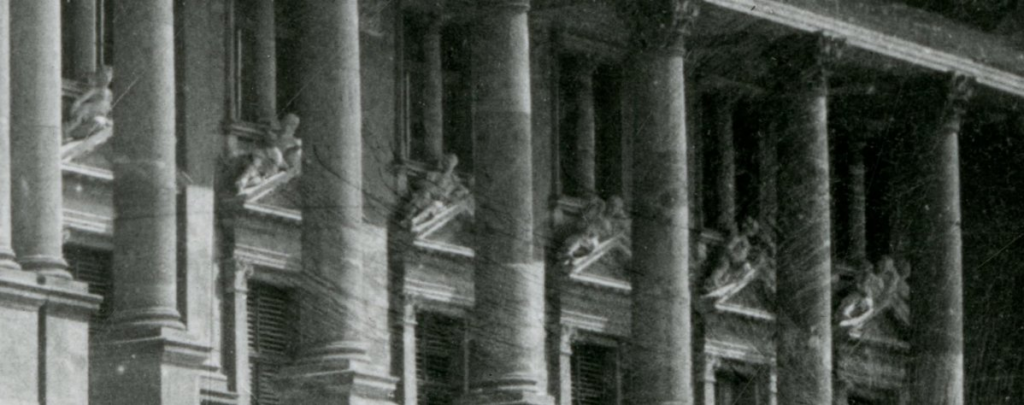
There is a splendid example of the neo-Renaissance style, decorated with a wonderful colonnade on the ground floor. Walking through such a colonnade is a step back in the past of the Austro-Hungarian Empire. There are statues representing various kinds of labor, agriculture, and science on its façade; they reflect the pride of the nation, providing food for half of Central Europe.
The Bloody Thursday in 1956
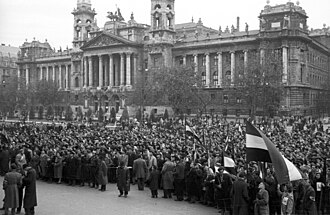
The peaceful and administrative mission of the structure ceased to exist on October 25, 1956, when a rebellion took place in Hungary against the Soviets. That day will be remembered as the infamous “Bloody Thursday,” as thousands of defenseless and unarmed protesters, men, women, and children gathered in Kossuth Square near the Parliament and joined Hungarian soldiers. All of a sudden, Soviet tanks showed up, while the secret police forces that were hiding on the roofs of the nearby buildings, including the Ministry of Agriculture, started firing at the cornered masses. Amidst the panic and confusion that ensued, people tried to take cover under the columns of the building. As the bullets rained down from above, hundreds of people died in cold blood below.
The Memorial of the Bullet Holes in the Pillars
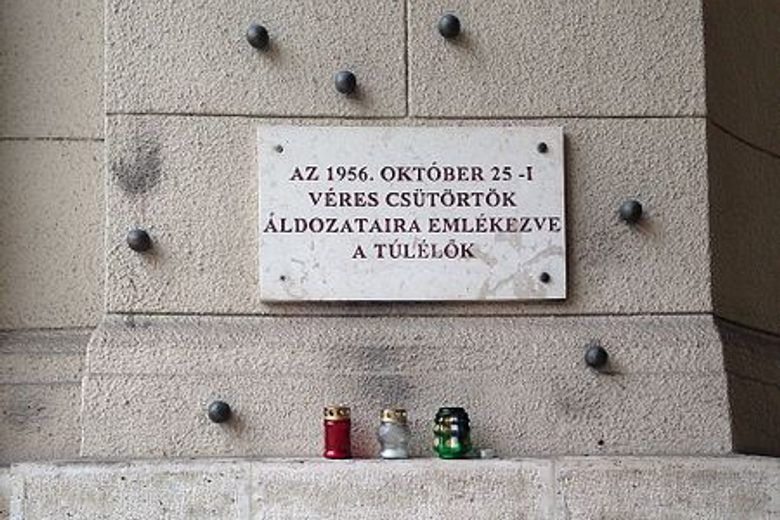
For many years, during the period of the reign of the Communists, the tragic story of the day was rigorously censored and removed from the pages of the history book. But the architectural structure would not allow such an omission to happen. After restoration of the structure, it was decided to preserve an eternal and lasting memorial to the victims of the tragedy in the very heart of the arcade. Passing by the pillars, you will see lots of small spheres made of bronze attached directly to the stone walls of the arcade and the pillars of the structure. These bronze spheres show the exact spots where the bullets shot from the roof tops pierced the building.
Getting the Perfect Angle for Your Shot
The Ministry of Agriculture is the ideal location for photography enthusiasts who want to use their photos to create symmetric and line-based images, not to mention the interesting history that comes with the structure. The most effective time for taking pictures of this beautiful building is early in the morning, when the morning sun strikes its facade, giving the stone its warm colors and creating very dramatic shadows inside the arches. In order to get the perfect picture, which will highlight the emotional core of the place, go inside the covered arcade. The key to taking the perfect shot is to make sure you use central perspective in order to catch the infinite number of arches that disappear into the distance. Focus in on one of the columns that have holes from the bullets and let the long hallway fade away into the background
Comments are closed.