
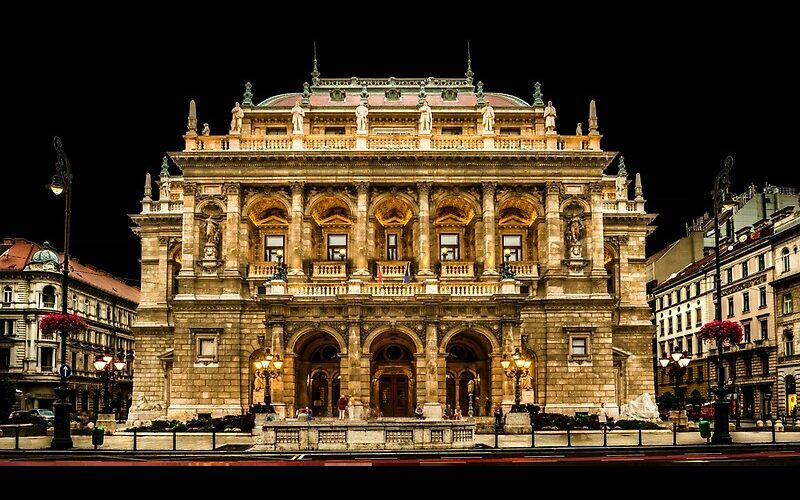
As you walk down Andrássy Avenue, Budapest’s elegant and prestigious avenue, you cannot overlook the magnificent architectural marvel that adorns the road. Not only does the Hungarian State Opera House (Magyar Állami Operaház) serve as a place of magnificent operatic performances, but it also serves as a magnificent testament to the high culture of Europe, political aspirations, and luxurious living in its purest form. Step into the opera house, and you will find yourself thrown back into an age where going to the opera was an indication of opulence and power.
Royal Competition in Neo-Renaissance Stone
The history of the Opera House begins in 1875, during the glamorous dual monarchy of the Austro-Hungarian Empire. The city was developing rapidly and had the desire to build a cultural institution capable of rivaling other theaters on the European continent. The emperor agreed to finance the building of such an opera house, but it is said that he gave a particular condition: The Budapest Opera House must not exceed the famous Court Opera of Vienna in size. Miklós Ybl, one of Hungary’s greatest architects, decided to take the challenge personally. In 1884, the construction of Ybl’s magnificent neo-Renaissance building was completed, and while it really was smaller than the Vienna building, it surpassed it in terms of sound, opulence, and architecture by leaps and bounds. When finally visiting the building for its grand opening, the emperor himself was apparently so impressed—and irritated—that he left before the performance was over.
The Emperor’s Private Escape and the Gold Hall
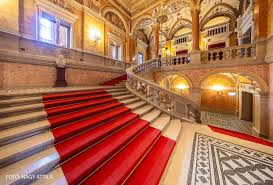
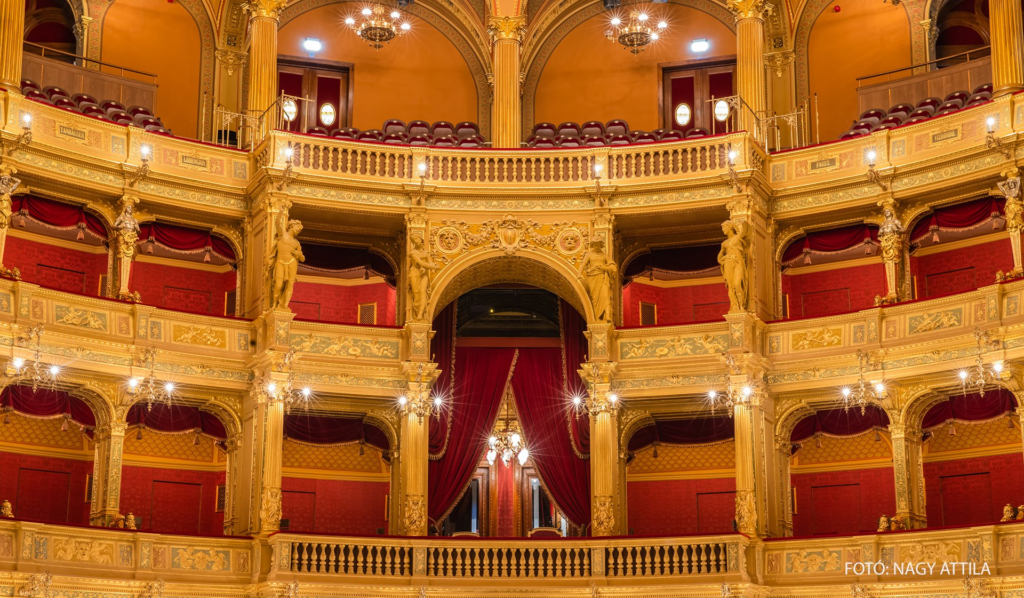
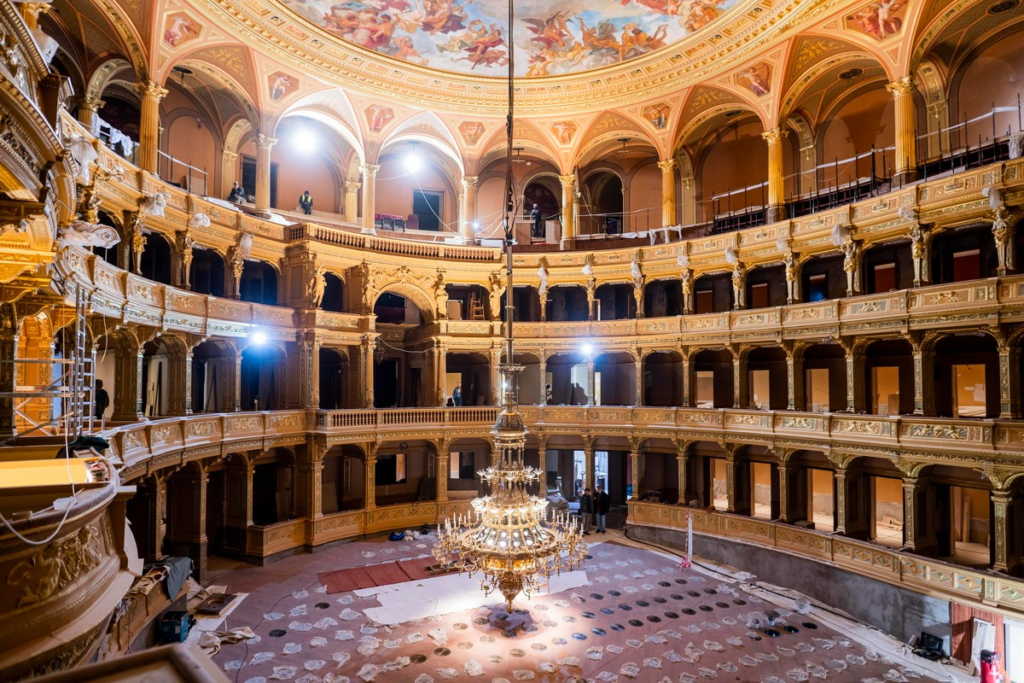
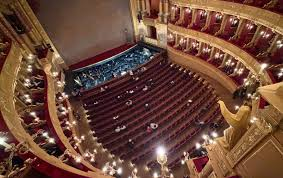
Whereas the Emperor may have had conflicting feelings, his dear wife, the Empress Elisabeth – fondly called by Hungarians Sisi – loved the building immensely. The Empress Elisabeth felt stifled by the rigid customs at the Viennese imperial court and escaped to Hungary as often as possible, where she was loved by everyone. The opera house has a specially constructed royal staircase and a royal salon that were under heavy guard for her only. Sisi would secretly arrive in Budapest, use the royal entrance and watch shows from her own royal box in the shape of a horseshoe without being seen by anyone. The main hall of the opera house itself is an embodiment of nineteenth-century luxury. The hall is made in shape of a horseshoe to ensure better acoustics and is lined with more than three kilograms of gold leaf. Gazing up, one sees a huge bronze chandelier with a mass over three tons illuminating the ceiling fresco showing the Greek gods at Mount Olympus by Károly Lotz.
Withstanding the Siege and Discovering a New Voice
It is hard to imagine the Opera House without thinking about its stormy history. The basement of the building became an enormous bomb shelter during the WWII siege of Budapest. Many artists, members of the orchestra, and civilians found a place to hide under the stage of the theater and survived the harsh winter of 1944. Despite all the destruction, the love for music could not be killed; it is mentioned in history that there were some performances inside the underground shelters. After all these sieges and years of neglect, the building was renovated in one of the most expensive renovations of its life. Every inch of gold leaf was polished, the hydraulic system of the stage was renovated, and the seating arrangement was slightly changed to make the acoustics as perfect as they used to be in the nineteenth century.
The Quest for the Ideal Composition
Getting the perfect shot at the Hungarian State Opera House requires one to focus on the grandeur of its symmetry and its warm golden lighting. When planning on visiting this landmark, ensure that you arrange an officially sponsored afternoon guided tour since during that time the opera house will be deserted of the evening visitors. Position yourself at the bottom of the grand entrance staircase and take a straight shot towards the sky. The arches formed by the stones, the marble columns and the ceilings decorated with frescoes form an amazing depth composition, which makes ideal use of the wide angle lens. On the other hand, if you are lucky enough to get tickets to watch an evening performance, position yourself at the back of the gold horseshoe hall while the three-ton gold bronze chandelier starts to dim.
Comments are closed.