Tag

history

Browsing

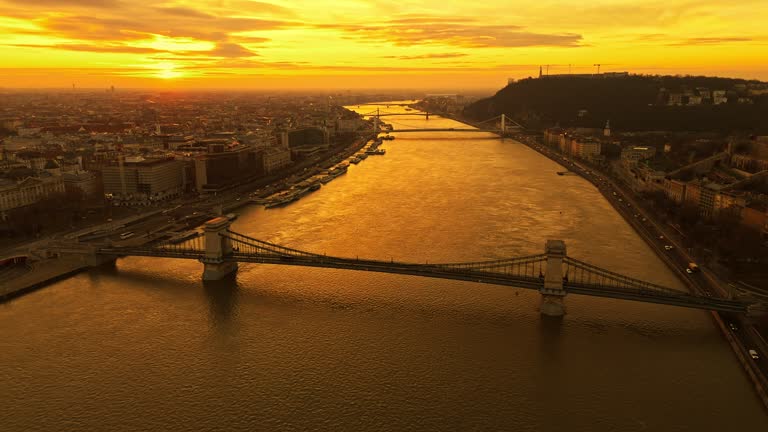
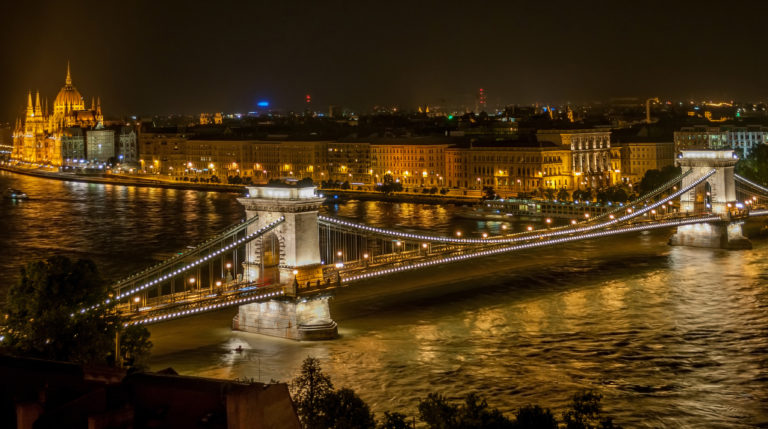
The Chain Bridge (Széchenyi Lánchíd) is one of the most iconic landmarks of Budapest, spanning the Danube River and connecting the Buda and Pest sides of the city. It stands as a symbol of unity and architectural heritage for the Hungarian capital. Opened on November 20, 1849, the bridge was the first permanent stone bridge to cross the Danube in Hungary, marking a key milestone in the country’s modernization and economic revival. Its construction was a significant feat, not only engineering-wise but also symbolically, as it united two distinct parts of the city. Today, the Chain Bridge remains a cultural and historical emblem, illuminated at night to highlight its majestic design. It continues to serve as an essential pedestrian and vehicular link over the river, attracting both locals and tourists who marvel at its beauty and historical significance. History of the Chain Bridge The Need to Unite Buda and Pest…

Budapest is a cultural epicentre where folk music resonates as an echo of the past. This tradition, deeply rooted in the national identity, has evolved along with society, adapting to historical changes while preserving its unique essence. Below, we explore traditional instruments, musical styles, venues for live performances, representative artists and groups, the history and evolution of Hungarian folklore, and its influence on contemporary music. Traditional Instruments and Musical Styles Hungarian folk music is distinguished by its diversity of instruments, each with a specific role in creating its characteristic sound. Among the most emblematic are: These instruments give life to distinctive musical styles. The verbunkos, originating in the 18th century as a military conscription dance, combines slow and fast sections, reflecting the contrasting Hungarian character. The csárdás, another popular dance, alternates slow (lassú) and fast (friss) rhythms, creating a dynamic experience. Both styles use pentatonic scales and dactylic rhythms, unique…

Standing at the end of Budapest’s grand Andrássy Avenue, Heroes’ Square (Hősök tere) immediately captures the imagination with its commanding statues, towering columns, and sweeping open space. As one of the most visited and photographed landmarks in the Hungarian capital, the square is more than just an architectural marvel, it is a powerful symbol of national pride and collective memory. Constructed at the turn of the 20th century, Heroes’ Square commemorates the thousand-year history of the Hungarian people, honoring both mythic founders and influential leaders who shaped the nation’s identity. With its rich historical context and cultural significance, the square remains a focal point for both reflection and celebration in modern Hungary. Historical Background Heroes’ Square (Hősök tere) was conceived as a monumental tribute to Hungary’s millennial anniversary, commemorating 1,000 years since the Magyars settled in the Carpathian Basin in 896 AD. Initiated in 1896, the project was part of…

The Budapest Museum of Fine Arts (Szépművészeti Múzeum) is a cultural gem located in the iconic Heroes’ Square in the heart of the Hungarian capital. Founded in the early 20th century, this museum houses an extensive collection of more than 100,000 works spanning a broad spectrum of time, from Ancient Egyptian artefacts and classical sculptures to European paintings up to the 20th century. Thanks to the diversity and quality of its collection, it has established itself as one of the most important museums in Central Europe. The neoclassical building stands out both for its façade and its spacious interior rooms, which offer a quiet and well-organised environment in which to enjoy art in peace and quiet. Over the years, the museum has been able to adapt to the times, renovating its spaces and expanding its exhibition offer with temporary exhibitions that complement its permanent collection. Whether for academic interest, cultural…

Perched majestically atop Castle Hill, overlooking the sparkling waters of the Danube River, Buda Castle stands as one of Budapest’s most iconic landmarks. With its grand domes, ornate façades, and sweeping panoramic views, the castle is not just a feast for the eyes, it’s a living testament to Hungary’s turbulent yet rich history. Once the royal residence of Hungarian kings, today Buda Castle invites visitors from around the world to step into a world where centuries-old architecture meets vibrant cultural life. Recognized as a UNESCO World Heritage Site, this architectural masterpiece has evolved over the ages, witnessing invasions, wars, and rebirths, each leaving its mark on the stone walls and cobblestone streets. Whether you’re drawn by its historical depth, artistic treasures, or simply the stunning views, Buda Castle is a must-see destination that captures the soul of Budapest. A Glimpse into History The story of Buda Castle begins in the…

The Danube River, often celebrated as the “Queen of European Rivers,” is one of the continent’s most iconic waterways. Spanning approximately 2,850 kilometers, it is Europe’s second-longest river after the Volga. From its source in Germany’s Black Forest to its delta in the Black Sea, the Danube meanders through ten countries, binding them through a shared geography, history, and culture. A River Woven into European History Few rivers have witnessed as much history as the Danube. It served as a critical frontier for the Roman Empire, where outposts and forts lined its banks. In medieval times, it became a trade route linking the Holy Roman Empire to the Byzantine world. During the Ottoman expansion and the Austro-Hungarian reign, the Danube remained a central artery of power, movement, and influence. The river has also been a backdrop for revolutions, battles, and diplomatic exchanges. Empires rose and fell along its banks, and…

The Hungarian National Museum, or Magyar Nemzeti Múzeum, stands as a key institution in the heart of Budapest, acting as the main repository of Hungarian history, art and archaeology. Its mission encompasses the presentation of the rich and complex history of Hungary and the Carpathian Basin from prehistoric times to the present day. Housed in an impressive neoclassical building, the museum not only houses a vast collection of artefacts, but also serves as a symbol of Hungarian national identity. The purpose of this article is to offer a detailed overview of this important museum, providing practical information for visitors and highlighting its profound cultural and historical significance. Practical Information for Visitors For those planning to explore the treasures housed in the Hungarian National Museum, practical information is essential to facilitate the visit. The exact address of the museum is Múzeum körút 14-16, 1088 Budapest, Hungary. Its central location in Budapest…

The Rubik’s Cube is much more than a toy: it is a worldwide symbol of ingenuity, logic and perseverance. Since its creation in 1974, it has captivated millions of people thanks to its contrast between a simple appearance and impressive mathematical complexity, with more than 4.3 × 10¹⁹ possible combinations. As well as entertaining, it has established itself as an educational tool that stimulates spatial reasoning, memory and problem solving, and has spawned a global community of enthusiasts who share techniques, compete and celebrate their passion for this puzzle.What many do not know is that the Rubik’s Cube has Hungarian roots: it was invented in Budapest by Ernő Rubik, a sculptor and professor of architecture, who initially called it the ‘Magic Cube’. The connection with the Hungarian capital goes beyond its origin, as Budapest also hosted the first edition of the World Rubik’s Cube Championship in 1982, cementing its role…

Budapest, the Pearl of the Danube, is a city that pulses with rich history and vibrant culture, where the majestic river winds its way between grand monuments and picturesque streets. Beyond its architectural splendor and historical legacy, Budapest is also steeped in a fascinating tapestry of legends and folklore passed down through generations. These stories, often blending historical events with elements of popular imagination, not only serve as entertainment but also offer deep insights into the values, beliefs, and fears of Hungarian society over time. The Tongueless Lions of the Chain Bridge Among the many architectural marvels of Budapest, the Széchenyi Chain Bridge stands as one of the city’s most iconic landmarks. Opened in 1849, it was the first permanent bridge to connect Buda and Pest across the Danube River. While its historic and symbolic significance is well known, the bridge is also wrapped in a peculiar urban legend involving…

The Budapest Parliament stands as one of the most iconic and photographed buildings in the Hungarian capital. Its distinctive profile, with its spires soaring skyward and its imposing presence on the banks of the Danube, has made it a globally recognised landmark. Standing majestically on the banks of the river running through the city, it dominates the cityscape and attracts visitors from all corners of the globe. Its strategic location not only offers spectacular panoramic views, but also makes it a visual focal point accessible from many parts of the city. More than just a government building, the Budapest Parliament is a living symbol of Hungary’s rich history, deep national identity and constant aspiration for sovereignty. Its construction and elaborate design were driven by a fervent desire to assert Hungarian independence in a period of significant political and social transformation. General Information The official name of this building in Hungarian…