
Budapest is blessed with a geological jackpot. As the city lies at the intersection of a fault line that connects the Buda Hills with the Great Hungarian Plain, it boasts of a tremendous number of sources of both thermal and filtered water. No matter if you use the water supplied by the municipality or look for mineral-laden spring waters, the city provides some of the best waters available in Europe.
Here you will find all that you need to know about the water quality in the city, where to find natural spring water, and make sure that the water you are consuming is completely pure.
The Municipal Supply: Is the Tap Water Safe?
The water coming out of Budapest taps is among the cleanest and purest in the world and can be consumed without any fear of any adverse effects on health.
The reason behind its exceptional quality lies in the way it is extracted, as opposed to most other cities which obtain their water supply through artificial treatment of stagnant water.
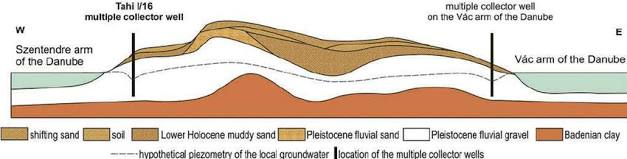
When the water travels underground into the aquifers, it is purified of any impurities through the thick layer of gravel and sand. This forms an effective natural biological filter that ensures the water is purified from the pollutants by the time it reaches the public supply.
- Chemical Safety: According to Fővárosi Vízművek (Budapest Waterworks), tests conducted recently in 2025-2026 show PFAS (forever chemicals) are far beneath the maximum EU standards in most places. In some cases, they are only slightly above the minimum detection level.
- The Only Potential Problem Area: The tap water supplied after being processed in the treatment plant is clean, but if you reside in an old, historical apartment without renovations in Districts V, VI, and VII, the piping may still contain lead pipes. It is suggested to let the water run for one minute each day, particularly in the morning.
Sourcing Raw & Mineral Spring Water
If you desire completely untreated and naturally occurring mineral water, Budapest happens to be one of those rare capital cities where finding such water is easy. The same sources of hot water that feed the famous baths in Budapest also feed special drinking rooms, known as Ivócsarnok.
Here, you can enjoy what is referred to as the “Drinking Cure,” or Ivókúra, where mineral-filled water is consumed.
The Major Drinking Halls
- Rudas Ivócsarnok: Located right under the Erzsébet Bridge on the Buda side. It offers three distinct springs:
- Attila: The most mineral-dense, highly sulfuric.
- Juventus: Said to aid with blood pressure and longevity.
- Hungária: Traditionally used for stomach and kidney support.
- Széchenyi Drinking Well: Located in City Park. Its waters are famous for calcium and magnesium content.
- Lukács Ivócsarnok: Located at the entrance of the Lukács Baths in Buda, known for its high sulfur and hydro-carbonate levels.
A Look Inside Széchenyi’s Spring Water:
If you source water from the Széchenyi well, you are getting an incredibly dense mineral profile (Total minerals: 1774 mg/L).
| Mineral | Chemical | Concentration |
| Lithium | Li+ | 0.20 mg/L |
| Metaboric acid | HBO2 | 6.50 mg/L |
| Silicic acid | H2SiO3 | 36.40 mg/L |
| Carbon dioxide | CO2 | 375.50 mg/L |
Free Public Fountains & Hydrants
You don’t always have to visit a bathhouse to find good water on the go.
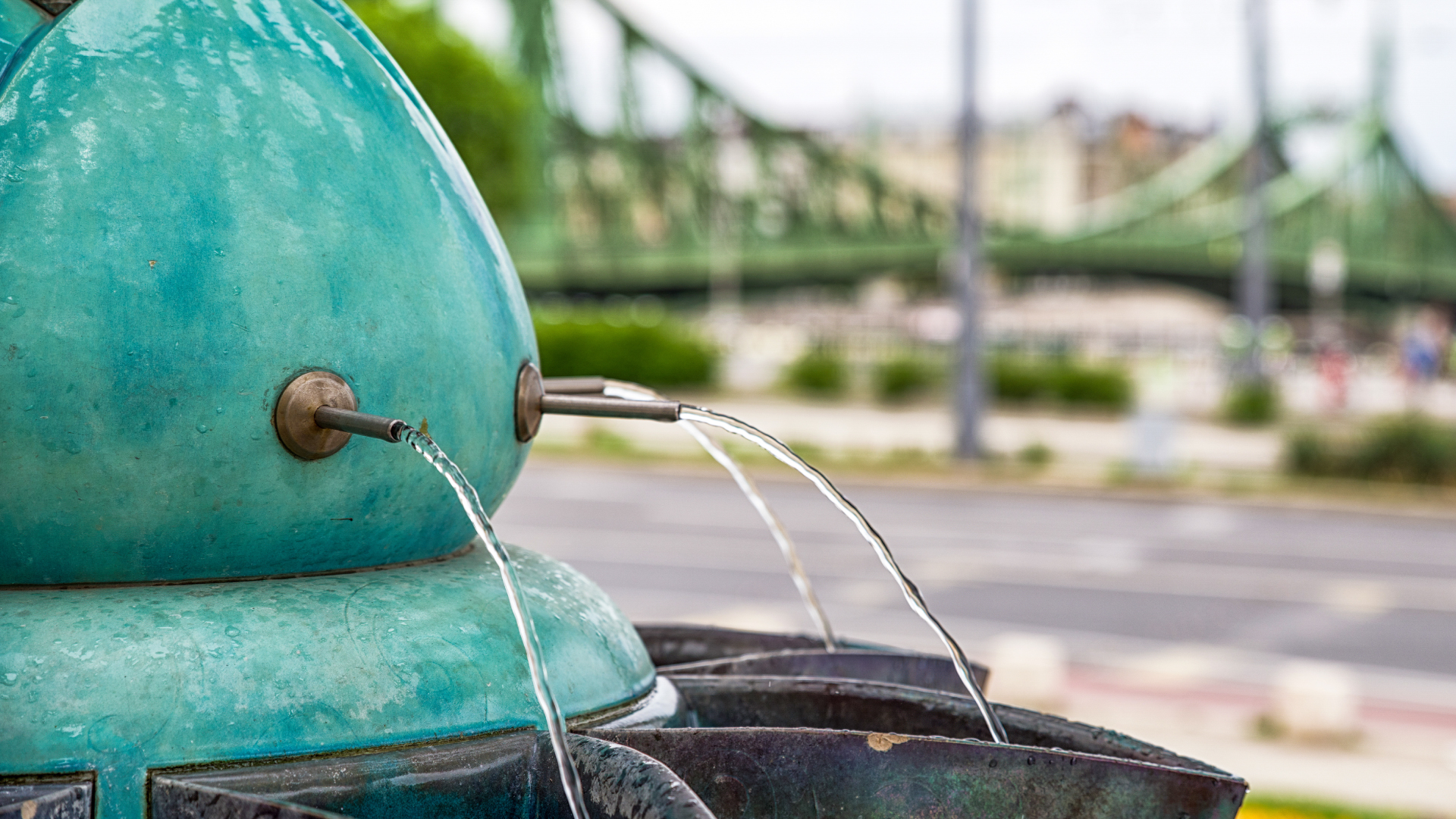
- Gellért Hill Fountain: Outside the Hotel Gellért on the Buda side of the Szabadság Bridge, there is a turquoise dome-covered fountain where free thermal mineral water gushes continuously.
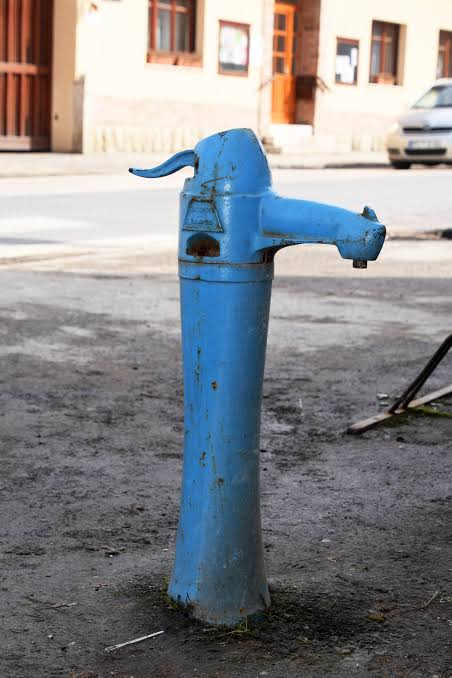
- The Blue Hydrants (Közkutak): As you walk around the city, you will see blue iron hydrants on the sidewalks. These aren’t just for putting out fires—they are public drinking wells connected directly to the city’s filtered water supply.
Budakalász
How Can You Make Sure Your Water Is Safe
To ensure that you have peace of mind, if you are in a rental situation and living in an old apartment building, or even just want to know precisely what is in your tap water, you do not need to speculate. You can request a professionally conducted water test done by the Budapest Waterworks Laboratory (Fővárosi Vízművek).
- What gets tested: If you are really skeptical, you can order a package for a heavy metal check (e.g. lead), a microbiological analysis, or even a complete chemical analysis.
- How to proceed: It is possible to obtain a sterilized container at the laboratory (address: Váci út 102/V, 4th district) where you can take the water sample and return it.
How to Take a Traditional “Drinking Cure”
If you decide to source raw mineral water from an Ivócsarnok, there is a specific way to do it to maximize the health benefits.
1.Bring your own glass: Or buy a ‘pohár’ on site.
The halls charge a very small fee for the water. You can bring large glass bottles to fill up for the week, or just a mug to drink on the spot.
2.Check the temperature:
Thermal spring water comes out of the earth naturally hot. Depending on the spring, it might be lukewarm or steaming. Let it cool slightly if necessary.
3.Sip slowly:
Do not chug it like regular water. Because of the extremely high mineral and sulfur content, it is meant to be sipped slowly to allow your digestive system to absorb the trace elements without getting upset.
4.Watch the dosage: More is not always better, in fact can make you have a diarrhea.
Because it is medicinal, the general recommendation is to drink no more than half a liter of raw thermal water per day unless directed otherwise.
Comments are closed.