When you move from a tight-knit Italian town like Jesi to a sweeping European capital like Budapest, the shift in lifestyle hits you fast. But it’s not just the language or the architecture that changes your daily routine—it’s how you move. In Jesi, the private car is the most used way of transport; without a steering wheel, you are practically stranded. In Budapest, however, owning a car is almost an inconvenience. Here, the city doesn’t belong to the automobile, but to an interconnected web of punctual trams and buses that seamlessly tie the metropolis together. The Scale of Infrastructure: Why Size Dictates the Strategy The root of this massive divergence in transportation habits comes down to the sheer geographic and demographic scale of each location.Jesi is a compact historical town in Italy’s Marche region, that has roughly 40,000 inhabitants. Because the distance from the medieval historic centre to the newer…
Budapest isn’t crowned the “City of Baths” simply because it boasts over 100 natural springs. Beneath the rising steam and grand architectural domes lies a millennia-old narrative, stretching from the Roman legions of Aquincum, to the beautiful Ottoman baths The Roman Foundations: Aquincum and the Birth of Bath Culture The history of the Budapest thermal baths dates back almost 2,000 years to the times of Rome. When the Roman Empire founded the town of Aquincum in what today is known as Óbuda (Part of Budapest), their selection of the site was primarily influenced by its rich sources of geothermal springs on the Danube fault line. For the ancient Romans, taking baths was an essential part of their routine, cleaning habits, and recovery after wars. Numerous archaeological digs have revealed a total of 14 different baths in this region. The biggest one, called the Thermae Maiores, was a huge military bathhouse…
Located in central Budapest, Liberty Square is far more than a public plaza, it is a layered landscape of monuments and historic buildings that reflect Hungary’s turbulent past and evolving identity. From politically charged memorials to striking architectural landmarks, the square offers a compelling narrative in stone and bronze. This article explores the statues and structures that define Liberty Square, revealing the stories they tell about war, power, memory, and national transformation. Ronald Reagan Statue Honoring a Cold War Architect In June 2011, a seven-foot bronze statue of Ronald Reagan was unveiled in Budapest’s Liberty Square, commemorating the 100th anniversary of his birth. Though Reagan never visited Hungary, his leadership during the Cold War is credited with aiding the country’s liberation from Soviet influence. Hungarian Prime Minister Viktor Orbán emphasized Reagan’s role in “creating a new world for Central Europe” by supporting the dismantling of communist regimes. Symbolic Placement and…
The Hungarian State Opera House, a Neo-Renaissance gem designed by Miklós Ybl, stands as a testament to Budapest’s rich cultural heritage and architectural grandeur. Opened in 1884, this iconic building has been a cornerstone of Hungary’s artistic landscape for over a century. Its opulent design, exceptional acoustics, and historical significance make it one of Europe’s premier opera venues. Beyond its role as a performance space, the opera house symbolizes Hungary’s dedication to the arts and its cultural identity. Whether attending a world-class performance or exploring its ornate interiors, a visit to the Hungarian State Opera House offers a glimpse into the artistic soul of Budapest. Architectural Beauty The Hungarian State Opera House is a masterpiece of Neo-Renaissance architecture, designed by the esteemed Hungarian architect Miklós Ybl. Completed in 1884, it stands as a testament to the grandeur and cultural aspirations of 19th-century Hungary. The building’s façade is adorned with intricate…
Nestled in the heart of Budapest, where grand boulevards meet the shimmering Danube, stands St. Stephen’s Basilica, a monumental testament to Hungary’s spiritual heritage and architectural splendour. As the largest church in the capital, this neoclassical masterpiece not only dominates the city’s skyline with its soaring 96-metre dome but also holds profound cultural and religious significance. Named in honour of Stephen, Hungary’s first king and patron saint, the basilica serves as a sacred space for worship, a repository of national treasures, and a beacon of artistic achievement. In the following sections, we will explore the basilica’s rich history, architectural marvels, and enduring role in Hungary’s national identity. Historical Background The origins of St. Stephen’s Basilica trace back to the early 19th century, when the rapidly expanding district of Lipótváros in Pest necessitated a prominent place of worship. Following the devastating flood of 1838, which saw many residents seek refuge on…
Budapest is not only noted for its stunning architecture and rich history on the banks of the Danube, but also for a music scene that, far from being anecdotal, has become one of the city’s most dynamic cultural engines. Among the ruins of abandoned factories, the hidden cellars of Pest and the clubs floating on the river, electronic music is thriving, shaping a sonic identity of its own. In 2025, Budapest’s electronic scene continues to grow with surprising vitality. Driven by a unique blend of local innovation, openness to global influences and a strong community spirit, the city has established itself as a creative hotbed for independent DJs, producers and collectives pushing the boundaries of the genre. While perhaps not as internationally renowned as other electronic capitals such as Berlin or Barcelona, Budapest offers something different: a combination of rawness, excitement and authenticity that appeals to both curious music lovers…
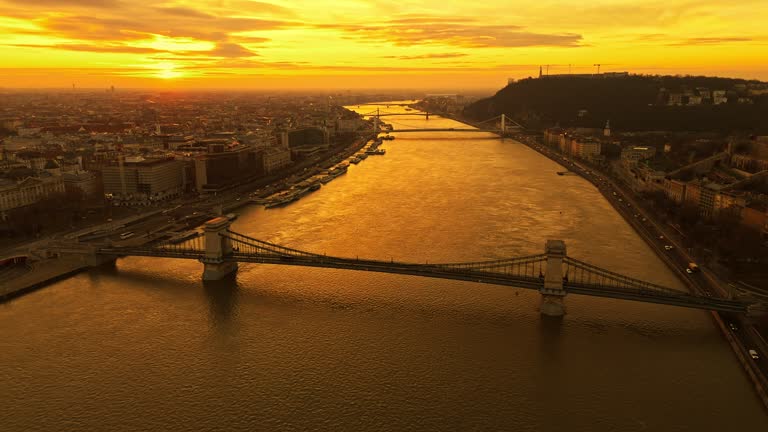
The Chain Bridge (Széchenyi Lánchíd) is one of the most iconic landmarks of Budapest, spanning the Danube River and connecting the Buda and Pest sides of the city. It stands as a symbol of unity and architectural heritage for the Hungarian capital. Opened on November 20, 1849, the bridge was the first permanent stone bridge to cross the Danube in Hungary, marking a key milestone in the country’s modernization and economic revival. Its construction was a significant feat, not only engineering-wise but also symbolically, as it united two distinct parts of the city. Today, the Chain Bridge remains a cultural and historical emblem, illuminated at night to highlight its majestic design. It continues to serve as an essential pedestrian and vehicular link over the river, attracting both locals and tourists who marvel at its beauty and historical significance. History of the Chain Bridge The Need to Unite Buda and Pest…
Budapest is a cultural epicentre where folk music resonates as an echo of the past. This tradition, deeply rooted in the national identity, has evolved along with society, adapting to historical changes while preserving its unique essence. Below, we explore traditional instruments, musical styles, venues for live performances, representative artists and groups, the history and evolution of Hungarian folklore, and its influence on contemporary music. Traditional Instruments and Musical Styles Hungarian folk music is distinguished by its diversity of instruments, each with a specific role in creating its characteristic sound. Among the most emblematic are: These instruments give life to distinctive musical styles. The verbunkos, originating in the 18th century as a military conscription dance, combines slow and fast sections, reflecting the contrasting Hungarian character. The csárdás, another popular dance, alternates slow (lassú) and fast (friss) rhythms, creating a dynamic experience. Both styles use pentatonic scales and dactylic rhythms, unique…
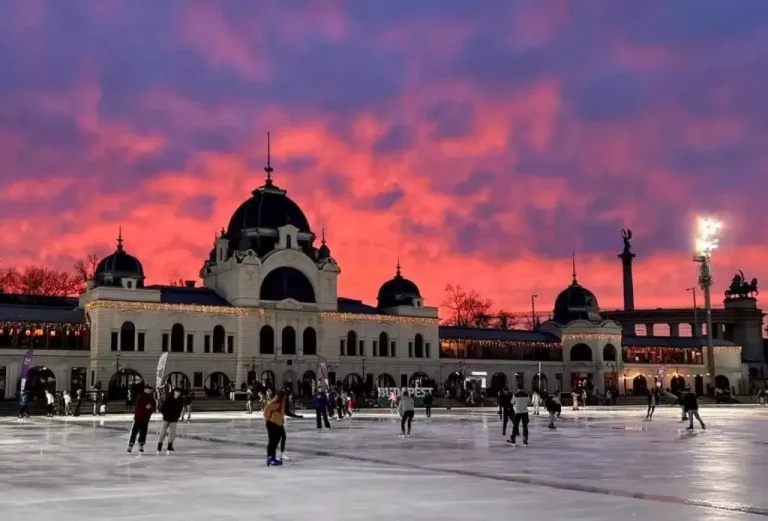
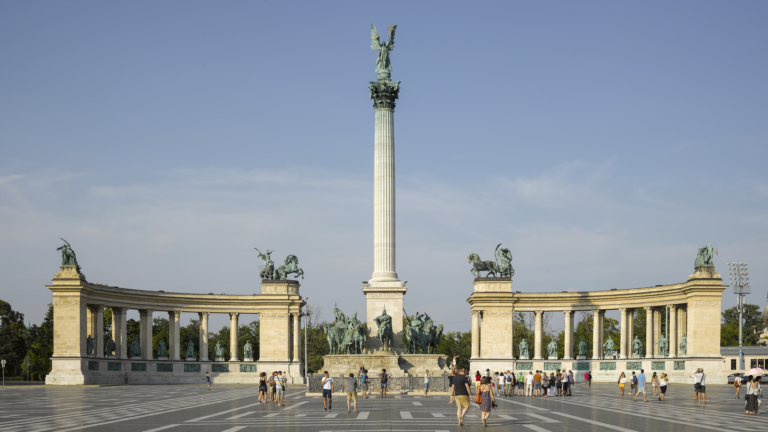
Standing at the end of Budapest’s grand Andrássy Avenue, Heroes’ Square (Hősök tere) immediately captures the imagination with its commanding statues, towering columns, and sweeping open space. As one of the most visited and photographed landmarks in the Hungarian capital, the square is more than just an architectural marvel, it is a powerful symbol of national pride and collective memory. Constructed at the turn of the 20th century, Heroes’ Square commemorates the thousand-year history of the Hungarian people, honoring both mythic founders and influential leaders who shaped the nation’s identity. With its rich historical context and cultural significance, the square remains a focal point for both reflection and celebration in modern Hungary. Historical Background Heroes’ Square (Hősök tere) was conceived as a monumental tribute to Hungary’s millennial anniversary, commemorating 1,000 years since the Magyars settled in the Carpathian Basin in 896 AD. Initiated in 1896, the project was part of…
Budapest Beer Week (BPBW) is Hungary’s leading international craft beer festival, an event that celebrates the passion, creativity and community behind craft brewing. Held annually in Budapest, this week-long festival attracts thousands of beer enthusiasts from around the world, offering a unique experience combining unlimited tastings, live music, street food and networking opportunities for industry professionals. For 2025, the festival is scheduled from 26 May to 1 June, promising a vibrant edition that cements Budapest as a key destination on the global beer map. History of Budapest Beer Week BPBW was established in 2018, at a time when the craft beer scene in Hungary was beginning to flourish. Since its inception, the festival has sought to promote both local and international breweries, providing a platform for producers to showcase their most innovative creations. In just a few years, BPBW has grown to become a landmark event, attracting approximately 5,000 visitors…