
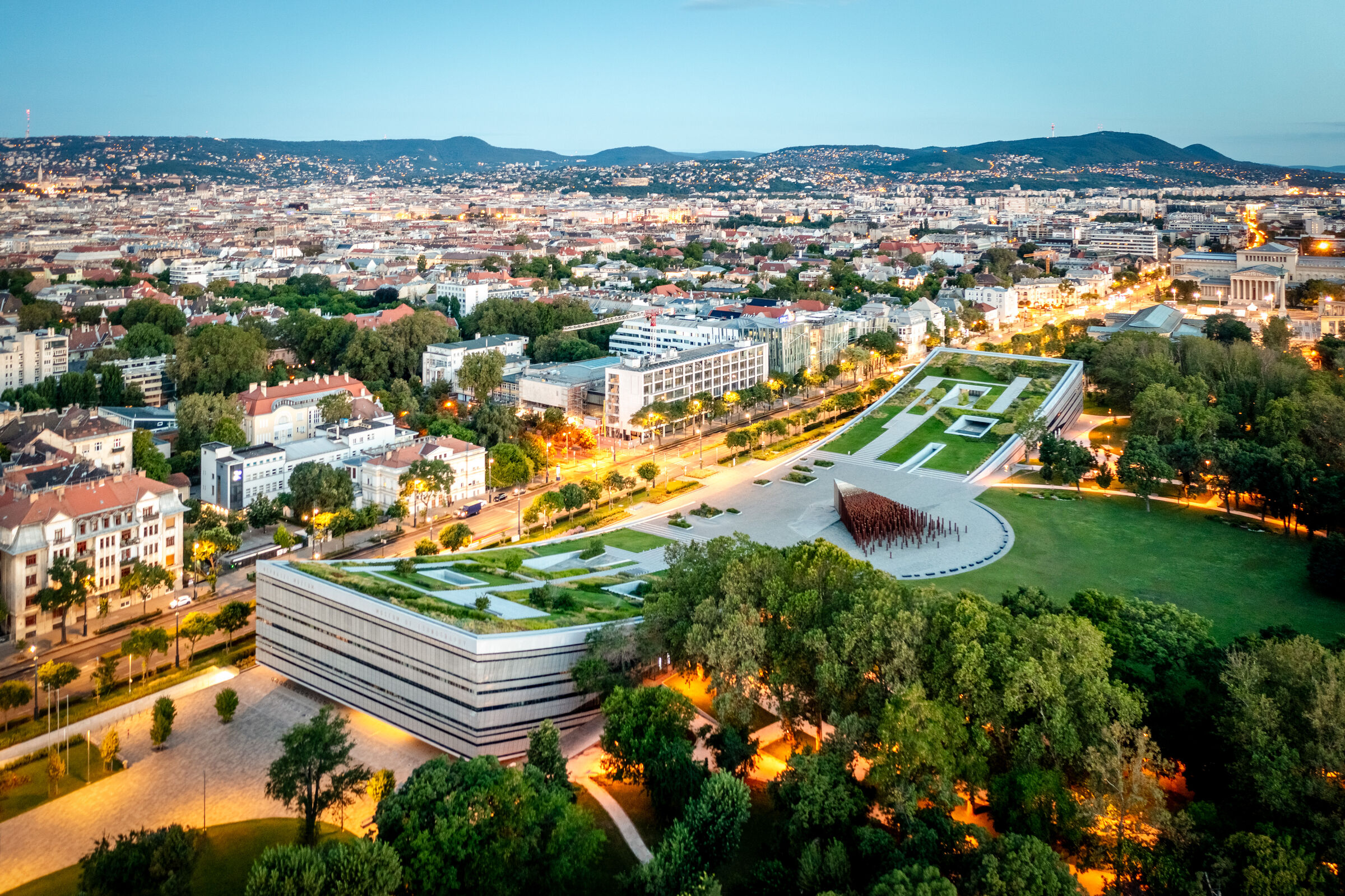
If you walk through Budapest’s Városliget (City Park) today, it is impossible to miss the striking structure rising smoothly from the ground like a massive half-pipe. After a century and a half of wandering, the Museum of Ethnography (Néprajzi Múzeum) finally opened the doors to its custom-built, permanent home in May 2022.
Designed by Marcel Ferencz of the Hungarian firm NAPUR Architect, who beat out architectural heavyweights like Zaha Hadid and Rem Koolhaas for the commission, the building acts as a physical and visual gateway between the bustling city and the tranquility of the park.
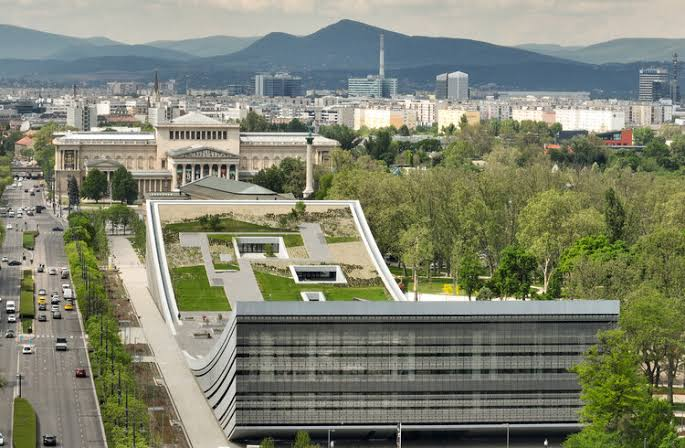
By placing the vast exhibition buildings below ground level, this building achieves the perfect balance between preserving the old scale of City Park and offering a large amount of space for one of the most important cultural collections in Europe.
A 150-Year Journey Home
The museum’s collection now boasts over 250,000 items from the Carpathian Basin and five continents, but for most of its existence, it didn’t have a purpose-built space to display them. In many ways, moving to City Park was a homecoming.
Foundation – 1872
Established as the Ethnographic Department of the Hungarian National Museum, originally focusing on East Asian cultures before shifting to Hungarian folk traditions.
The Millennium Exhibition – 1896
The collection was first shown to the wider public right here in Városliget (City Park) as an “Ethnographic Village” featuring traditional dwellings.
The Parliament Era – 1973
After decades of bouncing between temporary venues, the museum moved into the palatial Hall of Justice opposite the Hungarian Parliament.
A Permanent Home – May 2022
The museum opened in its first-ever purpose-built facility back in City Park, built over a former concrete parking lot known as the Square of the ’56ers.
The 7,300-Square-Meter Rooftop Garden
On viewing the building from afar, one thing is certain: the main attraction will be the softly rounded green roof. It was not just an aesthetic addition to the building, but an attempt to restore the greenery which had once been stripped off by means of constructing parking spaces in concrete. The rooftop acts like a completely open all-day park located on top of both the arched wings of the building.
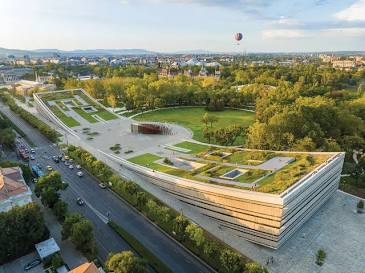
To create this “floating” park, engineers laid down over 3,000 cubic meters of nutrient-rich topsoil over the building’s arches. The landscaping was planned to mirror a natural hillside while surviving the unique conditions of an elevated roof.
| Plant Type | Specimen Count | Landscape Role |
| Flowering Perennials | ~1,500 | Adds seasonal color bursts and supports local pollinators. |
| Ornamental Grasses | ~700 | Provides texture and movement mimicking the natural park. |
| Evergreens | ~100 | Ensures the roof remains vibrant during Budapest’s gray winters. |
| Deciduous Shrubs | 7 | Anchors the deeper soil beds across the building’s arches. |
Rules of the Roof: Because it is a manicured architectural space, there are a few house rules. You won’t find anyone cycling, skateboarding, or flying drones here. Dogs are also asked to stay down in the park’s designated dog runs. However, it is an absolutely perfect spot to lay out a blanket, have a picnic, and take in the panoramic views of Heroes’ Square and the majestic Parliament building in the distance. During the summer, misting systems are even turned on to keep the area cool.
The 500,000-Pixel Facade
As you approach the building’s glass curtain wall, its most intricate and photogenic secret reveals itself: an enormous aluminum shading grid made of nearly half a million distinct “pixels.”
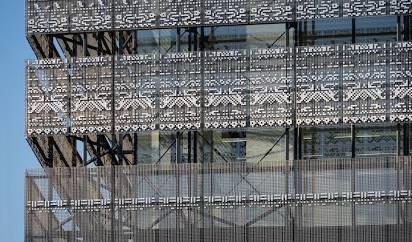
These metallic cubes were individually inserted by specialized robots into more than 2,000 laser-cut panels. But they aren’t random. The pixels form a contemporary, digitized adaptation of 20 Hungarian and 20 international ethnographic motifs drawn directly from the museum’s collection, including traditional patterns from Venezuela, Congo, Cameroon, Mongolia, China, and Melanesia.
Aside from looking incredible, the grid serves a highly functional purpose: it acts as a massive sunshade, severely reducing the building’s cooling costs and making it highly energy efficient.
The Underground Building
To protect the priceless historical artifacts from degrading UV light, 60% of the museum is located underground.
This subterranean setup allows the museum to boast over 7,000 square meters of exhibition space, three times larger than its previous location. The space is divided intuitively: one wing is dedicated to the public sphere (events, youth exhibitions, and a restaurant), while the other focuses on the museum’s professional archives, library, and research rooms.
The undisputed crowning jewel of the public interior is the Ceramics Space, a massive, free-to-visit display flanking the building’s central 40-meter staircase.
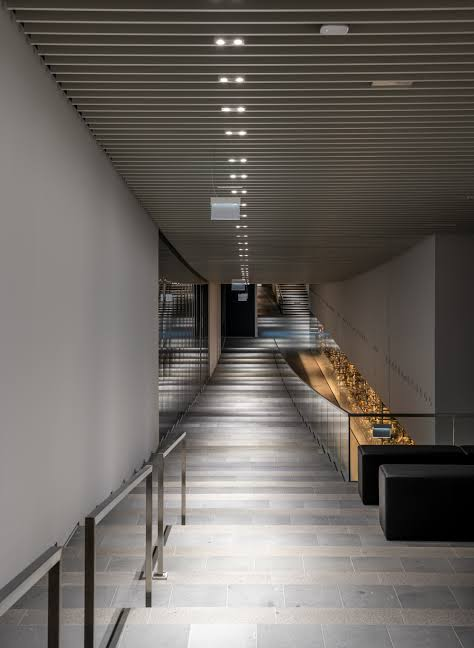
The exhibit cleverly divides its 4,000 ceramic objects into two distinct viewing experiences. One side of the staircase appeals to the left side of the brain, meticulously organizing the world’s pottery by continent, design, and era. The opposite side targets the right side of the brain, organizing the ceramics visually and sensually into a loose, artistic chain of associations.
Whether you are digging into Hungarian history or just looking for the best free panoramic view in Városliget, the Museum of Ethnography has cemented itself as a must-see modern landmark in Budapest.
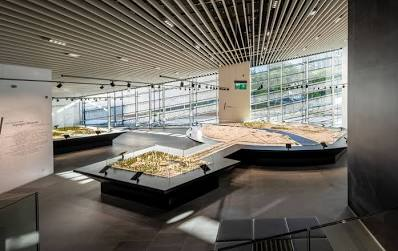
The 1900s Budapest Scale Model
Located on the ground floor inside the Visitor Center, this layout features a giant, incredibly detailed physical 3D model of Budapest as it stood at the turn of the 20th century. It includes more than 6,000 miniature, individually modeled buildings. It gives visitors an immediate look at how the surrounding city and park space.
Comments are closed.