
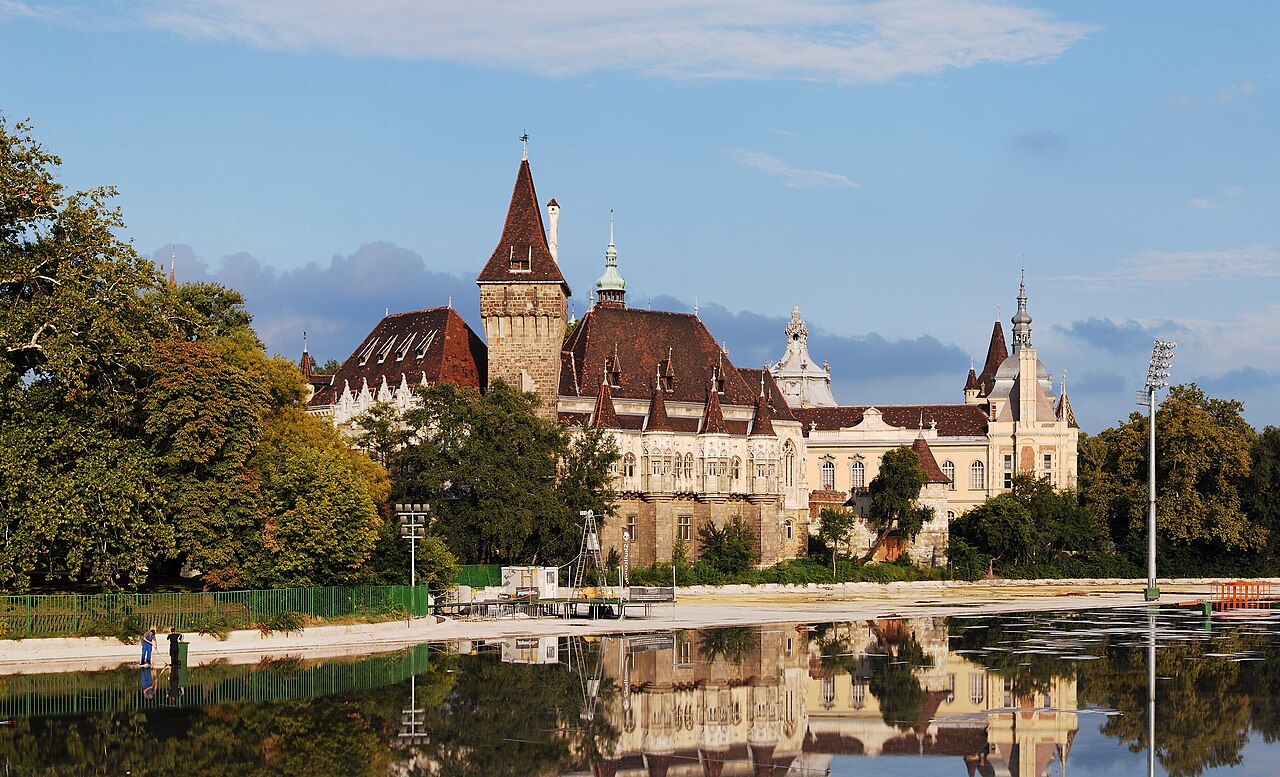
When walking through Budapest’s City Park (Városliget), just a stone’s throw from the grand monuments of Heroes’ Square, you suddenly stumble upon a sweeping architectural wonderland rising from the water. With its mix of sharp gothic spires, heavy Romanesque arches, and elegant pastel walls, the complex looks like a historic royal citadel that has guarded the city for centuries. This spectacular site is Vajdahunyad Castle (Vajdahunyad vára), a place where multiple eras of European history collide in a single courtyard. But the true story behind this fairytale fortress is one of the most bizarre, fascinating, and beloved pieces of urban lore in Central Europe. It is a massive monument that was never meant to last, built by an architect who essentially created a giant piece of historical copy-pasting.
The 1000-Year Celebration: A Castle Made of Cardboard
The story begins in 1896, a monumental year for Hungary. The country was celebrating its Millennium, the 1000th anniversary of the Hungarian conquest of the Carpathian Basin. To mark the occasion, Budapest hosted a massive World Fair-style exhibition inside the City Park, and the government wanted a pavilion that would showcase the nation’s rich architectural evolution in one single glance.The task fell to architect Ignác Alpár. Faced with a tight deadline and a strictly limited budget for what was supposed to be a temporary exhibit, Alpár came up with a genius, if fragile, solution. He designed a “collage” castle built entirely out of wood, plaster, and thick cardboard (papier-mâché).The temporary structure was an instant masterpiece, seamlessly blending 21 different famous buildings, churches, and towers from across the historical Kingdom of Hungary into one single complex.
The People’s Revolt Against the Bulldozers
Because the castle was made of cardboard and wood, the original plan was simple: when the millennium exhibition ended, the entire thing was to be torn down, cleared away, and forgotten. However, urban planning often has to contend with public emotion. The people of Budapest, along with thousands of international tourists, fell absolutely in love with this fairytale fortress in the park. It became the ultimate romantic backdrop for evening strolls, winter ice skating, and summer boat rides.When the fair wrapped up and the construction crews showed up to dismantle it, the public fiercely opposed the demolition. The outcry was so loud and persistent that the government eventually backed down. Recognizing that the cardboard castle had become an irreplaceable symbol of the city’s identity, they approved a massive budget to tear down the rotting plaster version and rebuild it exactly the same, but this time using permanent stone, marble, and brick between 1904 and 1908.
Walking Through Time: The Architectural Collage
Because the castle is a mashup of different historical eras, walking through its gates feels like stepping into a living time machine. The complex is divided into distinct architectural chapters, each representing a different artistic movement that shaped the region.
The Romanesque Cloisters and the Mysterious Notary
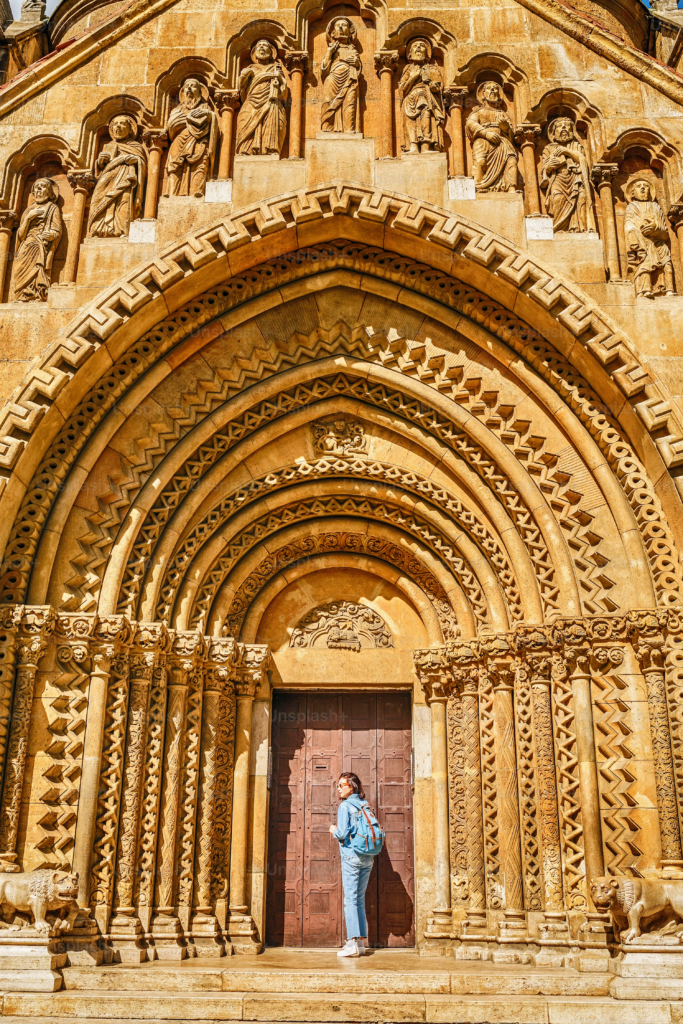
As you approach the entrance, you are greeted by heavy, solemn stone walls modeled after the Cloister of Ják, a famous 13th-century church in western Hungary. The massive, deeply recessed portal features beautiful geometric carvings and statues of the apostles, perfectly capturing the dark, protective feel of early medieval monastic life. Just inside this Romanesque courtyard sits one of the castle’s most famous monuments: a brooding, faceless bronze figure draped in a heavy hood. This is the statue of Anonymus, the nameless 12th-century notary who wrote the first comprehensive history of the early Hungarian kings. Local lore says that if you touch the shiny bronze quill in his hand, it will grant you great writing talent or luck in school exams.
The Gothic Splendor and the Hollywood Vampire
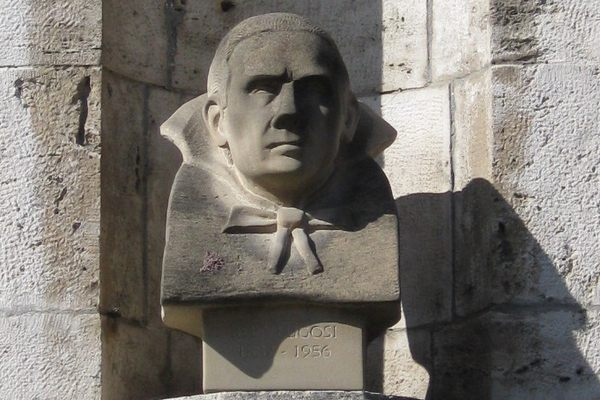
The most dramatic, towering section of the complex is a direct replica of Hunyad Castle, a famous fortress located in Transylvania. This specific area gives the Budapest complex its heavy gothic flair, complete with sharp turrets, open loggias, and imposing watchtowers. Because the real Transylvanian fortress was historically tied to Vlad the Impaler, the cruel ruler who inspired Bram Stoker’s legendary character, the Budapest replica naturally inherited a heavy dose of vampire lore.This gothic shadow over the boating lake makes it a favorite spot for horror enthusiasts, who often explore the outer walls facing the water to find a hidden treasure. Tucked away in a small stone niche on a rear wall, there is a secret bust of Béla Lugosi, the legendary Hungarian-American actor who immortalized Dracula in the classic 1931 Hollywood film. The bust was secretly placed there by a group of artists in 2003 as a nod to the castle’s unofficial nickname. Nearby, closer to the ground, visitors can also spot a tiny bronze guerrilla sculpture by artist Mihály Kolodko, featuring a cartoonish Count Dracula wrapping his cape around himself while reading a book.
The Baroque Palace and its Unlikely Interior
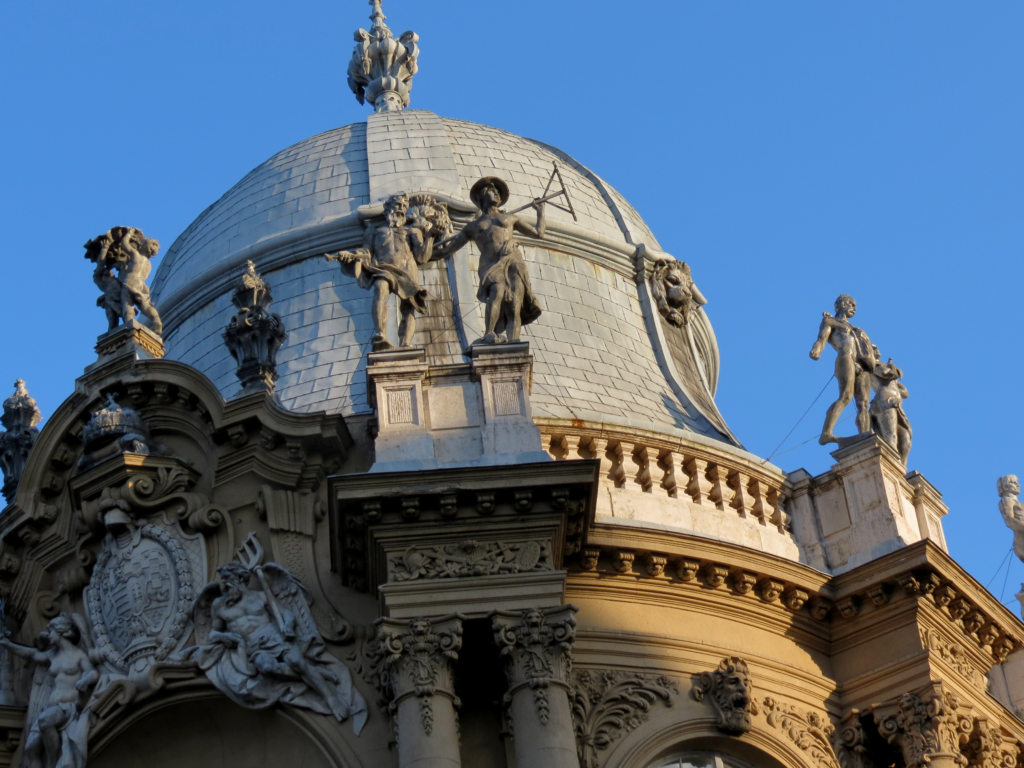
Just when you think you are trapped in a medieval dungeon, the path opens up into a sweeping, elegant courtyard designed in the grand Austrian-Baroque style. With its ornate windows, pastel-colored plaster, and royal crests, this wing looks like a miniature version of a Habsburg palace, showcasing the refined luxury of the 18th century.Perhaps the funniest piece of lore regarding this elegant wing is what actually sits inside these ancient-looking walls. Despite looking like a royal ballroom or an aristocratic residence from the outside, the massive Baroque wing of the castle actually houses the Museum of Hungarian Agriculture. Instead of crown jewels or royal portraits, the interior is filled with historical tractors, ancient farming tools, hunting trophies, and exhibits detailing the history of Hungarian winemaking and livestock breeding, proving that Vajdahunyad Castle is full of surprises both inside and out.
Comments are closed.