Straddling the Danube River, Budapest sits divided between Buda’s historic slopes and Pest’s flat, wide streets. The city rocks a solid public transportation system, but now e-scooters have made a huge mark too. People use them all the time for that final leg of the journey. These little scooters pop up everywhere in Hungary’s capital. Want to shoot down József körút? Hop on an e-scooter. Need to get to that uni class quick? Easy, grab one. Late night out headed to a ruin bar? Yep, you guessed it, just jump on an e-scooter. For us ride lovers, there’s tons to know about riding safely and right. That means checking out which companies operate in Budapest, what they charge, and big rules like local laws and where to park. All to make your roll around town nice and smooth. Budapest’s Primary E-Scooter Providers Unlike some European capitals that feature a chaotic…
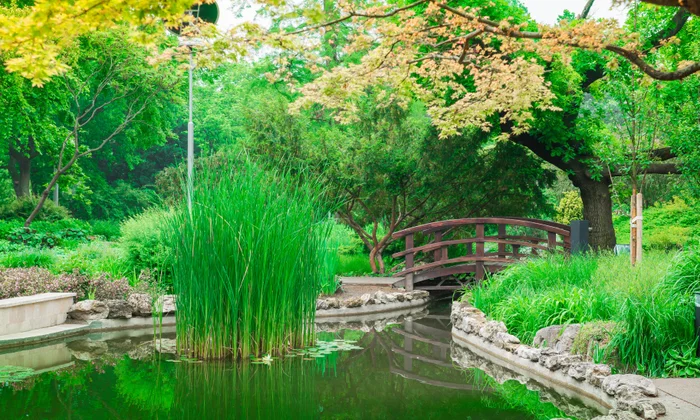
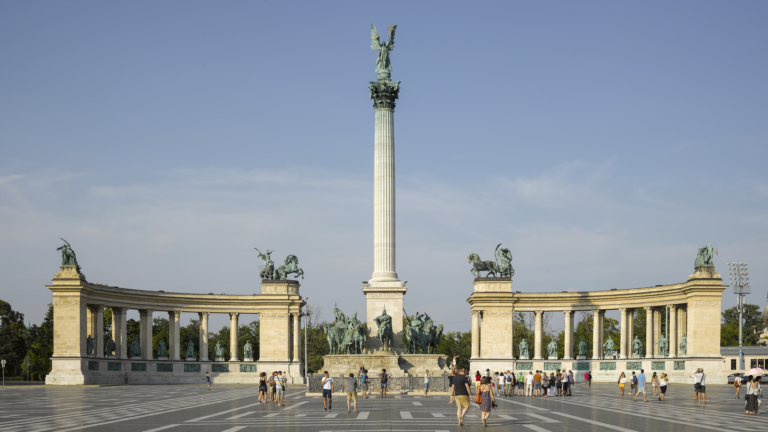
When walking through Budapest’s City Park (Városliget), just a stone’s throw from the grand monuments of Heroes’ Square, you suddenly stumble upon a sweeping architectural wonderland rising from the water. With its mix of sharp gothic spires, heavy Romanesque arches, and elegant pastel walls, the complex looks like a historic royal citadel that has guarded the city for centuries. This spectacular site is Vajdahunyad Castle (Vajdahunyad vára), a place where multiple eras of European history collide in a single courtyard. But the true story behind this fairytale fortress is one of the most bizarre, fascinating, and beloved pieces of urban lore in Central Europe. It is a massive monument that was never meant to last, built by an architect who essentially created a giant piece of historical copy-pasting. The 1000-Year Celebration: A Castle Made of Cardboard The story begins in 1896, a monumental year for Hungary. The country was celebrating…
In Budapest’s City Park, right near the big Széchenyi Thermal Bath, there’s a spot that’s both mysterious and captivating. When you first look at the bronze statue, it can give you a small shiver. It shows a lone monk cloaked in a hood that fully hides his face. This is the Anonymous Statue, honoring an incredibly significant but totally unknown person in Hungarian history. Even if you don’t care much for history or are just a myth enthusiast, or if you’re wandering around Vajdahunyad Castle, you shouldn’t miss this odd statue. Who Was “Anonymus”? To understand the statue, you kinda have to begin with the man behind it, or really with the strange fog around him. “Anonymus” wasn’t only some bedtime tale, it actually existed , but almost nobody keeps the real name in mind anymore. He served as a notary and as a chronicler for a Hungarian king, a…
When you move from a tight-knit Italian town like Jesi to a sweeping European capital like Budapest, the shift in lifestyle hits you fast. But it’s not just the language or the architecture that changes your daily routine—it’s how you move. In Jesi, the private car is the most used way of transport; without a steering wheel, you are practically stranded. In Budapest, however, owning a car is almost an inconvenience. Here, the city doesn’t belong to the automobile, but to an interconnected web of punctual trams and buses that seamlessly tie the metropolis together. The Scale of Infrastructure: Why Size Dictates the Strategy The root of this massive divergence in transportation habits comes down to the sheer geographic and demographic scale of each location.Jesi is a compact historical town in Italy’s Marche region, that has roughly 40,000 inhabitants. Because the distance from the medieval historic centre to the newer…
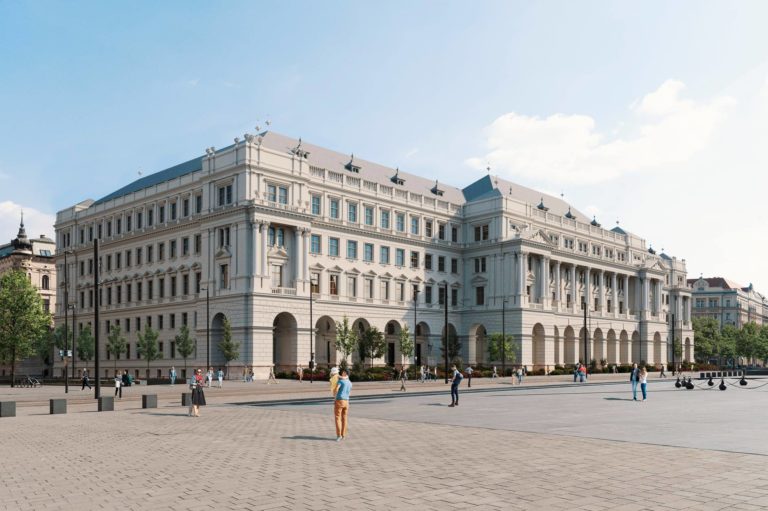
Located in central Budapest, Liberty Square is far more than a public plaza, it is a layered landscape of monuments and historic buildings that reflect Hungary’s turbulent past and evolving identity. From politically charged memorials to striking architectural landmarks, the square offers a compelling narrative in stone and bronze. This article explores the statues and structures that define Liberty Square, revealing the stories they tell about war, power, memory, and national transformation. Ronald Reagan Statue Honoring a Cold War Architect In June 2011, a seven-foot bronze statue of Ronald Reagan was unveiled in Budapest’s Liberty Square, commemorating the 100th anniversary of his birth. Though Reagan never visited Hungary, his leadership during the Cold War is credited with aiding the country’s liberation from Soviet influence. Hungarian Prime Minister Viktor Orbán emphasized Reagan’s role in “creating a new world for Central Europe” by supporting the dismantling of communist regimes. Symbolic Placement and…
Memento Park, located on the outskirts of Budapest, is a space dedicated to preserving statues and symbols of Hungary’s communist period. Far from being a traditional park, this place offers a direct look at the country’s recent past, through monuments that once occupied public spaces during the socialist regime. Visiting it is a unique experience: a tour among sculptures of leaders, soldiers and workers that, beyond their artistic value, represent a key period in Hungarian history. The first impact As soon as you arrive at the park, you don’t find an ostentatious entrance like that of the Museum of Fine Arts or the Hungarian National Museum, but a brick wall that already conveys a sense of serenity. Right at the entrance, as if waiting for us, are the statues of Karl Marx and Lenin.The three gates through which you enter the park already allow you to see some of the…
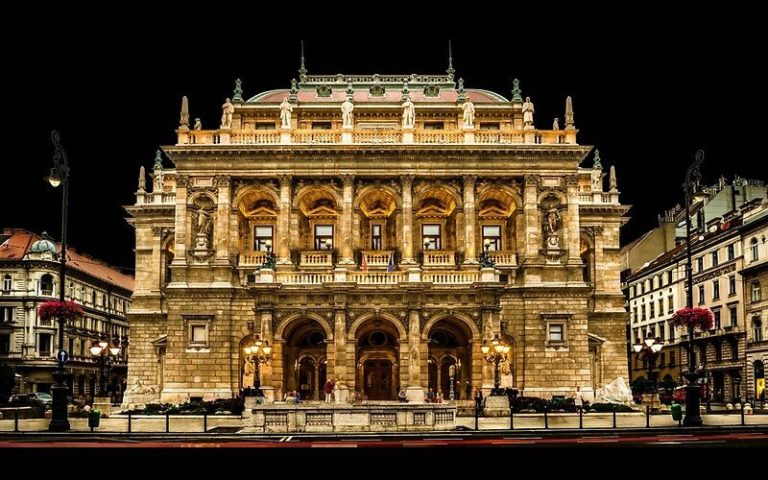
The Hungarian State Opera House, a Neo-Renaissance gem designed by Miklós Ybl, stands as a testament to Budapest’s rich cultural heritage and architectural grandeur. Opened in 1884, this iconic building has been a cornerstone of Hungary’s artistic landscape for over a century. Its opulent design, exceptional acoustics, and historical significance make it one of Europe’s premier opera venues. Beyond its role as a performance space, the opera house symbolizes Hungary’s dedication to the arts and its cultural identity. Whether attending a world-class performance or exploring its ornate interiors, a visit to the Hungarian State Opera House offers a glimpse into the artistic soul of Budapest. Architectural Beauty The Hungarian State Opera House is a masterpiece of Neo-Renaissance architecture, designed by the esteemed Hungarian architect Miklós Ybl. Completed in 1884, it stands as a testament to the grandeur and cultural aspirations of 19th-century Hungary. The building’s façade is adorned with intricate…
The Budapest Museum of Fine Arts (Szépművészeti Múzeum) is a cultural gem located in the iconic Heroes’ Square in the heart of the Hungarian capital. Founded in the early 20th century, this museum houses an extensive collection of more than 100,000 works spanning a broad spectrum of time, from Ancient Egyptian artefacts and classical sculptures to European paintings up to the 20th century. Thanks to the diversity and quality of its collection, it has established itself as one of the most important museums in Central Europe. The neoclassical building stands out both for its façade and its spacious interior rooms, which offer a quiet and well-organised environment in which to enjoy art in peace and quiet. Over the years, the museum has been able to adapt to the times, renovating its spaces and expanding its exhibition offer with temporary exhibitions that complement its permanent collection. Whether for academic interest, cultural…
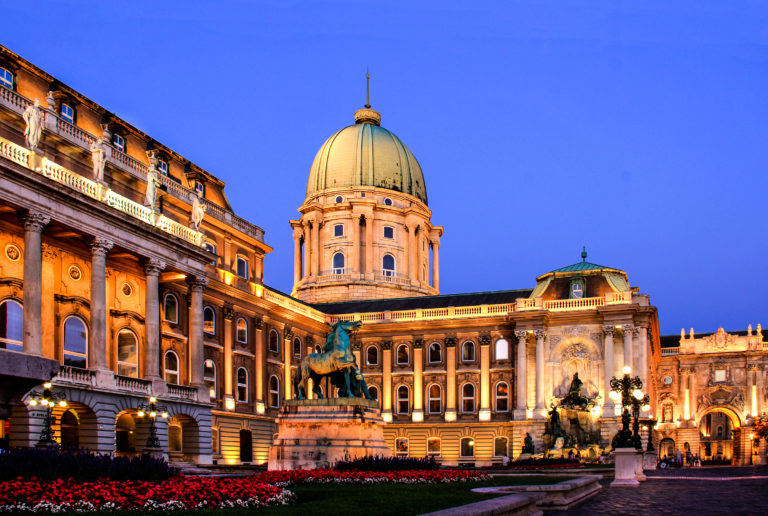
Perched majestically atop Castle Hill, overlooking the sparkling waters of the Danube River, Buda Castle stands as one of Budapest’s most iconic landmarks. With its grand domes, ornate façades, and sweeping panoramic views, the castle is not just a feast for the eyes, it’s a living testament to Hungary’s turbulent yet rich history. Once the royal residence of Hungarian kings, today Buda Castle invites visitors from around the world to step into a world where centuries-old architecture meets vibrant cultural life. Recognized as a UNESCO World Heritage Site, this architectural masterpiece has evolved over the ages, witnessing invasions, wars, and rebirths, each leaving its mark on the stone walls and cobblestone streets. Whether you’re drawn by its historical depth, artistic treasures, or simply the stunning views, Buda Castle is a must-see destination that captures the soul of Budapest. A Glimpse into History The story of Buda Castle begins in the…
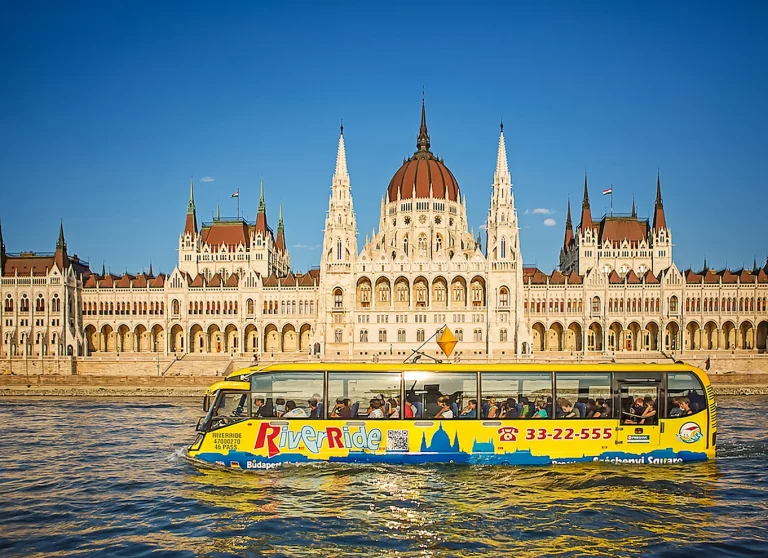
The Danube River, often celebrated as the “Queen of European Rivers,” is one of the continent’s most iconic waterways. Spanning approximately 2,850 kilometers, it is Europe’s second-longest river after the Volga. From its source in Germany’s Black Forest to its delta in the Black Sea, the Danube meanders through ten countries, binding them through a shared geography, history, and culture. A River Woven into European History Few rivers have witnessed as much history as the Danube. It served as a critical frontier for the Roman Empire, where outposts and forts lined its banks. In medieval times, it became a trade route linking the Holy Roman Empire to the Byzantine world. During the Ottoman expansion and the Austro-Hungarian reign, the Danube remained a central artery of power, movement, and influence. The river has also been a backdrop for revolutions, battles, and diplomatic exchanges. Empires rose and fell along its banks, and…