
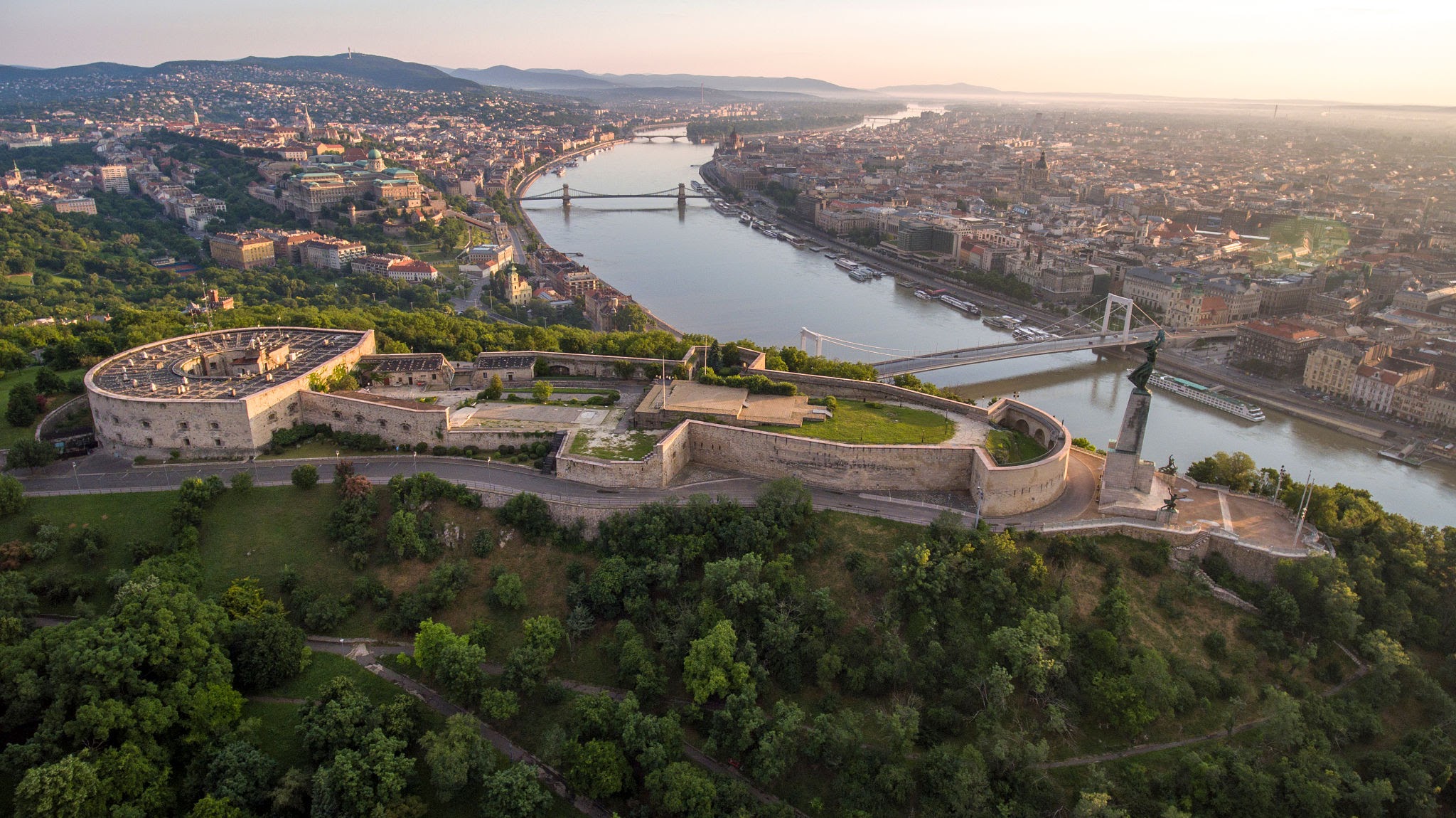
From any point in central Budapest if you look up, then you will be able to see a large stone castle looming from the top of Gellért Hill, with an enormous bronze woman standing with a palm leaf held to the sky. This is the Cittadella. For years it was considered simply the finest panoramic spot in Budapest.
But the story of the limestone monster is a dark and highly ironic one, which is absolutely fascinating. And if you come to Budapest today, then you will experience the most dramatic changes that have been seen on this hill for more than a century.
The History: A Fortress Built to Intimidate
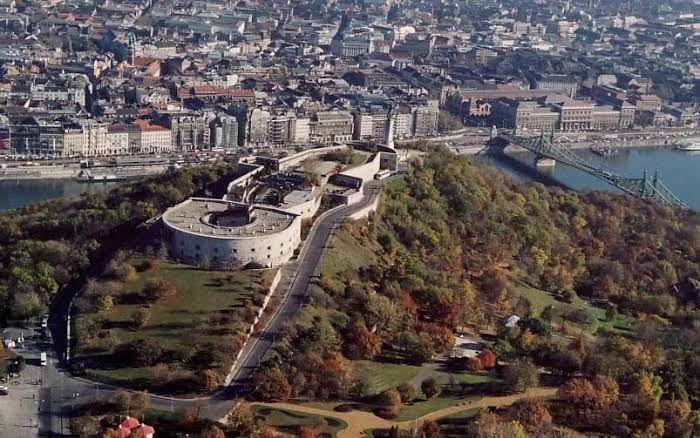
The majority of castles and fortresses are constructed by the city government in order to defend the citizens from the attacks by outsiders. However, the Cittadella is the absolute contradiction of this principle.
In 1848, Hungarians organized a massive, and almost successful revolution against the ruling Habsburg Empire. Once the revolt was defeated with the assistance of the Russian military (in the course of which there was heavy bloodshed), the Emperor ordered the construction of the Cittadella in 1854.
They did so in order to remind rebellious locals of who was the true ruler. By analyzing the design, it becomes evident that the cannons faced not an enemy attacking from the outside but the civilians of Pest from above.
Later, political tension was reduced, the Austro-Hungarian Empire was founded, and the military left the castle. So strong was the hatred for the structure among the Hungarians that they literally destroyed some portions of the wall to demonstrate its inability to threaten them anymore.
The Liberty Statue: The Woman Watching Over Budapest
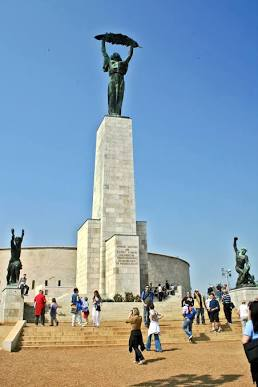
At the easternmost point of the castle complex, one will find the Liberty Statue (Szabadság-szobor). She is 14 meters tall and stands on a gigantic 26 meter tall pedestal. She cannot be missed, especially if you visit Budapest. Built in 1947, she was first erected by the Soviet Union as a tribute to their “liberation” of Budapest from Nazi Germany.
But in 1989, after the fall of Communism in Europe, Budapest had a tough choice to make. All other Soviet monuments that could be found were either removed or transferred to the Memento Park except for the Liberty Statue. It had become a part of the city’s skyline.
Rather than remove her, Budapest merely carved out the Soviet inscription and rededicated it “to all those who sacrificed their lives for the independence, freedom and prosperity of Hungary.”
Source: Wikipedia
The Rebirth: A New Era for the Fortress
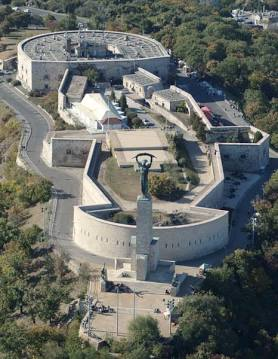
Today when one visits the Cittadella, one can easily recognize that it is experiencing an enormous renaissance. The inner courtyard has been merely a pavement covered with nothing but bare concrete (at one point in time it served as a forgotten bunker and hostel).
Nowadays the city is completing a vast redevelopment program. It has literally broken through the suffocating walls of stone in order to create sweeping stairways leading to the inside of the fortress for people to see it. The concrete courtyard will be replaced with a flourishing garden which will feature exhibition areas, lookout terraces and even a lake.
The ultimate revenge on architecture, a city turned a fortress into a community garden.
How to Reach the Top
Getting to the Cittadella is half the fun (or half the workout, depending on your perspective). You have a few great options depending on your energy levels:
- The Scenic Hike (The Classic Way): Start at the base of the hill near the Gellért Baths (accessible via the M4 Green Line or Trams 47/49) or from the Buda side of the Elisabeth Bridge. Follow the winding forest paths up. It’s a steep, moderate 15-to-20-minute hike, but the trees offer great shade, and there are several built-in lookout terraces to catch your breath and take photos along the way.
- The Easy Route (Bus 27): If you want to skip the cardio, catch Bus 27 from Móricz Zsigmond körtér (on the Buda side). Ride it up the residential back of the hill to the Búsuló Juhász (Citadella) stop. From there, it’s a flat, easy 5-minute walk to the fortress walls.
- Sightseeing Buses: Almost all major open-top Hop-On Hop-Off buses make a dedicated stop at the top of the hill, giving you enough time to jump out, soak in the view, and catch the next bus down.
Tip: Try to time your visit for about an hour before sunset. You can watch the golden light hit the Parliament building, and as dusk settles in, you’ll have the perfect vantage point to watch the city lights and the illuminated bridges switch on across the Danube.
Comments are closed.