
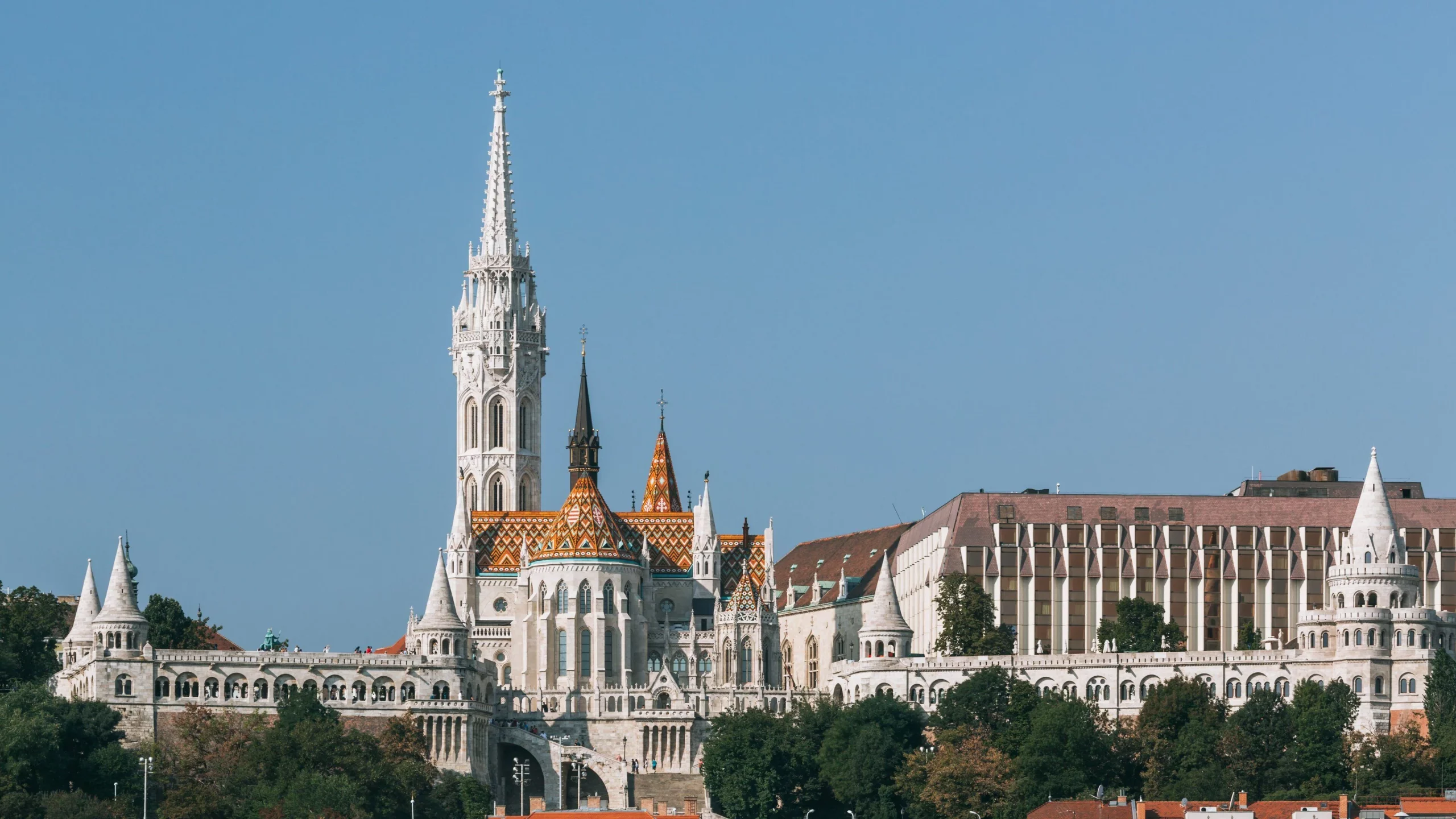
If you have come across pictures of Budapest, chances are that you must have seen Fisherman’s Bastion at least once. Its beautiful white stonework, conical towers, and magnificent view over the Danube river make it look like something out of a fairy tale.
However, it’s much more than just a scenic site; this place is a real gem of Hungarian architecture and history. This article covers all there is to know about one of the most enchanting places of Budapest, from construction through to how to enjoy it without the crowd.
Who Built It (And What’s With the Name?)
Despite looking like an ancient medieval fortress, Fisherman’s Bastion (Halászbástya) is surprisingly modern. It was built between 1895 and 1902 by architect Frigyes Schulek. His goal wasn’t to build a defensive fort, but rather a panoramic viewing terrace that would complement the stunning Matthias Church right next to it. It was constructed as part of Hungary’s massive Millennial Celebration, marking 1,000 years of the Hungarian state.
So, why “Fisherman’s” Bastion? In the Middle Ages, long before the current terraces were built, this stretch of the Buda Castle wall was defended by the local guild of fishermen. There was also a bustling fish market just down the hill in Watertown. Schulek kept the name to honor that history.
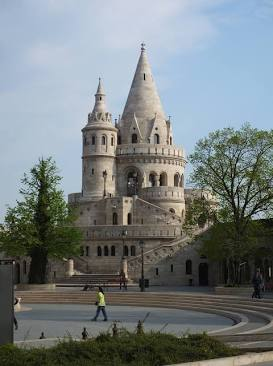
Those seven quirky, tent-like towers? They aren’t random. They represent the seven Magyar (Hungarian) chieftains who led their tribes into the Carpathian Basin to settle Hungary back in the year 895.
Expectations: The Interior vs The Exterior
The Fisherman’s Bastion is built in a T-shaped form around Matthias Church, offering some spectacular views of Pest, Hungarian Parliament and Margaret Island.
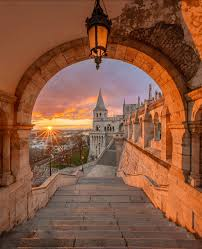
The Exterior (Staircase & Lower Terraces): The amazing set of stairs that lead visitors into the Fisherman’s Bastion are open for everyone for free. You will see beautiful stone arcades, secret little nooks and even the big bronze statue of St. Stephen (first king of Hungary) riding his horse.
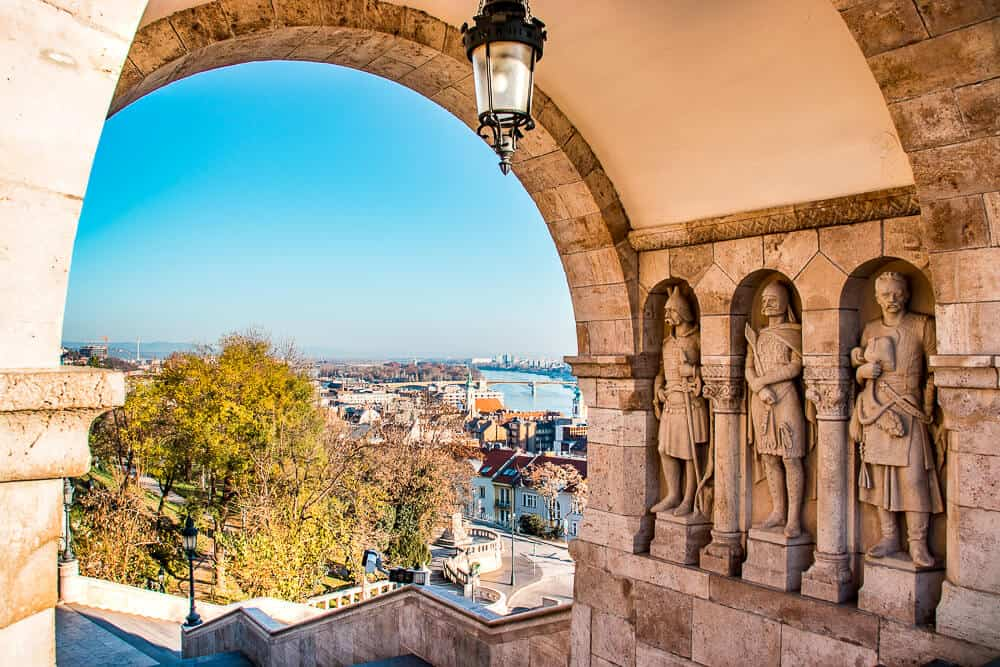
The Interior (Upper Arcades and Towers): These are the parts of the Fisherman’s Bastion which require ticket purchases during daytime hours. You will feel like wandering through a cloister while walking along these arcades which offer an ideal photo opportunity of the whole Parliament building.
How to Reach the Top
Getting up to the Buda Castle District is part of the adventure. You have three main options:
- The Scenic Route: Take the historic Buda Castle Hill Funicular (Sikló) from Clark Ádám Square (at the Buda end of the Chain Bridge). It drops you off near the Royal Palace, and it’s a short, beautiful walk over to the Bastion.
- The Easy Route: Hop on Bus 16 from Deák Ferenc Square or Széll Kálmán Square. It drops you off right at Szentháromság tér (Trinity Square), mere steps from the Bastion.
- By Walk: If you don’t mind a little cardio, you can walk up the winding paths and stairs from the Buda riverbank. It takes about 10–15 minutes and offers great views along the way.
Tips & Raccomendations
- Go at Sunrise: If you want the terraces to yourself and the softest, most magical light hitting the Parliament building, set your alarm. Midday gets incredibly crowded with tour groups, but early morning is peaceful and empty.
- The Ticket Trick: The lower balconies and terraces are always free. The upper towers require a ticket (around 1,700 HUF or ~€4.50) during peak daytime hours. However, the upper towers are completely free before 9:00 AM and after 7:00 PM (extended to after 9:00 PM in the summer months).
- Grab a Coffee: There is a café tucked right into the arches of the Bastion. While you’ll pay a premium for the location, sipping an espresso or a glass of Hungarian wine while looking out over the Danube is an unforgettable experience.
Comments are closed.