
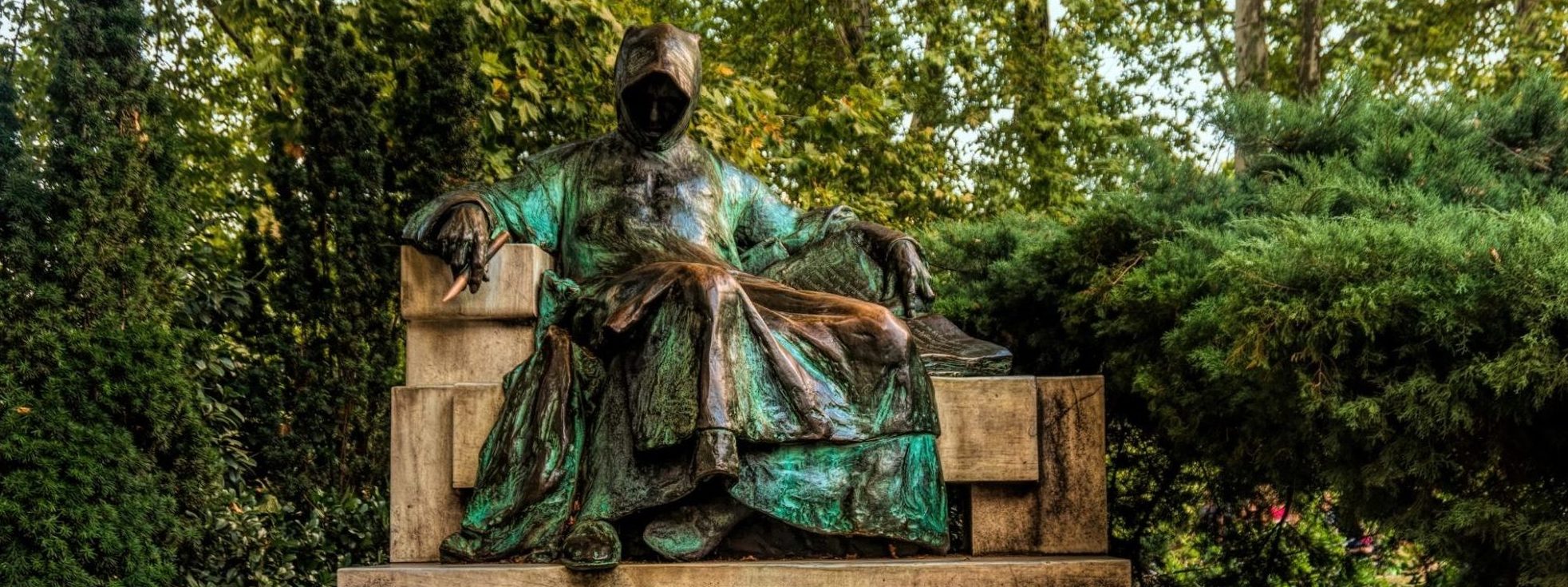
In Budapest’s City Park, right near the big Széchenyi Thermal Bath, there’s a spot that’s both mysterious and captivating. When you first look at the bronze statue, it can give you a small shiver. It shows a lone monk cloaked in a hood that fully hides his face. This is the Anonymous Statue, honoring an incredibly significant but totally unknown person in Hungarian history.
Even if you don’t care much for history or are just a myth enthusiast, or if you’re wandering around Vajdahunyad Castle, you shouldn’t miss this odd statue.
Who Was “Anonymus”?
To understand the statue, you kinda have to begin with the man behind it, or really with the strange fog around him. “Anonymus” wasn’t only some bedtime tale, it actually existed , but almost nobody keeps the real name in mind anymore.
He served as a notary and as a chronicler for a Hungarian king, a Béla of some kind. The issue is, there were four different King Bélas, so people kept debating for ages which one it was, like nobody could ever settle it. Nowadays, most historians lean toward the idea that he worked for King Béla III, the one ruling from 1172 to 1196. When he wrote, he didn’t give his whole name, he only used “P. dictus magister,” which is kinda like dropping “Master P” as a placeholder. After that, nobody managed to figure out what the “P” meant, so he gradually became known as Anonymus, full stop.
Also, we can say he wasn’t some casual dabbler. Historians think, with pretty strong confidence, he was a well-educated nobleman. And just by how the text is written, you get the sense he probably studied at the University of Paris, that usual magnet for the sharpest minds of the period. His name is gone now, sure, but his background, well… it reads as obvious.
The Gesta Hungarorum: Myth, Blood, and History
Anonymus is kind of famous, like really famous, for putting together one huge monumental text: the Gesta Hungarorum (The Deeds of the Hungarians). It was written in Latin somewhere around the turn of the 13th
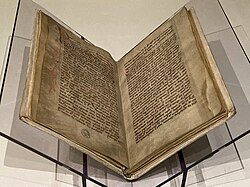
century , and it’s the oldest chronicle that still survives , telling the history of the Hungarian people.
The Gesta mostly gives off this epic, almost cinematic kind of story about how the Magyar tribes kept moving around , starting near the Ural Mountains, then they cross over the land, after that they enter the Carpathian Basin and later they conquer the territory that would eventually become Hungary. There are plenty of details about the seven chieftains, the legendary leader Árpád, and also the well-known “Blood Oath” where the leaders mix their blood together in a chalice, to seal their lifelong pact, you could say.
Today, modern historians argue that Anonymus blended genuine historical events with folklore, myths, and legends, sometimes not in the most straight line manner. Still, his work remains a cornerstone foundation text for Hungarian national identity. Without this nameless scribe, a lot of early Hungarian mythology would have vanished, or so it feels like.
The Masterpiece of Miklós Ligeti
The statue we see today was made by the well known Hungarian sculptor Miklós Ligeti and later, it was unveiled in 1903. Ligeti was first hired to craft a statue of Anonymus, as part of the 1896 Hungarian Millennium, which was this big nationwide celebration, basically 1,000 years since the Magyars settled and conquered the Carpathian Basin.
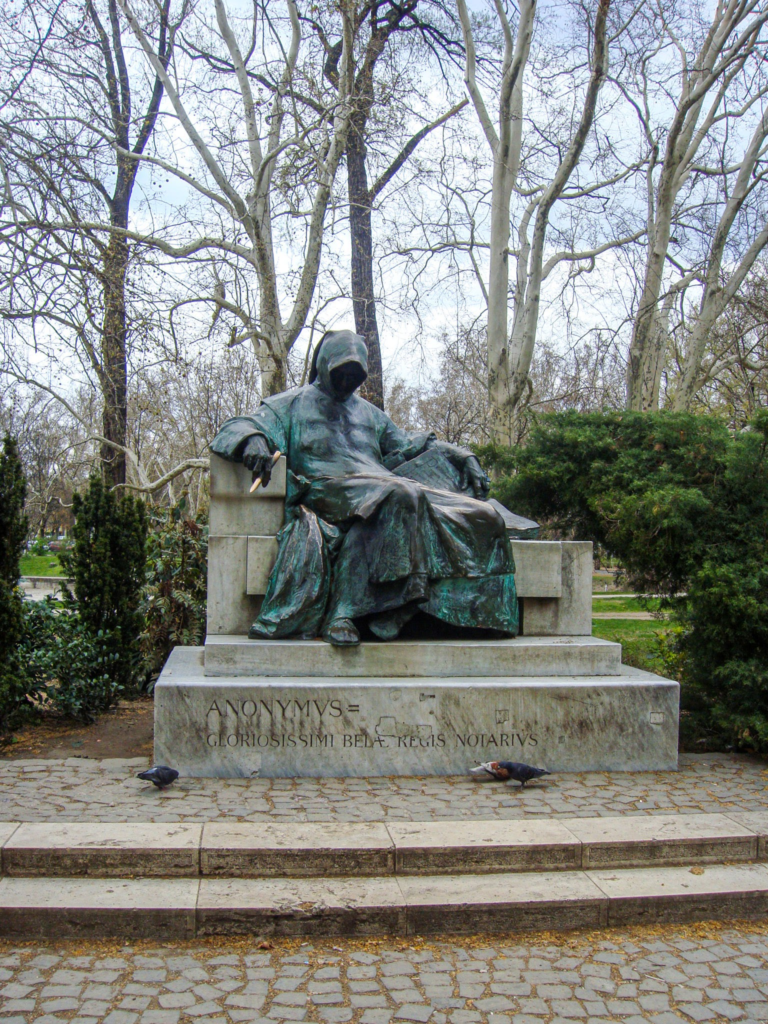
Ligeti faced this sort of strange artistic puzzle: How do you shape a man whose face, age, and identity are completely unknown, like really unknown?
And the solution is pure genius, in a calm way. He didn’t try to invent a new face at all. Instead he leaned right into the mystery, and kind of let it do the work. Ligeti sculpted the figure sitting on a stone bench ,wearing the traditional robes of a medieval monk or scholar. The hood comes forward, pulled low, and it sends the face into an eternal impenetrable shadow. That design move solves the historical problem of identity too, but it also adds this eerie, atmospheric presence which keeps pulling visitors closer, almost without them noticing at first.
The Legend of the Golden Pen
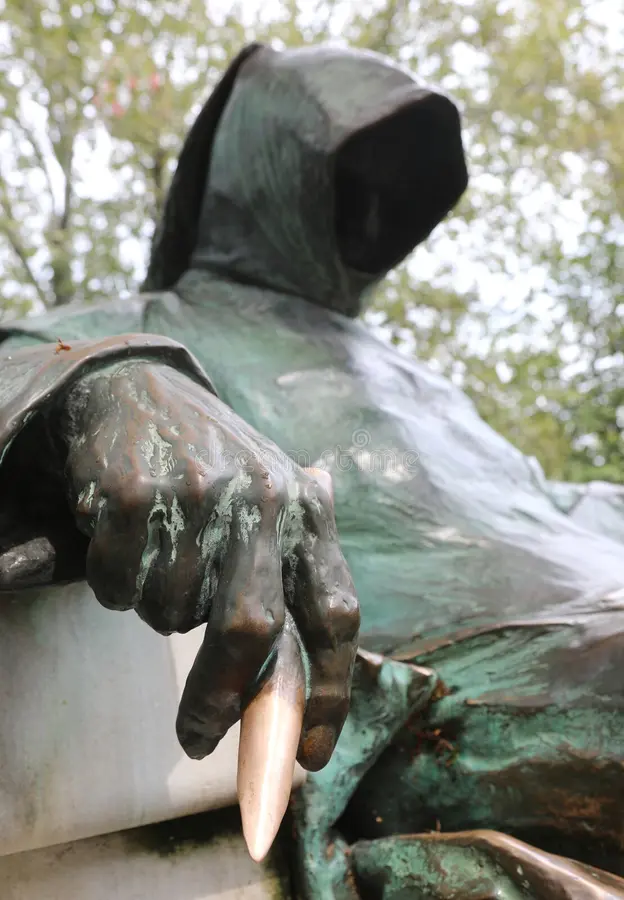
If you look closely at the statue s right hand, you ll notice something kinda striking. The bronze quill he holds looks gleaming and polished, it s shining like gold against the dark oxidized patina of the rest of the monument.
This isn’t really an artistic choice, it is more like the result of over a century of human touch. As the local Budapest legend goes, touching the pen of Anonymus brings inspiration, good luck, and also really excellent writing skills.
For decades, the statue has kind of been a pilgrimage spot for all sorts of people, including:
Writers and journalists dealing with writer s block, hoping the spirit of the great chronicler will give them a spark of genius, or at least a workable idea.
University students who visit the statue before big exams, rubbing the pen for good luck and clear thinking.
So whether you re working on a novel, studying for your exams, or you just want a little bit of Hungarian luck, giving the pen a quick rub is a Budapest tradition you really shouldn t skip.
How to Visit: Exploring the Surroundings
The statue is located in the courtyard of Vajdahunyad Castle, right in the heart of City Park (Városliget). Finding it is part of the adventure.
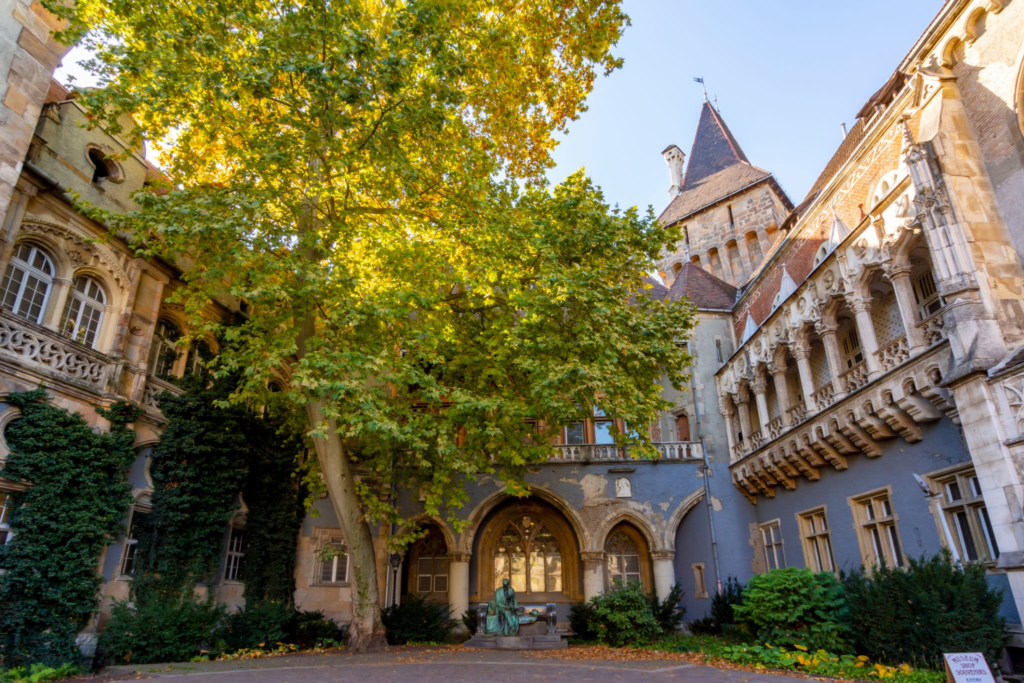
After admiring the statue and touching the pen, you sort of end up in the perfect spot, to wander around the rest of the park , sort of naturally:
- Vajdahunyad Castle : This place was first put together out of cardboard and wood for the 1896 Millennium exhibition , and it became so famous that later they rebuilt it in stone. You’ll notice this real mishmash of Romanesque, Gothic, Renaissance , and Baroque architectural moods.
- The City Park Lake : When it’s warm, you can rent a rowboat and drift along for a calm float, nothing rushed. Then in the winter, the same lake turns into the City Park Ice Rink, which is considered one of the oldest and largest outdoor ice rinks across Europe.
- Széchenyi Thermal Bath : It’s only about a five-minute walk from the statue, so you can wrap up your history wandering by dipping into the “healing” 40°C thermal waters. This is the biggest bath complex in Europe, so yeah, it’s quite the soak.
Comments are closed.