Tag

popular

Browsing

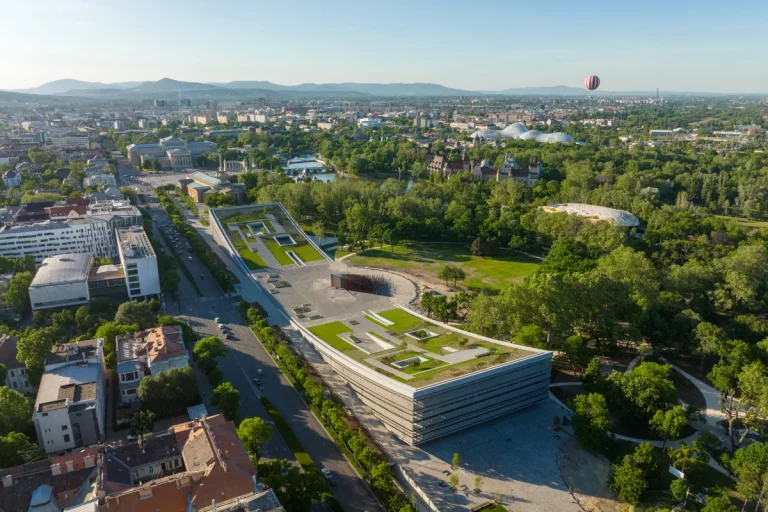
If you head into the green heart of Budapest’s City Park (Városliget), you will stumble upon an architectural marvel that looks like a giant, futuristic skateboard ramp covered in lush meadows. This is the new Museum of Ethnography (Néprajzi Múzeum). Instead of building a traditional, imposing monument that blocks the landscape, the architects did something revolutionary by designing a structure that curves gracefully into the earth, turning its entire, massive roof into a public, walkable hanging garden. This elevated urban park has quickly become a favorite sanctuary where city dwellers and travelers come to relax, walk, and experience the city from a completely fresh vantage point. A Bridge Between Nature and Culture Completed as part of the ambitious Liget Budapest Project, this award-winning building was designed by the Hungarian studio NAPUR Architect. The concept is beautifully poetic: the building is designed as two sweeping hills that meet in the center,…
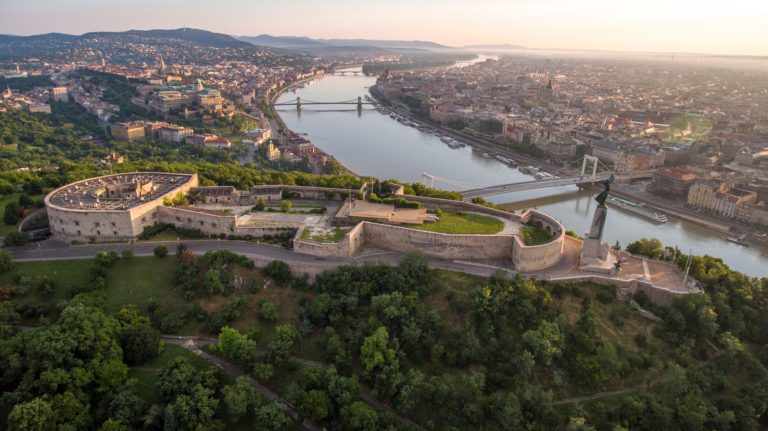
From any point in central Budapest if you look up, then you will be able to see a large stone castle looming from the top of Gellért Hill, with an enormous bronze woman standing with a palm leaf held to the sky. This is the Cittadella. For years it was considered simply the finest panoramic spot in Budapest. But the story of the limestone monster is a dark and highly ironic one, which is absolutely fascinating. And if you come to Budapest today, then you will experience the most dramatic changes that have been seen on this hill for more than a century. The History: A Fortress Built to Intimidate The majority of castles and fortresses are constructed by the city government in order to defend the citizens from the attacks by outsiders. However, the Cittadella is the absolute contradiction of this principle. In 1848, Hungarians organized a massive, and…

Have you ever been strolling around the banks of the Danube, minding your own business, when suddenly a flashy yellow bus comes right off the road, dives straight into the water? No need to be alarmed, the driver did not doze off behind the wheel. What you have just seen is the RiverRide, the amphibious water bus that Budapest is known for! If you are torn between a standard bus tour of the city and a boat ride, this funny yellow bus takes care of both of your needs. Below is what it is like riding this one-of-a-kind attraction in Budapest. What is an Amphibious Bus? At first glance, the RiverRide looks like a normal, albeit slightly bulky, tour bus. It has standard bus seats, large panoramic windows, and a tour guide with a microphone. But underneath, it’s built on a custom-designed chassis that functions entirely as a boat. Because…

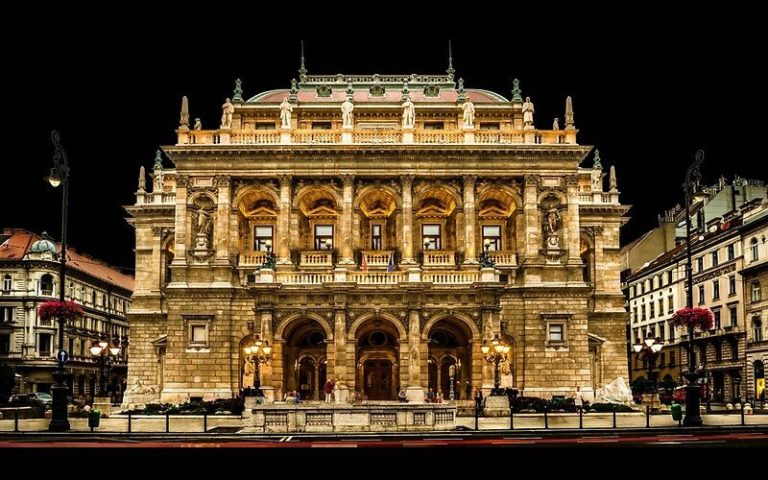
As you walk down Andrássy Avenue, Budapest’s elegant and prestigious avenue, you cannot overlook the magnificent architectural marvel that adorns the road. Not only does the Hungarian State Opera House (Magyar Állami Operaház) serve as a place of magnificent operatic performances, but it also serves as a magnificent testament to the high culture of Europe, political aspirations, and luxurious living in its purest form. Step into the opera house, and you will find yourself thrown back into an age where going to the opera was an indication of opulence and power. Royal Competition in Neo-Renaissance Stone The history of the Opera House begins in 1875, during the glamorous dual monarchy of the Austro-Hungarian Empire. The city was developing rapidly and had the desire to build a cultural institution capable of rivaling other theaters on the European continent. The emperor agreed to finance the building of such an opera house, but…

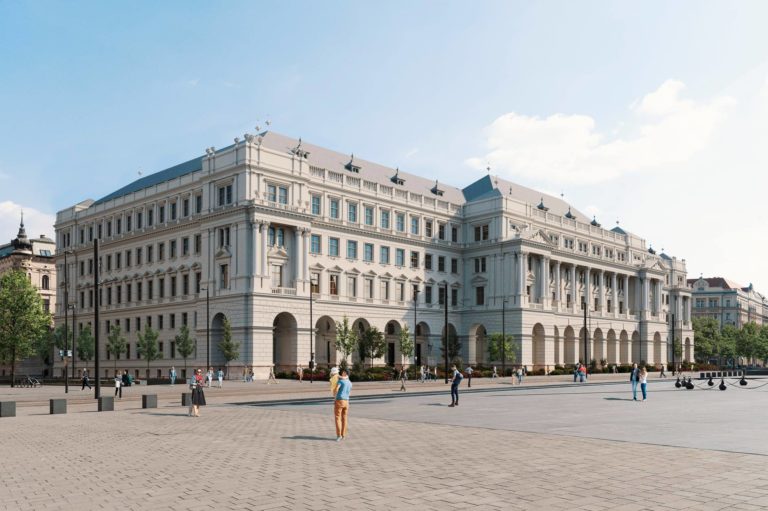
As you walk through Kossuth Square, your attention will automatically be caught by the imposing grandeur of the Hungarian Parliament Building. But, should you turn away from the river and towards the Parliament, you will notice another building, just as imposing as the Parliament, taking up the whole block opposite it. This is the Ministry of Agriculture (Agrárminisztérium). With its long arcades of neo-Renaissance arches, it appears to be a serene and noble palace for bureaucrats, yet this very building has some of the darkest wounds in the history of the city. Palace for the Country and Its Inhabitants This palace was built in 1887 by the famous architect, Gyula Bukovics. In the late 19th century, there was an immense growth in the economy in Hungary, where the agriculture played a major role. The government wanted a building to represent the significance, and thus they did not hesitate in the…

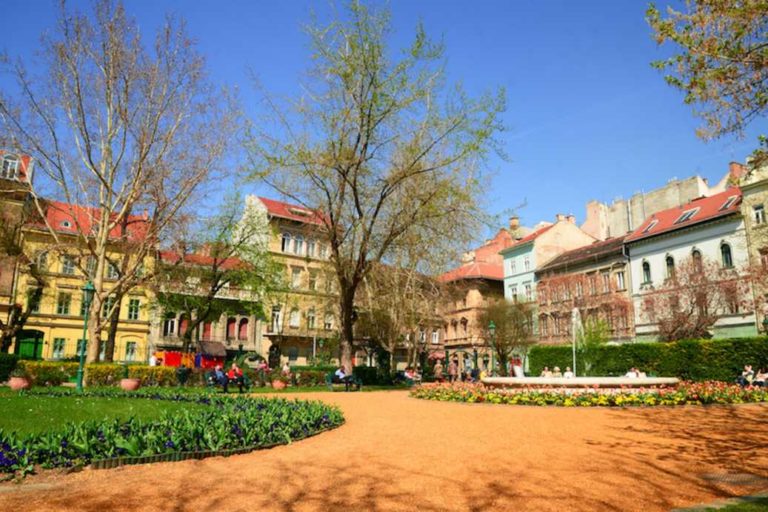
If you find yourself amidst the confusion at the busy crossroads of Astoria or Kálvin tér, where there are noisy cars and screeching trams passing around, it’s difficult to imagine that just three minutes’ walk will lead you into absolute silence. Hidden behind a row of old houses in the fifth district of Budapest is Károlyi Garden (Károlyi-kert). Fenced in by the high gates made of wrought iron, this is the oldest public garden left in Pest. This place is not only a garden but a perfect romantic oasis from the past times. Here are reasons for this garden to make the cut. The History: From Private Palace to Public Treasure The history of the garden begins with the extremely rich aristocratic family of Károlyi. At the end of the 18th century, the family erected an enormous Classicist palace (which currently forms the northern border of the park) along with…

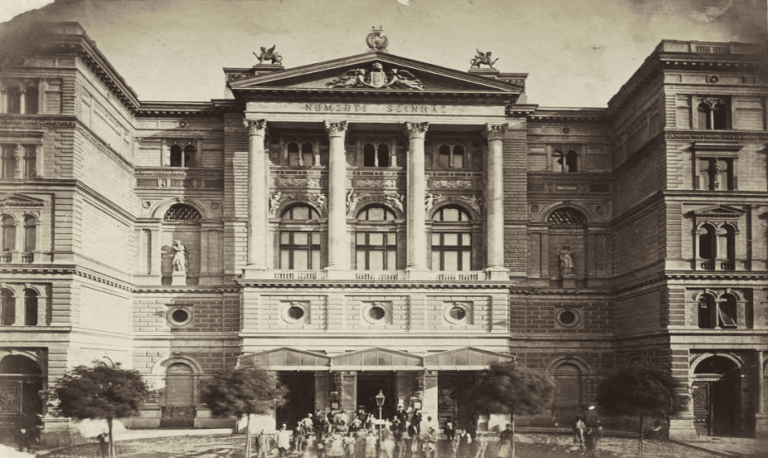
Should you be wandering through one of Budapest’s most bustling intersections, Blaha Lujza Square, surrounded by the rush of people, trams, and ugly concrete buildings, it can be rather difficult to concentrate on anything but all the chaos surrounding you. However, once you notice the strange dark stones protruding from the pavement, forming some sort of monument blocks, you will soon realize that there is more than just street art here. In fact, these stones are a monument erected in memory of the tragic destruction of the Old National Theatre. The Golden Age of the People’s Theater Our tale starts in the year 1875 when an opulent eclecticism-style building opened its doors here, called the Népszínház, otherwise the People’s Theater. An immense and magnificent building, adorned with an elaborate facade, arches, and spectacular halls that could accommodate thousands of enthusiastic visitors. In 1908, the building became home to the Hungarian…

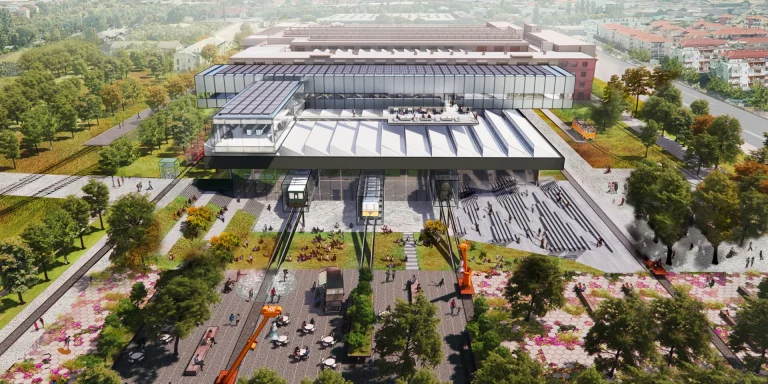
There may be just one museum in Budapest which reflects the pure energy of human inventions and innovations and this is the Hungarian Technical and Transportation Museum (Közlekedési Múzeum). Be it an interest in railways, vintage cars or anything related to the engineering behind moving a whole city; this museum is surely one of the most ancient and interesting of such kind in Europe. However, for a visit to this place it will take some insider information because the museum has gone through quite a dramatic change in recent years. And here is all you need to know about its history and collections. A Century in City Park: The History In order to get a better understanding of the museum, we need to take a look back at 1899. The first incarnation of the museum in City Park (Városliget) opened during the 1896 Millennium Exhibition and it was an elegant,…

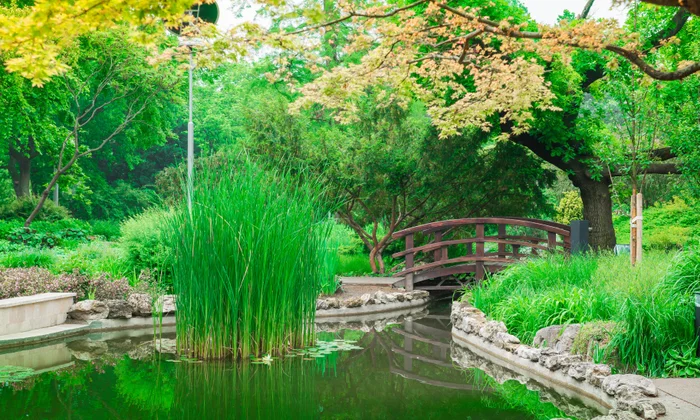
When you feel the need to find some inner peace amid the bustling streets of Budapest, but at the same time do not want to leave the urban environment, then one secluded place is sure to give you just what you are looking for. This quiet spot located in the northern part of the Margaret Island is called the Japanese Garden, which, in its native language, means Japánkert. This is more than just an area with Asian flora; this is an artistically crafted living masterpiece that can be traced back to the end of the 19th century. The Vision of a Master Gardener The garden was founded in 1882, and its creation was inspired by the vision of György Magyar, who was at that time the main gardener at the royal estates located on the island. In the last decades of the nineteenth century, there occurred the craze for all…

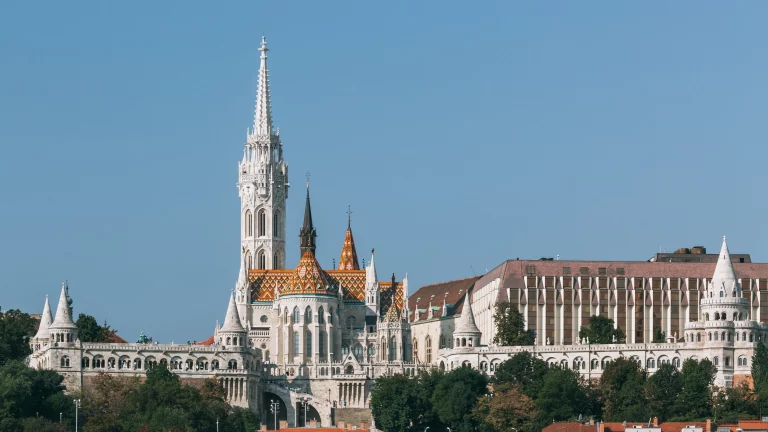
If you have come across pictures of Budapest, chances are that you must have seen Fisherman’s Bastion at least once. Its beautiful white stonework, conical towers, and magnificent view over the Danube river make it look like something out of a fairy tale. However, it’s much more than just a scenic site; this place is a real gem of Hungarian architecture and history. This article covers all there is to know about one of the most enchanting places of Budapest, from construction through to how to enjoy it without the crowd. Who Built It (And What’s With the Name?) Despite looking like an ancient medieval fortress, Fisherman’s Bastion (Halászbástya) is surprisingly modern. It was built between 1895 and 1902 by architect Frigyes Schulek. His goal wasn’t to build a defensive fort, but rather a panoramic viewing terrace that would complement the stunning Matthias Church right next to it. It was…