
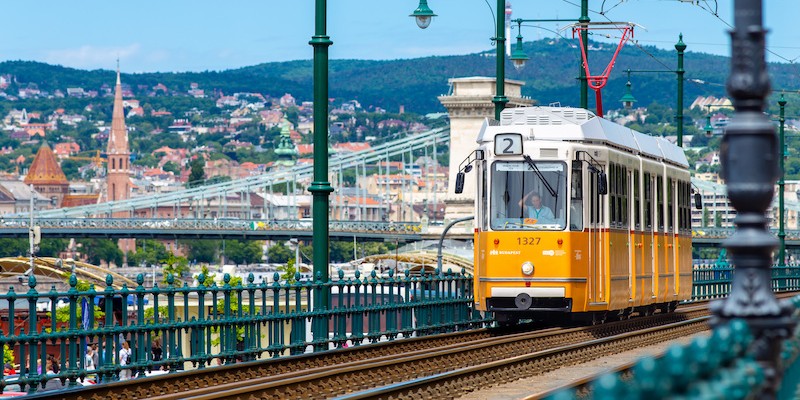
When you stay in Budapest for more than just a few days, public transport quickly becomes part of your everyday life. Metro, trams, buses and trolleybuses are everywhere, and after a short time you stop thinking too much about how to reach a place: you simply open BudapestGO, choose the route and go.
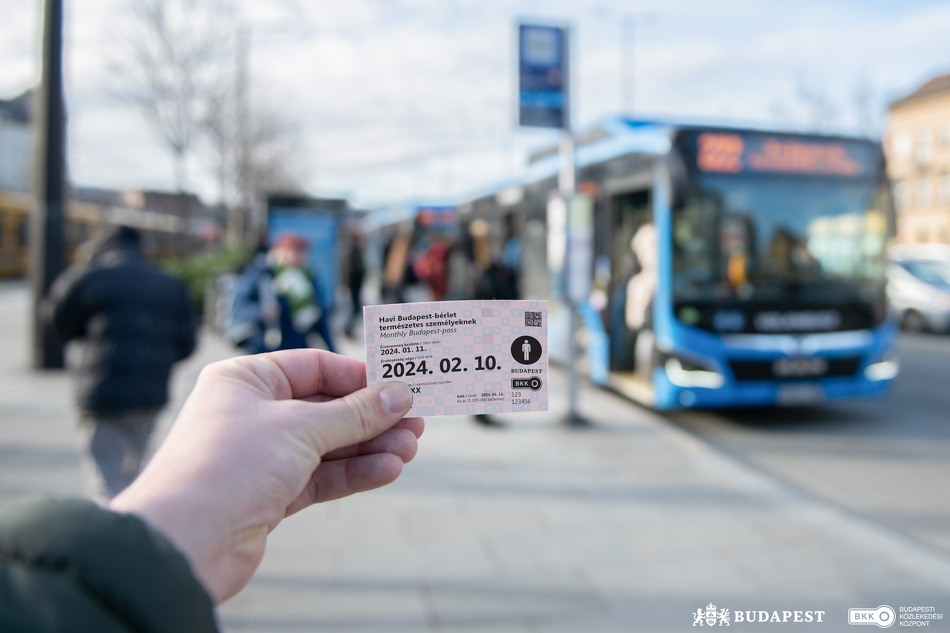
For someone staying in the city for one month, like us, one of the best things is the monthly Budapest Pass. It costs 8,950 HUF, which today is around €25, and allows unlimited travel for one month on almost all public transport inside Budapest.
And considering how much we use it every day, it is probably one of the best-value things we bought during our stay.
One pass, almost the whole city
The interesting thing about Budapest is that public transport is not based only on the metro.
There are four metro lines, M1, M2, M3 and M4, but around them there is a much larger system made of trams, buses, trolleybuses and suburban trains. The monthly Budapest Pass can be used on almost all BKK services inside the city, including the four metro lines, the HÉV suburban railway lines and some MÁV trains and regional buses when travelling within Budapest.
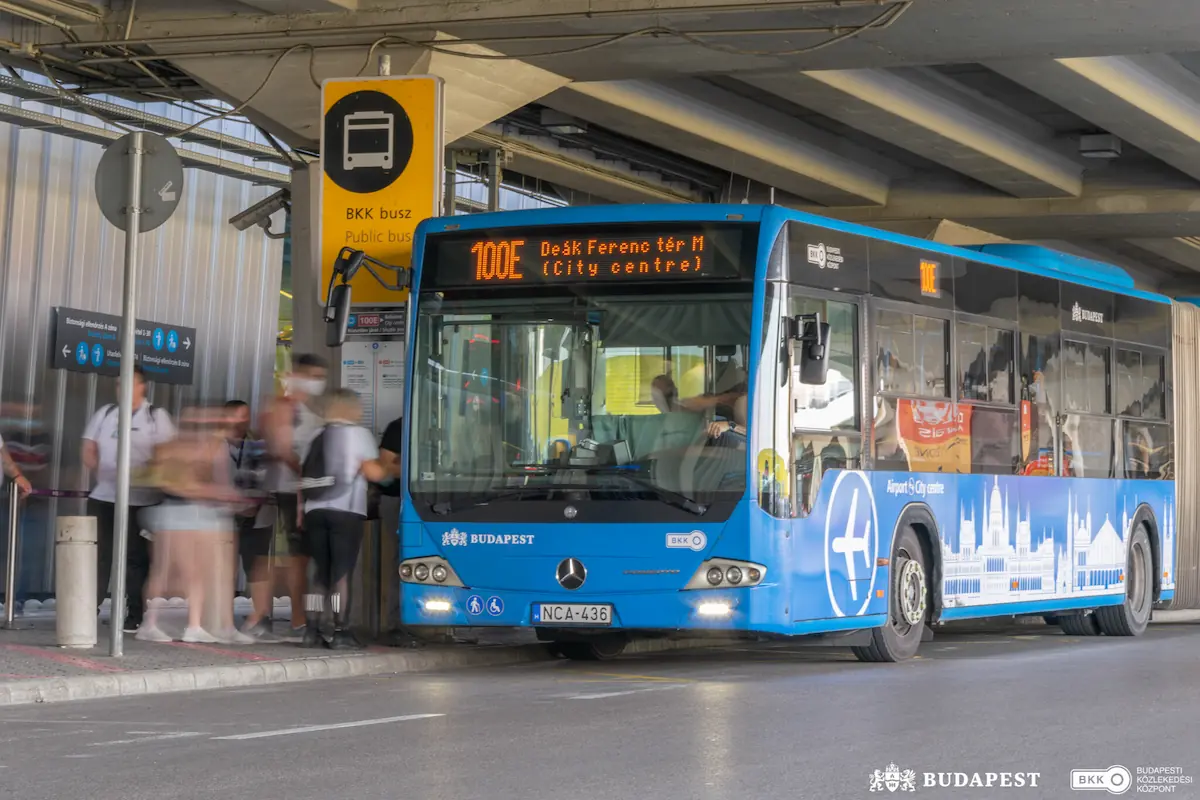
The main exception tourists should remember is the 100E Airport Express, which requires a separate ticket.
This means that during a normal day you can take a metro in the morning, change to a tram, use a bus later and come back at night without thinking about the cost of every single journey.
That makes a big difference when you are actually living in the city instead of visiting it for a weekend.
The metro: simple and fast
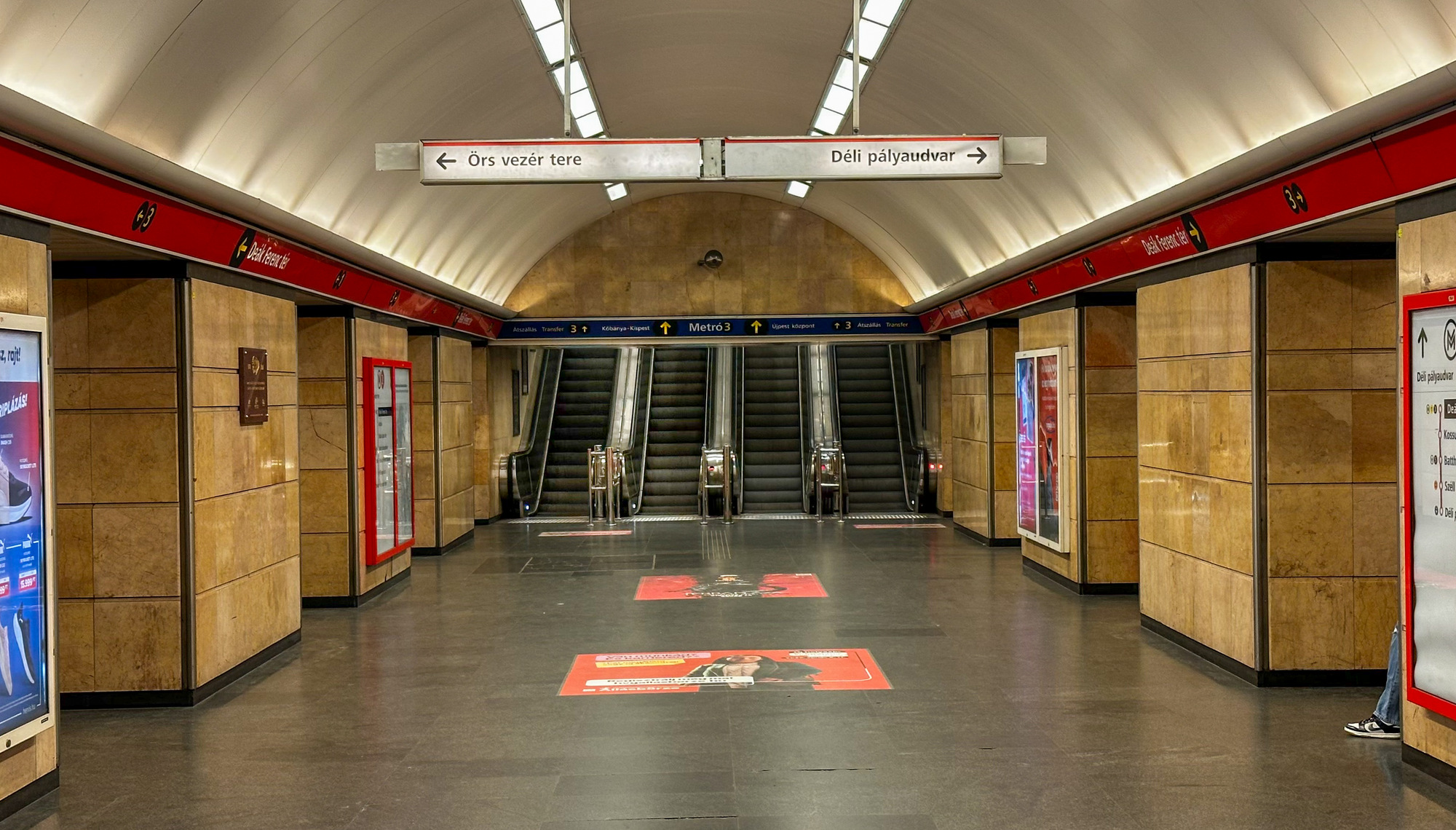
Budapest has four metro lines, and each one has quite a different character.
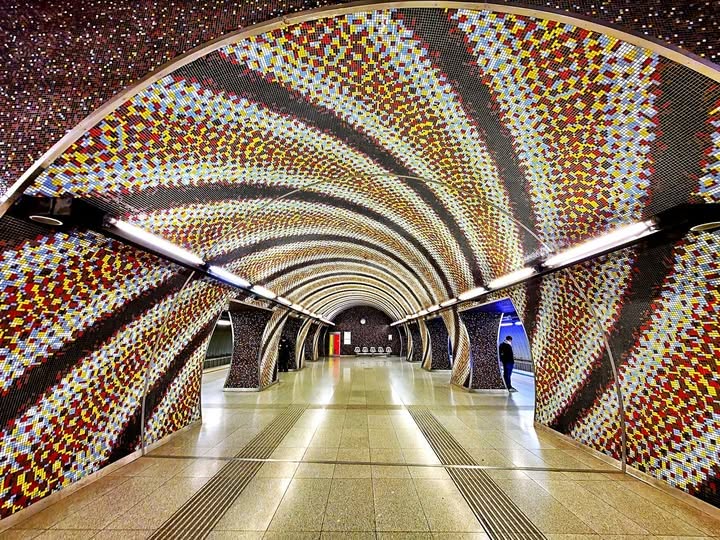
The M1, the yellow line, is small, old and almost feels like an attraction by itself. The M2 crosses the city from Buda to Pest, while the M3 is very useful for travelling north-south. The modern M4 connects important areas such as Kelenföld and Keleti railway station.
The network is not enormous compared with some European capitals, but the important difference is what happens when the metro ends: there is normally a tram, a bus or another connection waiting to continue the journey.
BKK says that around 1,900 vehicles operate across Budapest on a normal day, with more than 43,000 departures from buses, trams, trolleybuses, metro and suburban rail combined.
In the central areas, this makes the system feel very frequent. Instead of checking a timetable before every journey, most of the time we simply go to the stop and wait for the next vehicle.

Trams are almost as important as the metro
Probably the biggest difference we noticed compared with many Italian cities is the importance of the tram network.
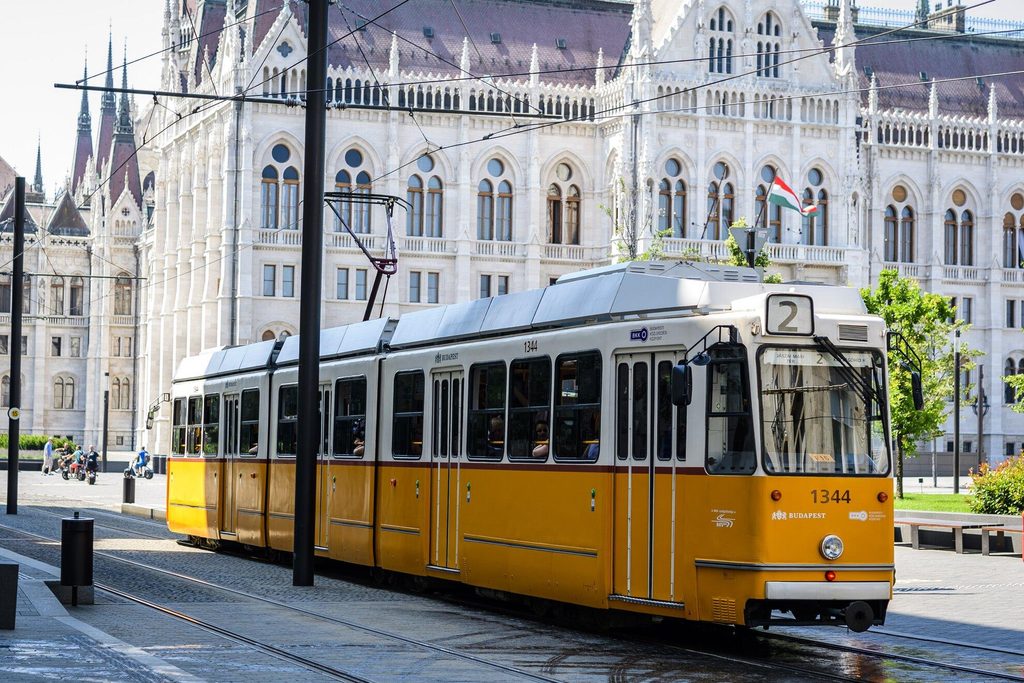
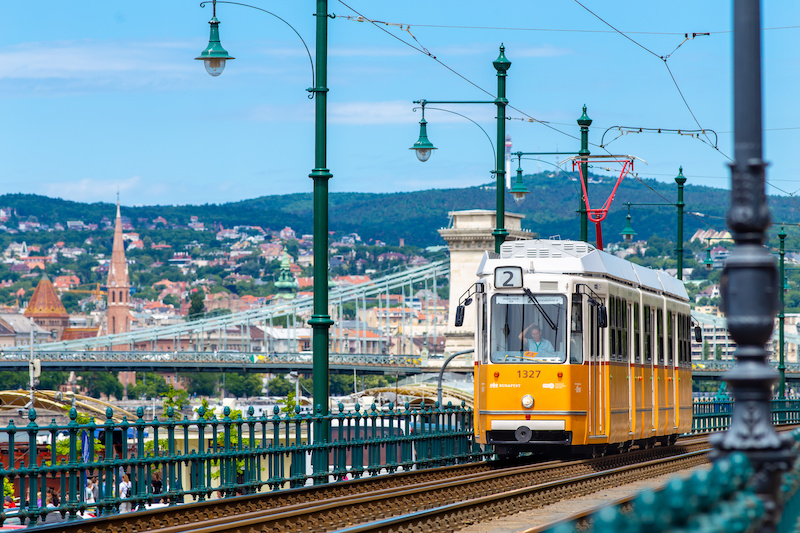
The yellow trams are one of the symbols of Budapest, but they are not there only because they look nice in photos. They are an essential part of the transport system.
Lines such as 4 and 6 cross some of the busiest parts of the city, while tram 2 runs along the Danube and is also one of the most beautiful ways to see Budapest.
Tram 6 even operates throughout the night, and the city also has a large network of night buses, so public transport does not completely disappear when the metro closes.
This is especially useful when going out in the evening: taking a taxi is often unnecessary.
Buses and trolleybuses fill the gaps
Where there is no metro or tram, there is usually a bus.
This is what makes the network feel so widespread. You can move around the historic centre, residential neighbourhoods and areas farther from the main tourist attractions without needing a car.
Budapest also still has many trolleybuses, easily recognisable because they look like buses but are powered by overhead electric wires.
They are particularly common on the Pest side.
At first the number of lines can look confusing, but after a few days it becomes surprisingly easy, especially because BudapestGO shows which stop to use, real-time departures and where to change.
BudapestGO makes everything easier
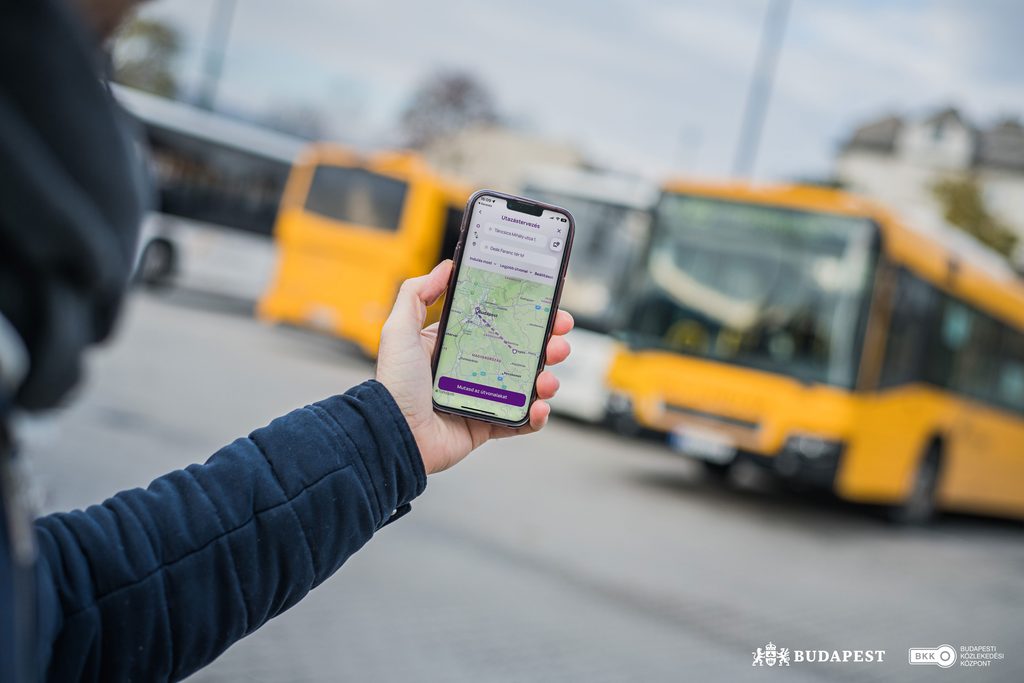
For us, BudapestGO is probably the most useful app for moving around Budapest.
You can use it to plan a journey, check departures, see service changes and buy digital tickets or passes. BKK also recommends the app for real-time travel information.
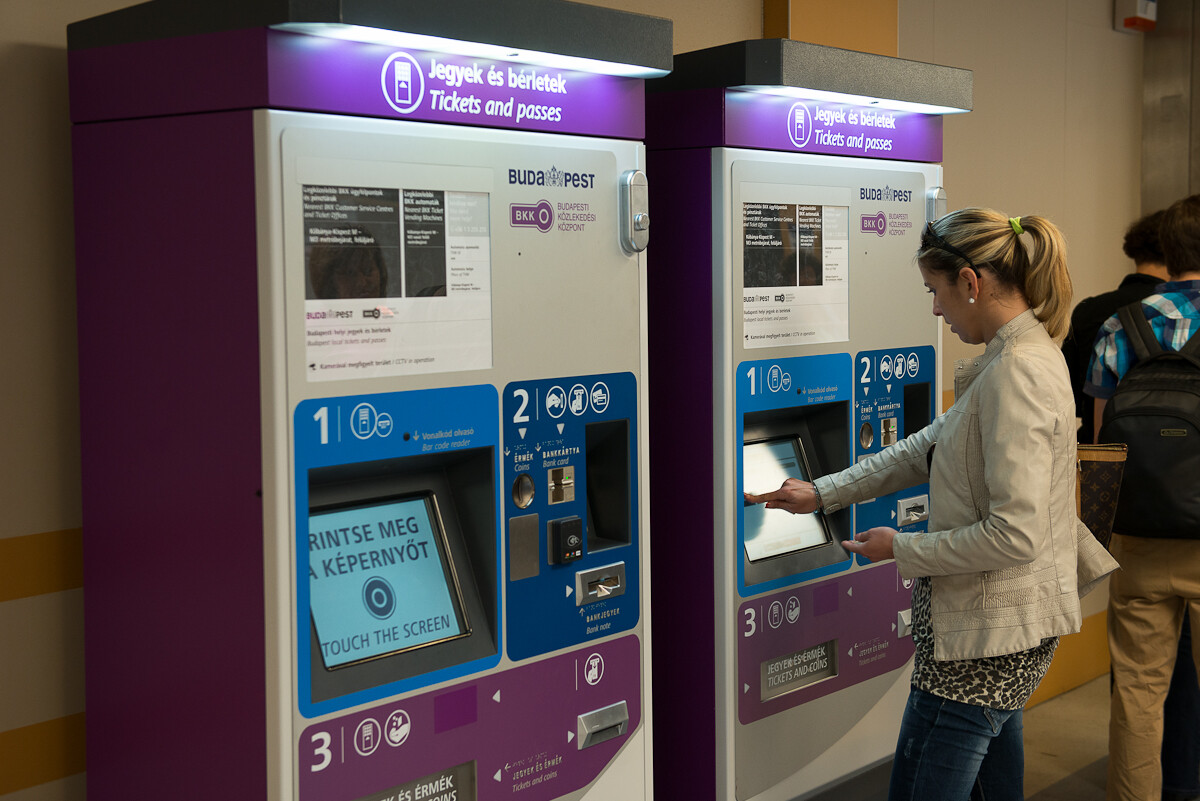
With a monthly pass you do not need to buy a new ticket for every journey. With a digital pass, however, you may still need to scan the QR/NFC code when entering metro stations or when boarding services where passengers must enter through the front door.
After you understand this system, using public transport becomes almost automatic.
How does it compare with Italy?
This is where Budapest surprised us the most.
Of course, there is no single “Italian public transport system”. Milan, Rome, Bologna or Naples are very different from each other.
Milan, for example, has an excellent metro network with five lines, so in terms of metro coverage it can compete very well with Budapest. Rome currently has the A, B/B1 and C metro lines, combined with buses, trams and urban railways.
The biggest difference for us is therefore not simply the number of metro lines. It is the integration and density of the entire network.
In Budapest, metro, tram and bus often work together. If the metro does not go exactly where you need, another high-capacity line usually continues the journey. Because different services overlap in the centre, waiting times often feel short and you rarely feel completely dependent on one single route.
Milan can offer a very similar experience in many areas. In other Italian cities, however, travellers may depend more heavily on buses once they leave the metro network.
And the price? This is where Budapest wins
The monthly pass is perhaps the clearest difference.
A normal Budapest monthly pass costs 8,950 HUF, around €25 at the current exchange rate. Rome’s ordinary monthly pass costs €35, while Milan’s urban monthly pass costs €39.
So the difference is not enormous if we compare Budapest only with the cheapest Italian monthly subscriptions, but Budapest becomes particularly attractive when we consider how much of the network is included and how often we use it.
For students, it can be even cheaper. The Budapest student monthly pass costs 3,450 HUF, around €9.50. However, there is an important rule for foreign students: since 15 June 2026, students using a foreign EU/EEA/Swiss or ISIC student card also need a registered address in Hungary to use this discounted Budapest pass.
So tourists or students staying only temporarily should check if they really qualify before buying it.
A city where you don’t really need a car
After living here for a few weeks, probably the best compliment we can give Budapest’s public transport is that we almost never think about needing a car.
The metro is fast, trams cover many important routes, buses reach the areas in between and night transport means that even coming home late is normally easy.
Of course, delays and crowded vehicles exist here too. Budapest is not perfect. But for someone discovering the city day after day, the combination of price, frequency and coverage makes the system very convenient.
And with a monthly pass costing about €25, you can basically spend an entire month jumping on and off metros and yellow trams without worrying about every single journey.
For a city this big, that is quite impressive.
Comments are closed.