Category

History

Category

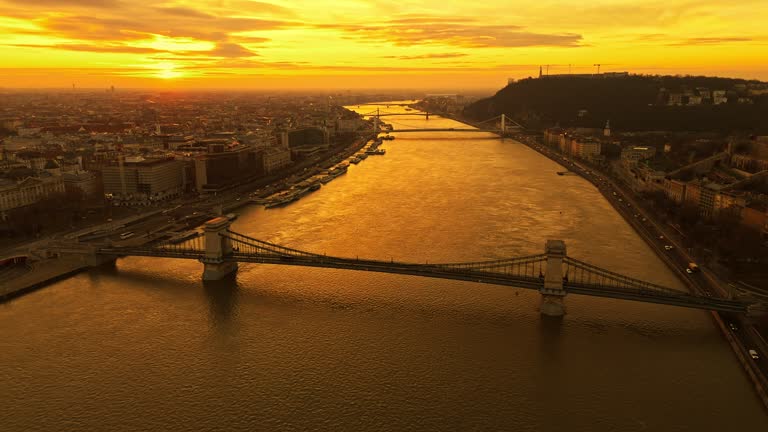
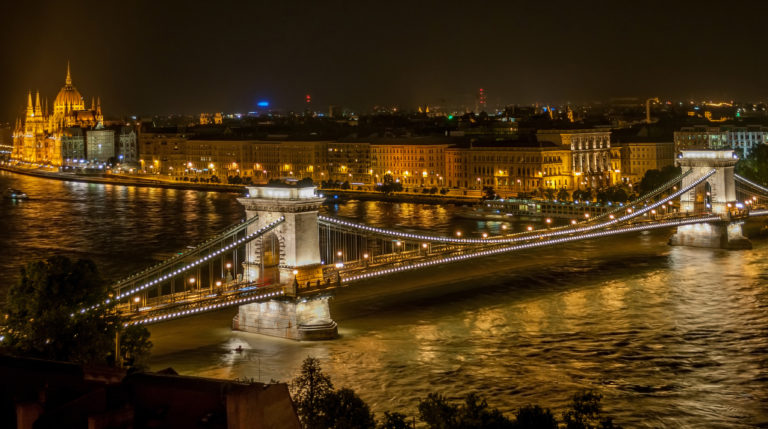
Walking along the Danube River, you can’t help but notice the most striking part of Budapest’s skyline: the Széchenyi Chain Bridge. With its amazing feat of engineering and two sturdy ends in Buda and Pest, it’s more than just a bridge—it represents Hungarian pride and unity. Now, underneath its fancy look and hefty chains is a popular tale locals adore. This story is about a nearly flawless design, a big embarrassment, and someone taking a tragic jump off the bridge into the icy water. People love sharing this intriguing mix of despair and mystery that sits alongside its glorious architecture. Why the Bridge Was Built The Chain Bridge’s size makes sense once you know about Buda and Pest before its construction. From 1849 on, these two cities were connected by the new bridge. Before that, during summertime, folks could use a floatable bridge to get across the Danube. Yet in…

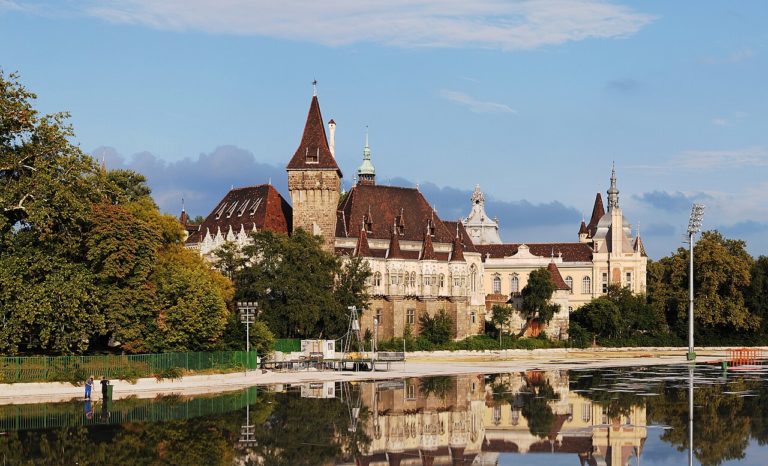
When walking through Budapest’s City Park (Városliget), just a stone’s throw from the grand monuments of Heroes’ Square, you suddenly stumble upon a sweeping architectural wonderland rising from the water. With its mix of sharp gothic spires, heavy Romanesque arches, and elegant pastel walls, the complex looks like a historic royal citadel that has guarded the city for centuries. This spectacular site is Vajdahunyad Castle (Vajdahunyad vára), a place where multiple eras of European history collide in a single courtyard. But the true story behind this fairytale fortress is one of the most bizarre, fascinating, and beloved pieces of urban lore in Central Europe. It is a massive monument that was never meant to last, built by an architect who essentially created a giant piece of historical copy-pasting. The 1000-Year Celebration: A Castle Made of Cardboard The story begins in 1896, a monumental year for Hungary. The country was celebrating…

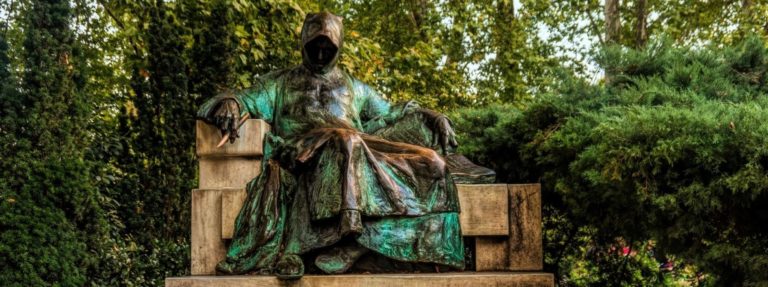
In Budapest’s City Park, right near the big Széchenyi Thermal Bath, there’s a spot that’s both mysterious and captivating. When you first look at the bronze statue, it can give you a small shiver. It shows a lone monk cloaked in a hood that fully hides his face. This is the Anonymous Statue, honoring an incredibly significant but totally unknown person in Hungarian history. Even if you don’t care much for history or are just a myth enthusiast, or if you’re wandering around Vajdahunyad Castle, you shouldn’t miss this odd statue. Who Was “Anonymus”? To understand the statue, you kinda have to begin with the man behind it, or really with the strange fog around him. “Anonymus” wasn’t only some bedtime tale, it actually existed , but almost nobody keeps the real name in mind anymore. He served as a notary and as a chronicler for a Hungarian king, a…

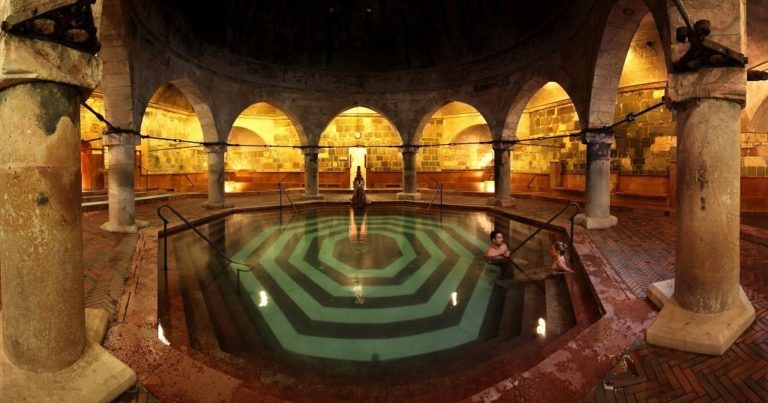
Budapest isn’t crowned the “City of Baths” simply because it boasts over 100 natural springs. Beneath the rising steam and grand architectural domes lies a millennia-old narrative, stretching from the Roman legions of Aquincum, to the beautiful Ottoman baths The Roman Foundations: Aquincum and the Birth of Bath Culture The history of the Budapest thermal baths dates back almost 2,000 years to the times of Rome. When the Roman Empire founded the town of Aquincum in what today is known as Óbuda (Part of Budapest), their selection of the site was primarily influenced by its rich sources of geothermal springs on the Danube fault line. For the ancient Romans, taking baths was an essential part of their routine, cleaning habits, and recovery after wars. Numerous archaeological digs have revealed a total of 14 different baths in this region. The biggest one, called the Thermae Maiores, was a huge military bathhouse…

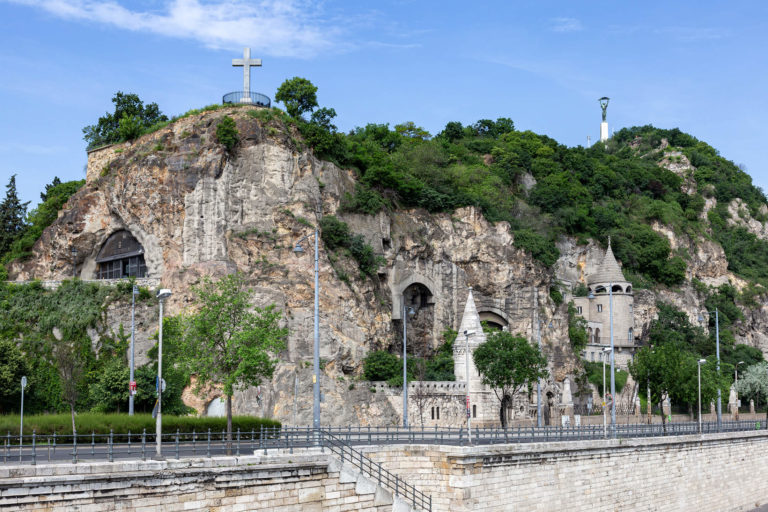
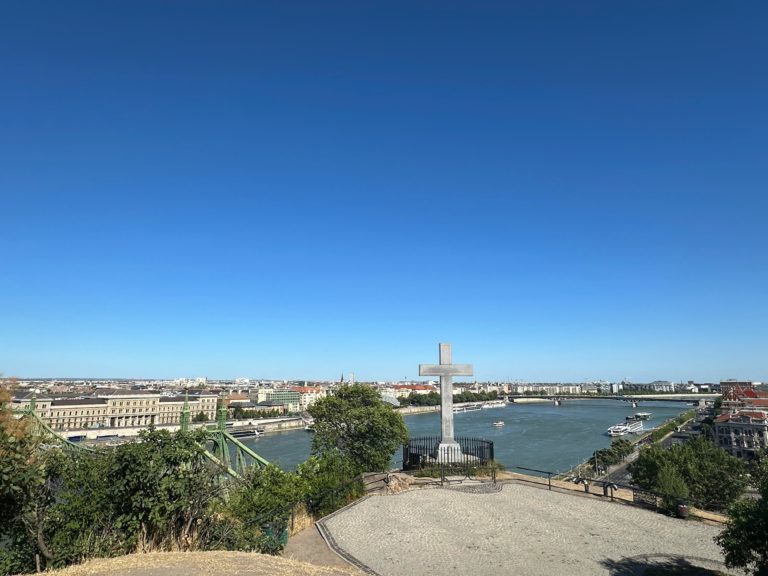
Among Budapest’s most enchanting and lesser-known spots, the Rock Church of Gellért Hill (Sziklatemplom) stands out as a perfect blend of spirituality, nature, and history. Nestled within Gellért Hill on the Buda side, right next to the famous Gellért Baths, this church is much more than a tourist attraction: it invites visitors into a space of silence, reflection, and discovery. A Sanctuary Carved into Stone The Rock Church was founded in the turbulent 1920s, during a time of great social and political change in Hungary, following the collapse of the Austro-Hungarian Empire. It was the Pauline Order—Hungary’s only native monastic order—that envisioned this sanctuary, inspired by the meditative spirit of the Sanctuary of Lourdes in France. The monks discovered a natural cave inside Gellért Hill, near the city’s thermal springs, and gradually transformed it into a sacred space. From the very beginning, the church became not only a spiritual refuge…

Located in central Budapest, Liberty Square is far more than a public plaza, it is a layered landscape of monuments and historic buildings that reflect Hungary’s turbulent past and evolving identity. From politically charged memorials to striking architectural landmarks, the square offers a compelling narrative in stone and bronze. This article explores the statues and structures that define Liberty Square, revealing the stories they tell about war, power, memory, and national transformation. Ronald Reagan Statue Honoring a Cold War Architect In June 2011, a seven-foot bronze statue of Ronald Reagan was unveiled in Budapest’s Liberty Square, commemorating the 100th anniversary of his birth. Though Reagan never visited Hungary, his leadership during the Cold War is credited with aiding the country’s liberation from Soviet influence. Hungarian Prime Minister Viktor Orbán emphasized Reagan’s role in “creating a new world for Central Europe” by supporting the dismantling of communist regimes. Symbolic Placement and…

Memento Park, located on the outskirts of Budapest, is a space dedicated to preserving statues and symbols of Hungary’s communist period. Far from being a traditional park, this place offers a direct look at the country’s recent past, through monuments that once occupied public spaces during the socialist regime. Visiting it is a unique experience: a tour among sculptures of leaders, soldiers and workers that, beyond their artistic value, represent a key period in Hungarian history. The first impact As soon as you arrive at the park, you don’t find an ostentatious entrance like that of the Museum of Fine Arts or the Hungarian National Museum, but a brick wall that already conveys a sense of serenity. Right at the entrance, as if waiting for us, are the statues of Karl Marx and Lenin.The three gates through which you enter the park already allow you to see some of the…

Nestled in the heart of Budapest, where grand boulevards meet the shimmering Danube, stands St. Stephen’s Basilica, a monumental testament to Hungary’s spiritual heritage and architectural splendour. As the largest church in the capital, this neoclassical masterpiece not only dominates the city’s skyline with its soaring 96-metre dome but also holds profound cultural and religious significance. Named in honour of Stephen, Hungary’s first king and patron saint, the basilica serves as a sacred space for worship, a repository of national treasures, and a beacon of artistic achievement. In the following sections, we will explore the basilica’s rich history, architectural marvels, and enduring role in Hungary’s national identity. Historical Background The origins of St. Stephen’s Basilica trace back to the early 19th century, when the rapidly expanding district of Lipótváros in Pest necessitated a prominent place of worship. Following the devastating flood of 1838, which saw many residents seek refuge on…

The Chain Bridge (Széchenyi Lánchíd) is one of the most iconic landmarks of Budapest, spanning the Danube River and connecting the Buda and Pest sides of the city. It stands as a symbol of unity and architectural heritage for the Hungarian capital. Opened on November 20, 1849, the bridge was the first permanent stone bridge to cross the Danube in Hungary, marking a key milestone in the country’s modernization and economic revival. Its construction was a significant feat, not only engineering-wise but also symbolically, as it united two distinct parts of the city. Today, the Chain Bridge remains a cultural and historical emblem, illuminated at night to highlight its majestic design. It continues to serve as an essential pedestrian and vehicular link over the river, attracting both locals and tourists who marvel at its beauty and historical significance. History of the Chain Bridge The Need to Unite Buda and Pest…

Standing at the end of Budapest’s grand Andrássy Avenue, Heroes’ Square (Hősök tere) immediately captures the imagination with its commanding statues, towering columns, and sweeping open space. As one of the most visited and photographed landmarks in the Hungarian capital, the square is more than just an architectural marvel, it is a powerful symbol of national pride and collective memory. Constructed at the turn of the 20th century, Heroes’ Square commemorates the thousand-year history of the Hungarian people, honoring both mythic founders and influential leaders who shaped the nation’s identity. With its rich historical context and cultural significance, the square remains a focal point for both reflection and celebration in modern Hungary. Historical Background Heroes’ Square (Hősök tere) was conceived as a monumental tribute to Hungary’s millennial anniversary, commemorating 1,000 years since the Magyars settled in the Carpathian Basin in 896 AD. Initiated in 1896, the project was part of…

şans casino |
vidobet |
vidobet |
vidobet güncel giriş |
vidobet giriş |
casinolevant |
casinolevant |
casinolevant |
vidobet giriş |
şans casino |
casinolevant giriş |
casino şans |
şans casino giriş |
casino levant |
casino şans |
casino şans |
boostaro |
casinolevant giriş |
şans casino giriş |
casinolevant giriş |
şanscasino |
vidobet |
vidobet giriş |
levant casino |
gorabet |
galyabet |
gorabet |
gorabet |
gorabet |
vidobet giriş |
galyabet |
gorabet |
gorabet