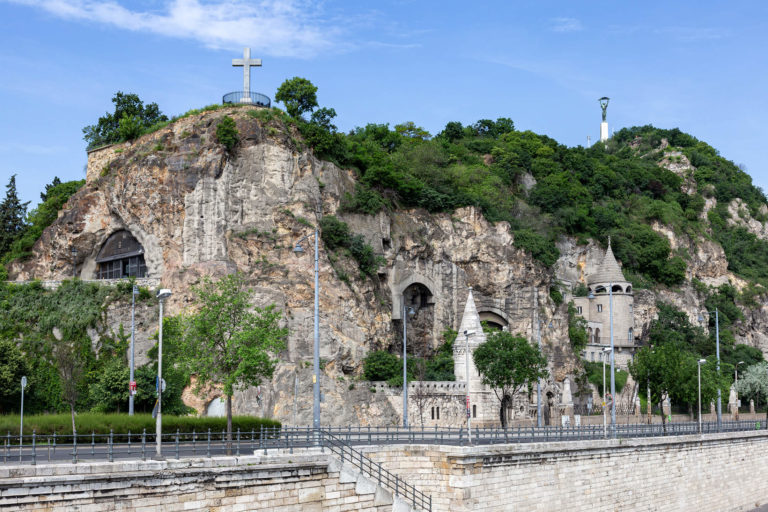
If you are standing on the Pest side of the city and look across the Danube River toward the rocky cliffs of Gellért Hill, there is a tiny detail that is incredibly easy to miss: a small stone portal carved directly into the mountainside, topped by a simple steel cross. From a distance, it looks like nothing more than a scenic lookout point. But if you cross the Liberty Bridge and step inside that cave mouth, you’ll find yourself in one of the most unique, spiritual, and historically dramatic spots in all of Budapest: The Cave Church (Sziklatemplom). The wild thing about this place is that you won’t find the usual polished marble pillars or soaring gothic arches here. The walls are made of raw, dark, unpolished mountain rock. But the real reason this place gives you goosebumps isn’t just the unique architecture—it’s the sheer survival story. This church didn’t…
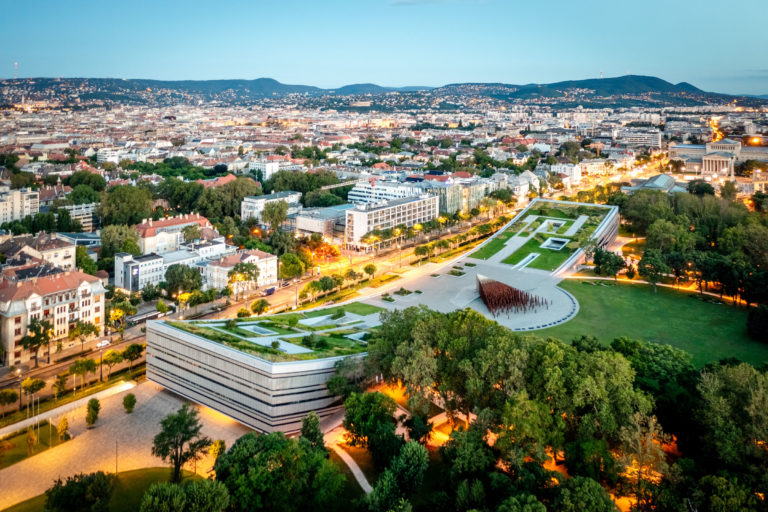
If you walk through Budapest’s Városliget (City Park) today, it is impossible to miss the striking structure rising smoothly from the ground like a massive half-pipe. After a century and a half of wandering, the Museum of Ethnography (Néprajzi Múzeum) finally opened the doors to its custom-built, permanent home in May 2022. Designed by Marcel Ferencz of the Hungarian firm NAPUR Architect, who beat out architectural heavyweights like Zaha Hadid and Rem Koolhaas for the commission, the building acts as a physical and visual gateway between the bustling city and the tranquility of the park. By placing the vast exhibition buildings below ground level, this building achieves the perfect balance between preserving the old scale of City Park and offering a large amount of space for one of the most important cultural collections in Europe. A 150-Year Journey Home The museum’s collection now boasts over 250,000 items from the Carpathian…
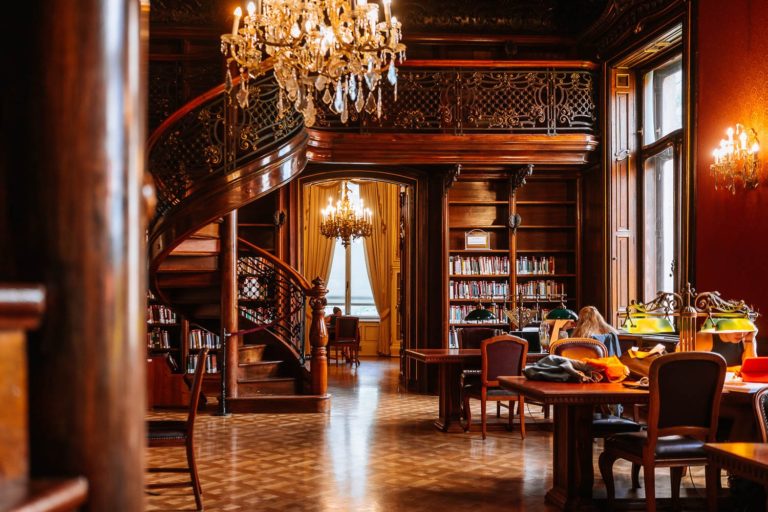
Picture yourself entering a generic-looking public library, passing through the turnstile after flashing your membership card, browsing some of the modern shelving units, and suddenly finding yourself inside an elaborate gold-painted, 19th-century neo-baroque palace by simply opening one of the many glass doors on the fourth floor. This scene does not belong to any fiction novel but is an everyday phenomenon at the Metropolitan Ervin Szabó Library (Fővárosi Szabó Ervin Könyvtár), which serves as the core of the library network in Budapest. Situated in the heart of the Palace District (Palotanegyed), this unique building represents one of the greatest mysteries of the city – the perfect combination of a university study room and an aristocratic mansion. 1. From Aristocratic Playground to Public Sanctuary In the middle of this exceptional collection is the **Wenckheim Palace**, an imposing neo-baroque mansion designed by the distinguished architect Arthur Meinig and constructed for Count Frigyes…
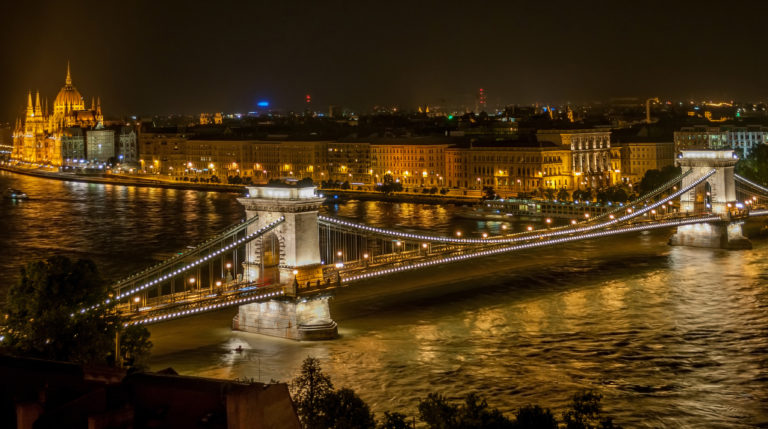
Walking along the Danube River, you can’t help but notice the most striking part of Budapest’s skyline: the Széchenyi Chain Bridge. With its amazing feat of engineering and two sturdy ends in Buda and Pest, it’s more than just a bridge—it represents Hungarian pride and unity. Now, underneath its fancy look and hefty chains is a popular tale locals adore. This story is about a nearly flawless design, a big embarrassment, and someone taking a tragic jump off the bridge into the icy water. People love sharing this intriguing mix of despair and mystery that sits alongside its glorious architecture. Why the Bridge Was Built The Chain Bridge’s size makes sense once you know about Buda and Pest before its construction. From 1849 on, these two cities were connected by the new bridge. Before that, during summertime, folks could use a floatable bridge to get across the Danube. Yet in…
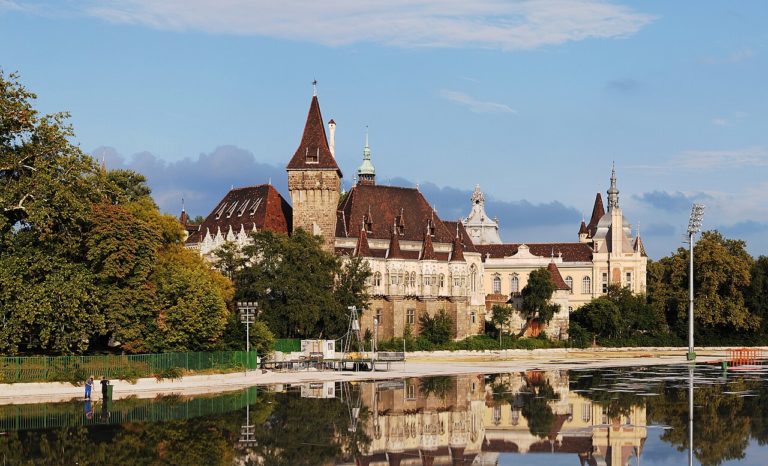
When walking through Budapest’s City Park (Városliget), just a stone’s throw from the grand monuments of Heroes’ Square, you suddenly stumble upon a sweeping architectural wonderland rising from the water. With its mix of sharp gothic spires, heavy Romanesque arches, and elegant pastel walls, the complex looks like a historic royal citadel that has guarded the city for centuries. This spectacular site is Vajdahunyad Castle (Vajdahunyad vára), a place where multiple eras of European history collide in a single courtyard. But the true story behind this fairytale fortress is one of the most bizarre, fascinating, and beloved pieces of urban lore in Central Europe. It is a massive monument that was never meant to last, built by an architect who essentially created a giant piece of historical copy-pasting. The 1000-Year Celebration: A Castle Made of Cardboard The story begins in 1896, a monumental year for Hungary. The country was celebrating…
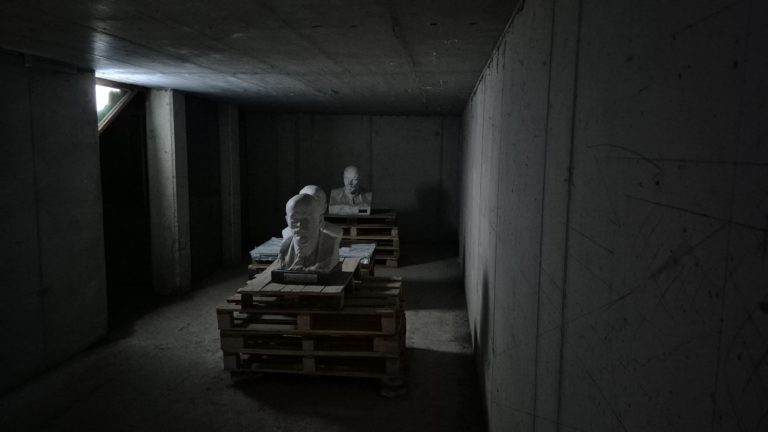
Memento Park, located on the outskirts of Budapest, is a space dedicated to preserving statues and symbols of Hungary’s communist period. Far from being a traditional park, this place offers a direct look at the country’s recent past, through monuments that once occupied public spaces during the socialist regime. Visiting it is a unique experience: a tour among sculptures of leaders, soldiers and workers that, beyond their artistic value, represent a key period in Hungarian history. The first impact As soon as you arrive at the park, you don’t find an ostentatious entrance like that of the Museum of Fine Arts or the Hungarian National Museum, but a brick wall that already conveys a sense of serenity. Right at the entrance, as if waiting for us, are the statues of Karl Marx and Lenin.The three gates through which you enter the park already allow you to see some of the…
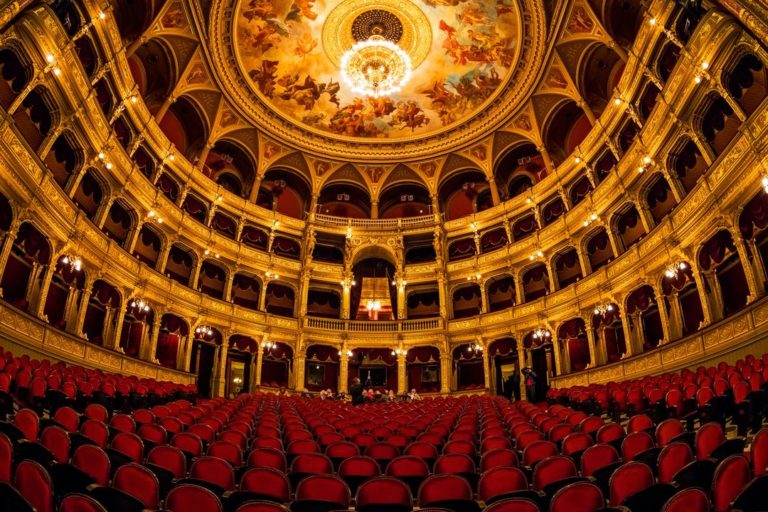
The Hungarian State Opera House, a Neo-Renaissance gem designed by Miklós Ybl, stands as a testament to Budapest’s rich cultural heritage and architectural grandeur. Opened in 1884, this iconic building has been a cornerstone of Hungary’s artistic landscape for over a century. Its opulent design, exceptional acoustics, and historical significance make it one of Europe’s premier opera venues. Beyond its role as a performance space, the opera house symbolizes Hungary’s dedication to the arts and its cultural identity. Whether attending a world-class performance or exploring its ornate interiors, a visit to the Hungarian State Opera House offers a glimpse into the artistic soul of Budapest. Architectural Beauty The Hungarian State Opera House is a masterpiece of Neo-Renaissance architecture, designed by the esteemed Hungarian architect Miklós Ybl. Completed in 1884, it stands as a testament to the grandeur and cultural aspirations of 19th-century Hungary. The building’s façade is adorned with intricate…
Budapest is not only noted for its stunning architecture and rich history on the banks of the Danube, but also for a music scene that, far from being anecdotal, has become one of the city’s most dynamic cultural engines. Among the ruins of abandoned factories, the hidden cellars of Pest and the clubs floating on the river, electronic music is thriving, shaping a sonic identity of its own. In 2025, Budapest’s electronic scene continues to grow with surprising vitality. Driven by a unique blend of local innovation, openness to global influences and a strong community spirit, the city has established itself as a creative hotbed for independent DJs, producers and collectives pushing the boundaries of the genre. While perhaps not as internationally renowned as other electronic capitals such as Berlin or Barcelona, Budapest offers something different: a combination of rawness, excitement and authenticity that appeals to both curious music lovers…
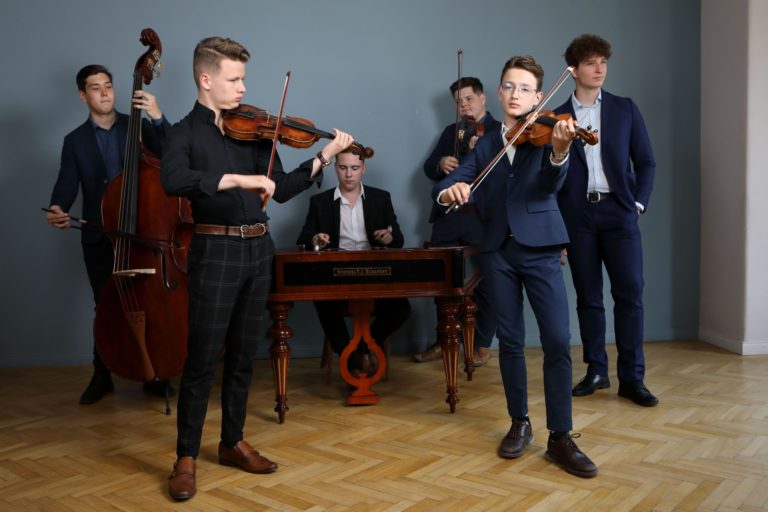
Budapest is a cultural epicentre where folk music resonates as an echo of the past. This tradition, deeply rooted in the national identity, has evolved along with society, adapting to historical changes while preserving its unique essence. Below, we explore traditional instruments, musical styles, venues for live performances, representative artists and groups, the history and evolution of Hungarian folklore, and its influence on contemporary music. Traditional Instruments and Musical Styles Hungarian folk music is distinguished by its diversity of instruments, each with a specific role in creating its characteristic sound. Among the most emblematic are: These instruments give life to distinctive musical styles. The verbunkos, originating in the 18th century as a military conscription dance, combines slow and fast sections, reflecting the contrasting Hungarian character. The csárdás, another popular dance, alternates slow (lassú) and fast (friss) rhythms, creating a dynamic experience. Both styles use pentatonic scales and dactylic rhythms, unique…
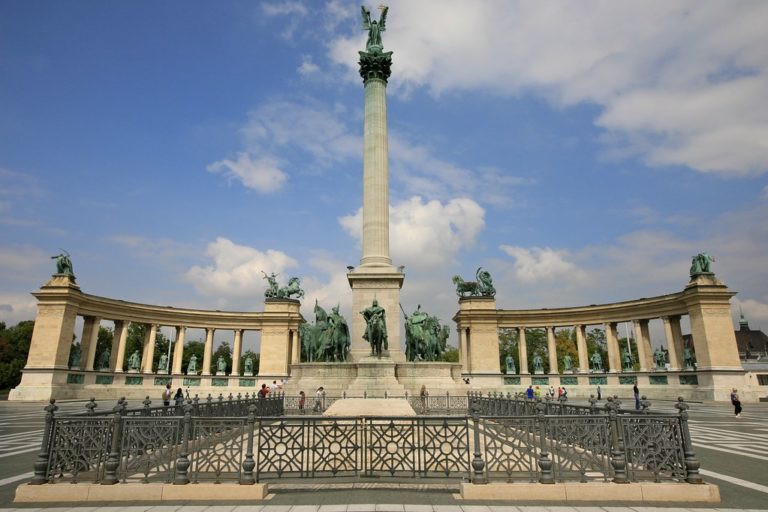
Standing at the end of Budapest’s grand Andrássy Avenue, Heroes’ Square (Hősök tere) immediately captures the imagination with its commanding statues, towering columns, and sweeping open space. As one of the most visited and photographed landmarks in the Hungarian capital, the square is more than just an architectural marvel, it is a powerful symbol of national pride and collective memory. Constructed at the turn of the 20th century, Heroes’ Square commemorates the thousand-year history of the Hungarian people, honoring both mythic founders and influential leaders who shaped the nation’s identity. With its rich historical context and cultural significance, the square remains a focal point for both reflection and celebration in modern Hungary. Historical Background Heroes’ Square (Hősök tere) was conceived as a monumental tribute to Hungary’s millennial anniversary, commemorating 1,000 years since the Magyars settled in the Carpathian Basin in 896 AD. Initiated in 1896, the project was part of…