
Should you be wandering through one of Budapest’s most bustling intersections, Blaha Lujza Square, surrounded by the rush of people, trams, and ugly concrete buildings, it can be rather difficult to concentrate on anything but all the chaos surrounding you. However, once you notice the strange dark stones protruding from the pavement, forming some sort of monument blocks, you will soon realize that there is more than just street art here. In fact, these stones are a monument erected in memory of the tragic destruction of the Old National Theatre.
The Golden Age of the People’s Theater
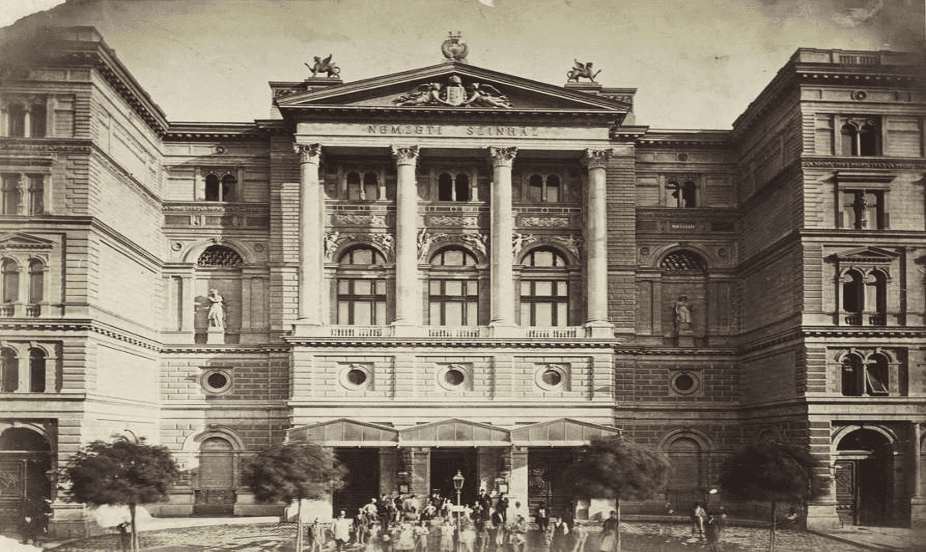
Our tale starts in the year 1875 when an opulent eclecticism-style building opened its doors here, called the Népszínház, otherwise the People’s Theater. An immense and magnificent building, adorned with an elaborate facade, arches, and spectacular halls that could accommodate thousands of enthusiastic visitors. In 1908, the building became home to the Hungarian National Theater ensemble, thus becoming the epicenter of Hungarian drama.
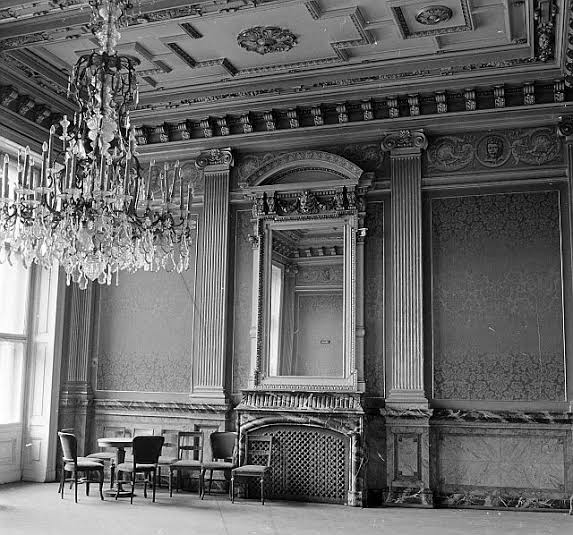
For decades, this was where the beating heart of Budapest lived and thrived; the best actors and actresses from Hungary have performed on its stage, among others Lujza Blaha, an acclaimed opera singer and actress, whose nickname was the Nightingale of the Nation. In time, she gave her name to the square on which the People’s Theater stood. This building managed to withstand the dissolution of the Austro-Hungarian empire, the turmoil of the inter-war years and the fierce battles for control during World War II.
A Controversial Decision and Destruction of Communists
The tragedy began not at any time of war, but in the heyday of communist power in the middle 1960s. The city authorities were constructing the new underground Metro Line 2, and the architects of Soviet urban development asserted that the building was located right on the path of the future subway station and reconstruction of colossal Rákóczi Avenue. The architectural experts and citizens protested actively, noting that it would be easy to adjust the routes of the tunnels, but the government was stubborn and did not change its mind.
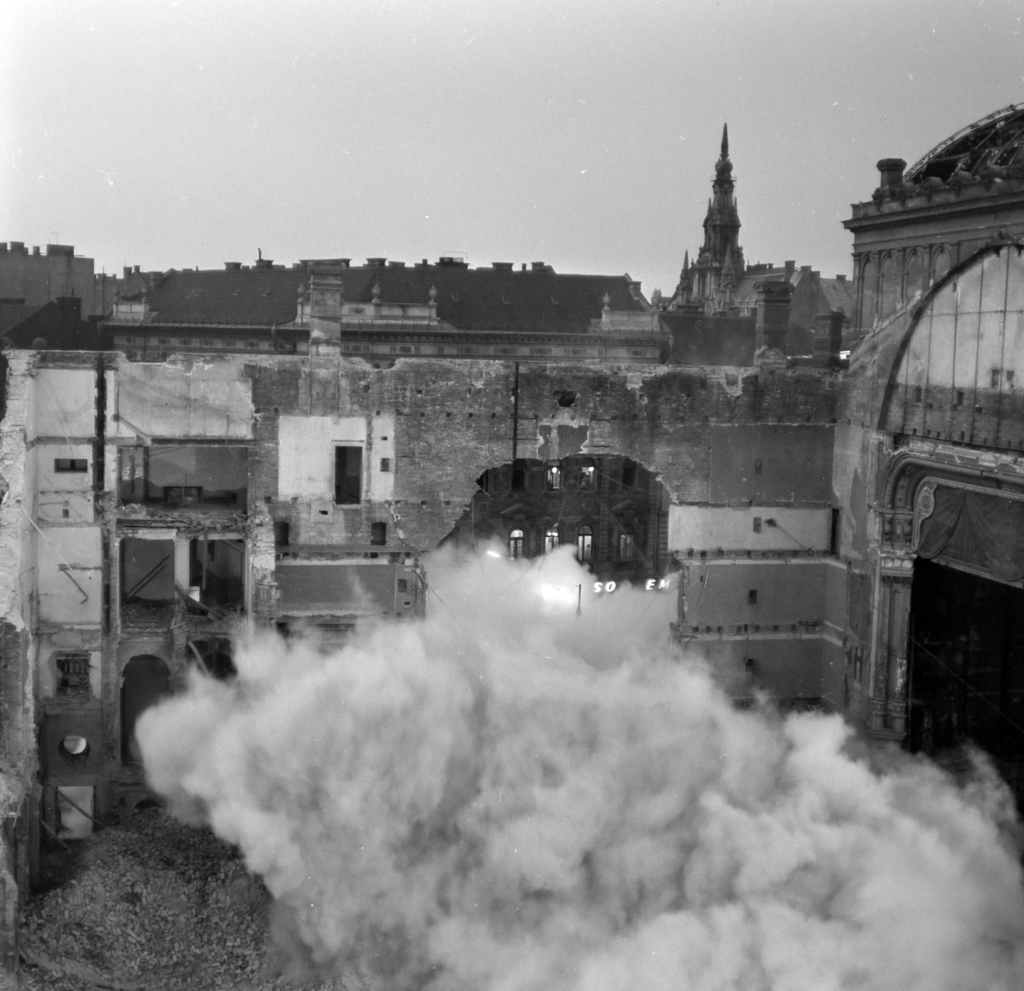
In March 1965, the police blocked the surroundings, and the building was blown up. Many local residents, who came here and cried openly because of the tragic event, saw how the bombs destroyed their national treasure. The demolition of the theatre was the conscious decision of communists, which meant that one more element of bourgeois culture had to be erased physically and give place to a future utopia. As a result, there remained an abandoned square for several decades.
The Remembering the Fallen Columns Monument
For almost fifty years, the memory of the building persisted solely in photographs and memories of the previous generation. Yet recently, in the large-scale reconstruction of Blaha Lujza Square, the city chose to pay homage to the spirit haunting this space by erecting an interesting structure composed of dark stones and resembling in its shape and size the theater’s fallen columns and walls.
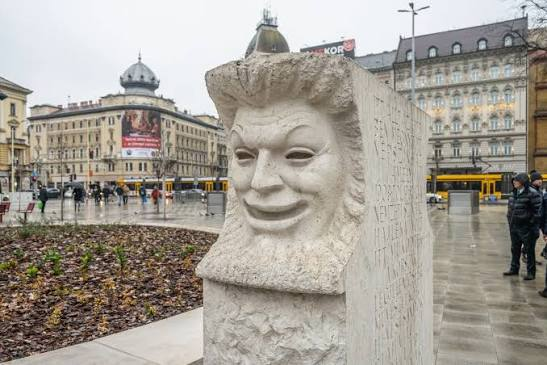
The stones, carefully laid in a number of places throughout the square, create both benches for pedestrians and an architectural scar. Upon careful observation of the monument’s shape, one can notice how the stones suggest that a part of the building is emerging from under the pavement, thus making each and every passer-by remember that they tread upon their cultural heritage.
How to Get to and Capture Pictures of the Monument
In order to feel the power of this monument in full, it is recommended to pay a visit at the time of the evening rush hour when everything becomes very hectic in the life of this metropolis.
If you would like to take a picture of it, then position yourself close to the entrance of the metro station and look out on the square with its black stones. With a slight enlargement, you will be able to include the tram lines and the bustling crowds among the ruins of something great.
Comments are closed.