
Budapest is full of impressive monuments, but some statues are famous for a completely different reason. According to local traditions, touching a particular part of them can bring luck, love, inspiration or even success in exams.
If you walk around the city, you can actually see which parts people touch the most: the dark bronze becomes bright and almost golden after thousands of hands have rubbed the same spot.
There is no official number of lucky statues in Budapest. Different local guides include different ones, but there are several famous examples spread between Buda and Pest.
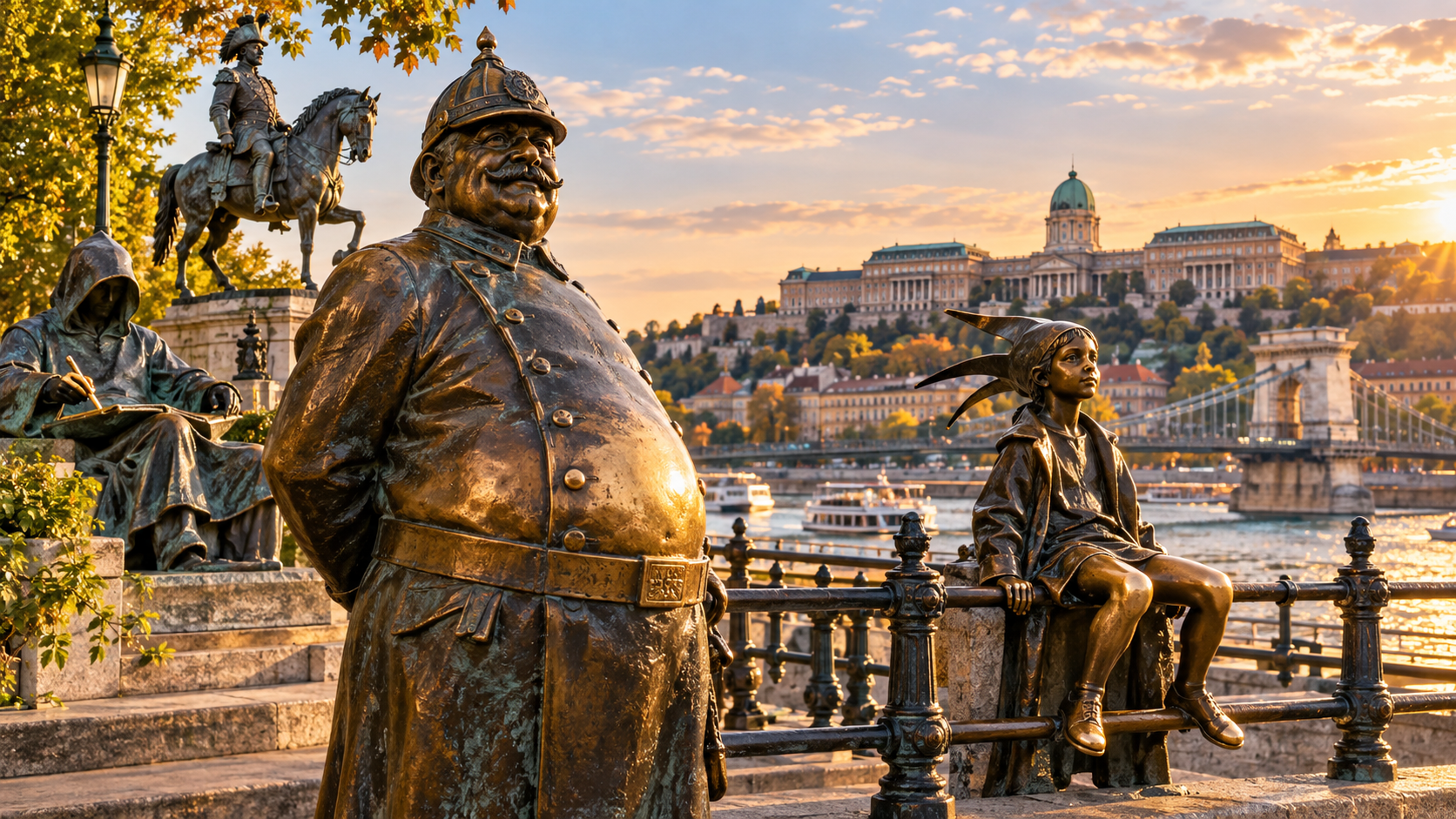
The Fat Policeman – probably the most famous one
One of the easiest lucky statues to find is the Fat Policeman, standing on Zrínyi Street, only a few steps from St Stephen’s Basilica.
The first thing you notice is his enormous shiny belly. It has become golden because tourists have been rubbing it for years.
According to the most popular versions of the legend, touching his belly brings good luck, prosperity and happiness. Another funny version says that after touching it, you can enjoy Hungarian food without worrying about gaining weight.
True or not, almost everyone walking along Zrínyi Street stops for a photo.
📍 Where: Zrínyi utca, close to St Stephen’s Basilica.

The Little Princess – luck beside the Danube
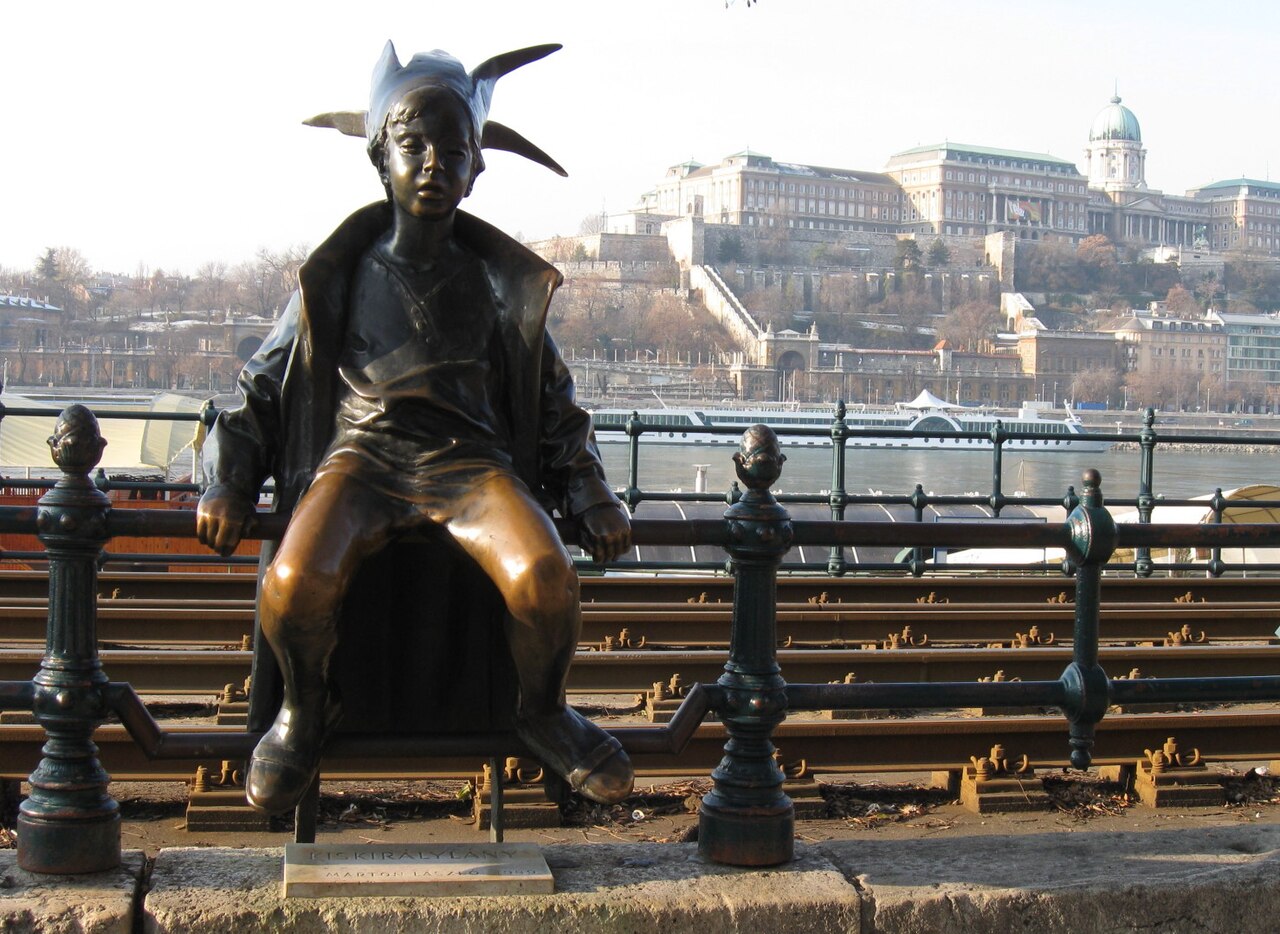
Another very famous statue is Kiskirálylány, the Little Princess, sitting on a railing along the Danube Promenade.
The sculptor László Marton was inspired by his young daughter, who used to play at home wearing a paper crown and pretending to be a princess.
Today, visitors often touch the statue’s knees for good luck. They are noticeably brighter than the rest of the statue because so many people have touched them.
The location also makes this one of the most photogenic statues in Budapest: from here you can see the Danube and Buda Castle on the opposite side.
📍 Where: Danube Promenade, near Vigadó tér.
András Hadik – the strangest lucky tradition
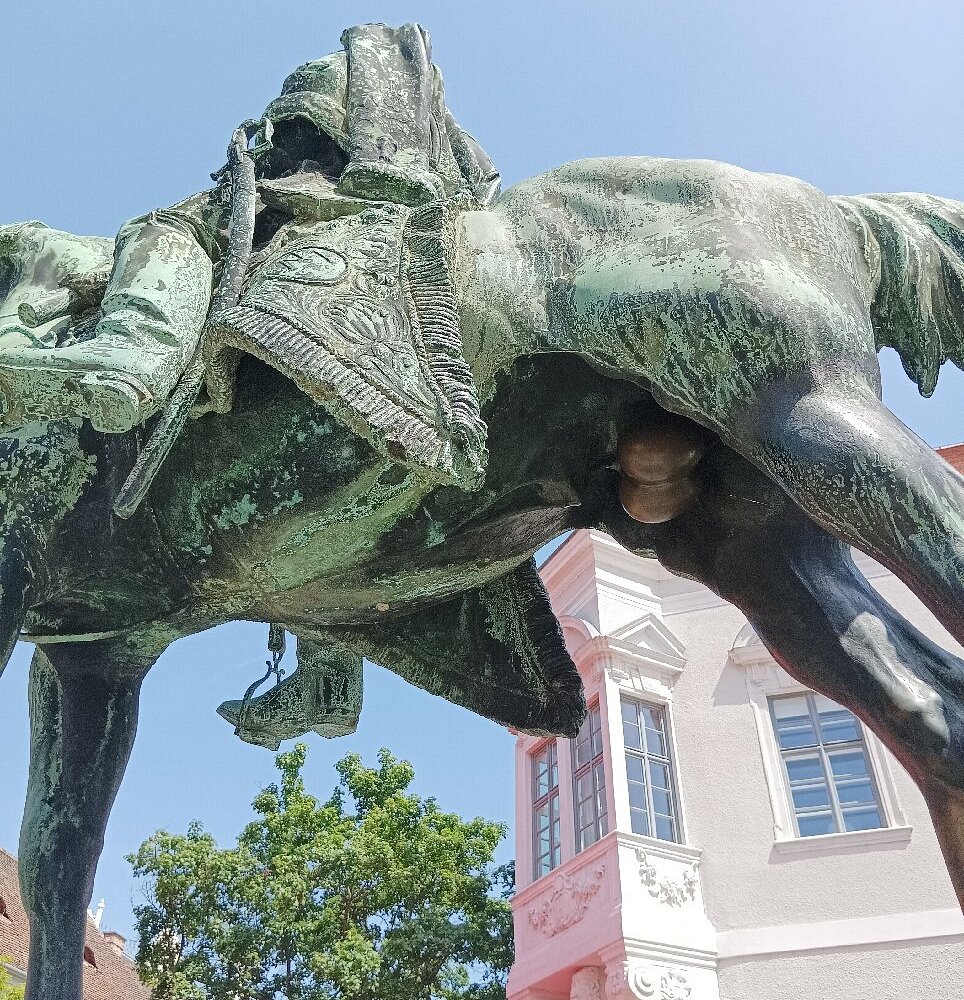
The most unusual tradition is probably connected to the statue of Count András Hadik, in the Castle District.
Hadik was an important Hungarian military commander, but today many visitors are more interested in his horse.
For decades, students from Budapest University of Technology have believed that touching the horse’s polished bronze testicles brings good luck in exams. The tradition became so popular that this part of the statue is much brighter than the rest of the horse.
It is probably Budapest’s funniest good-luck tradition, although today it is better to treat the monument carefully: Hungarian heritage authorities have raised concerns about repeated rubbing and climbing damaging the statue.
📍 Where: corner of Úri utca and Szentháromság utca, Buda Castle District.

Anonymus – luck for students and writers
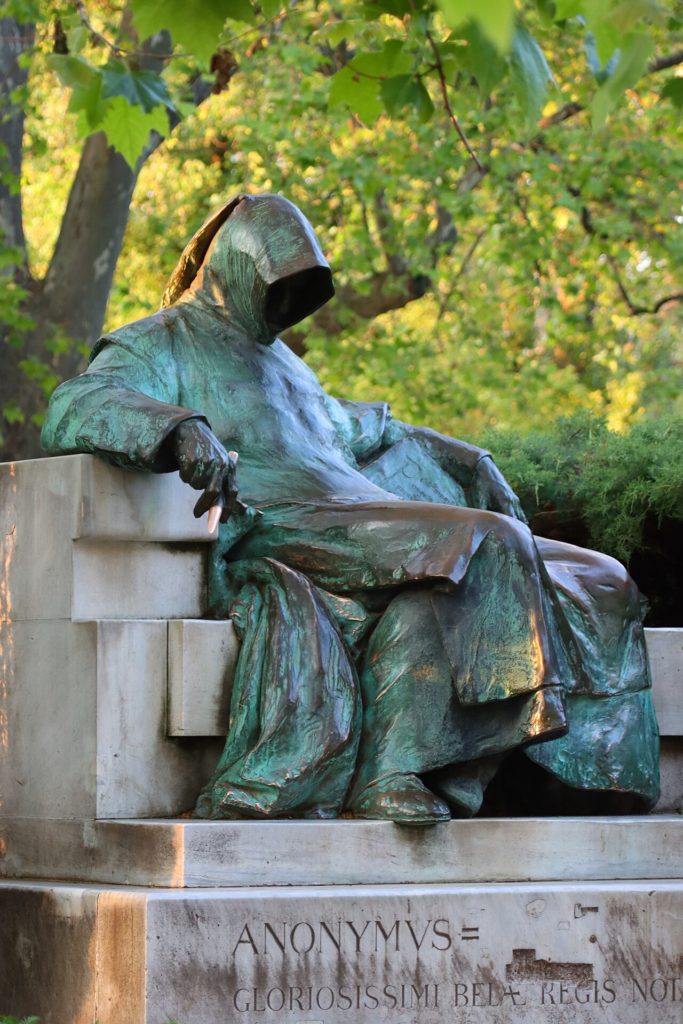
Inside City Park, near Vajdahunyad Castle, there is a much darker and more mysterious statue.
It represents Anonymus, the unknown medieval chronicler who wrote the Gesta Hungarorum, one of the earliest written accounts of Hungarian history.
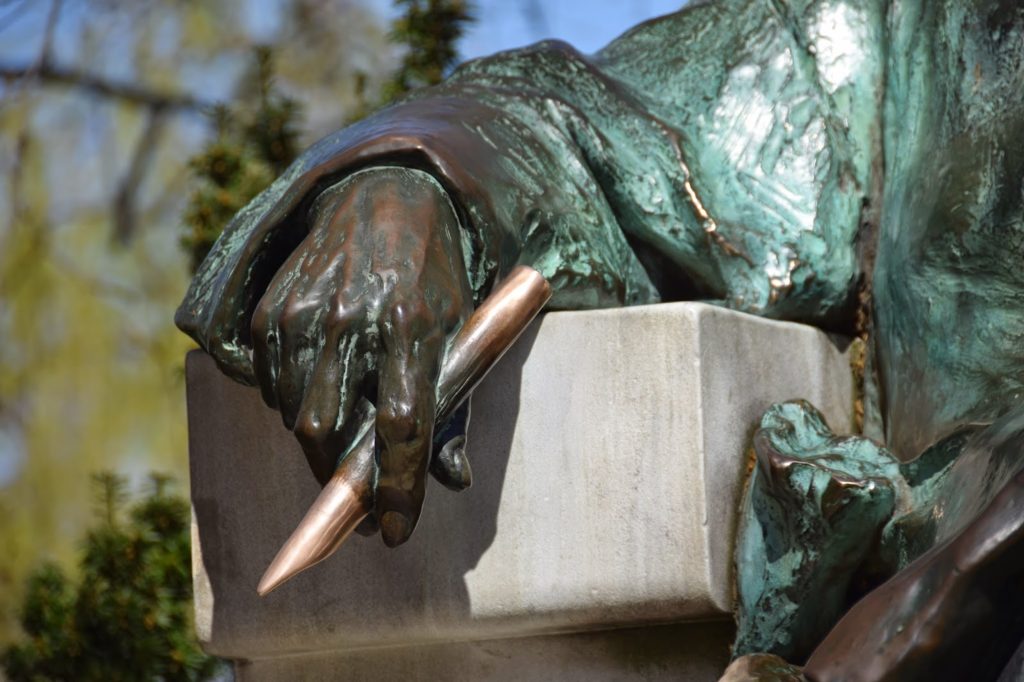
His face is hidden under a hood, but one detail immediately attracts attention: his pen is bright and polished.
The legend says that touching the pen brings luck and inspiration, especially to students, writers and people preparing for exams.
So if you have an exam coming soon, this could be an important stop.
📍 Where: Vajdahunyad Castle, Városliget.
Matthias Fountain – Budapest’s little Trevi Fountain
Not every lucky monument has to be touched.
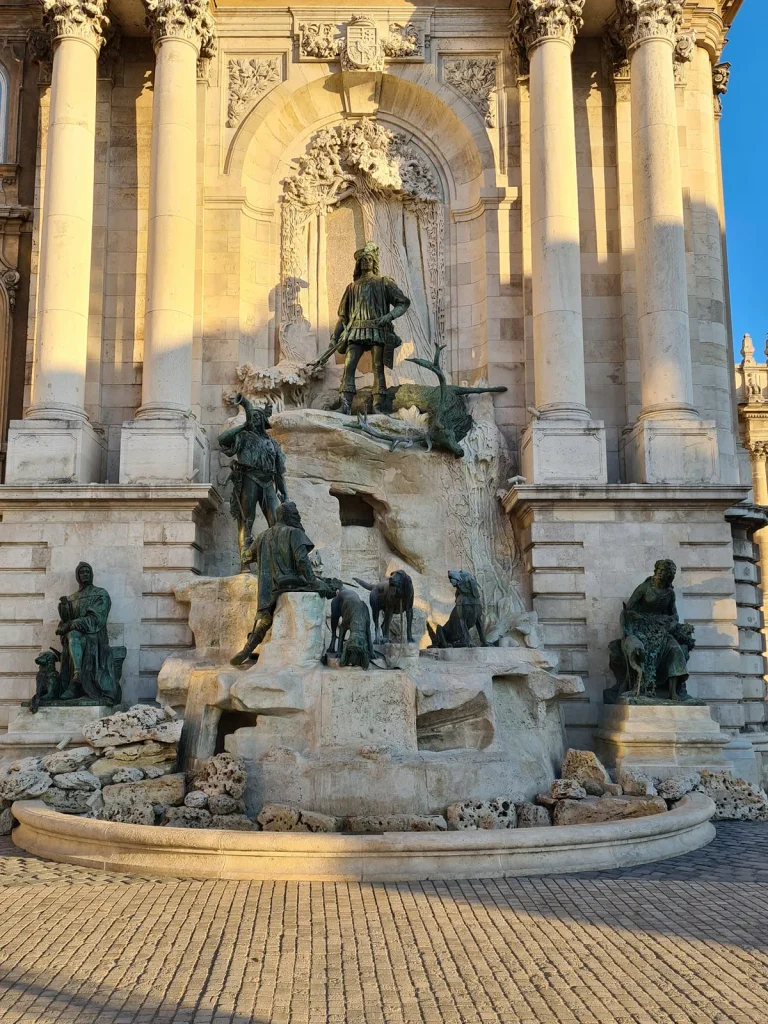
Inside Buda Castle you can find Matthias Fountain, an impressive sculpture showing King Matthias Corvinus during a hunting scene.
A Budapest tradition says that if you throw a coin into the fountain, you will return to the city one day, very similar to the famous tradition at Rome’s Trevi Fountain.
Even without the superstition, it is worth seeing because it is one of the most detailed sculptural groups in the Castle area.
📍 Where: Hunyadi Courtyard, Buda Castle.
Maci, the lucky cat hidden at Kálvin tér
This one is much easier to miss.
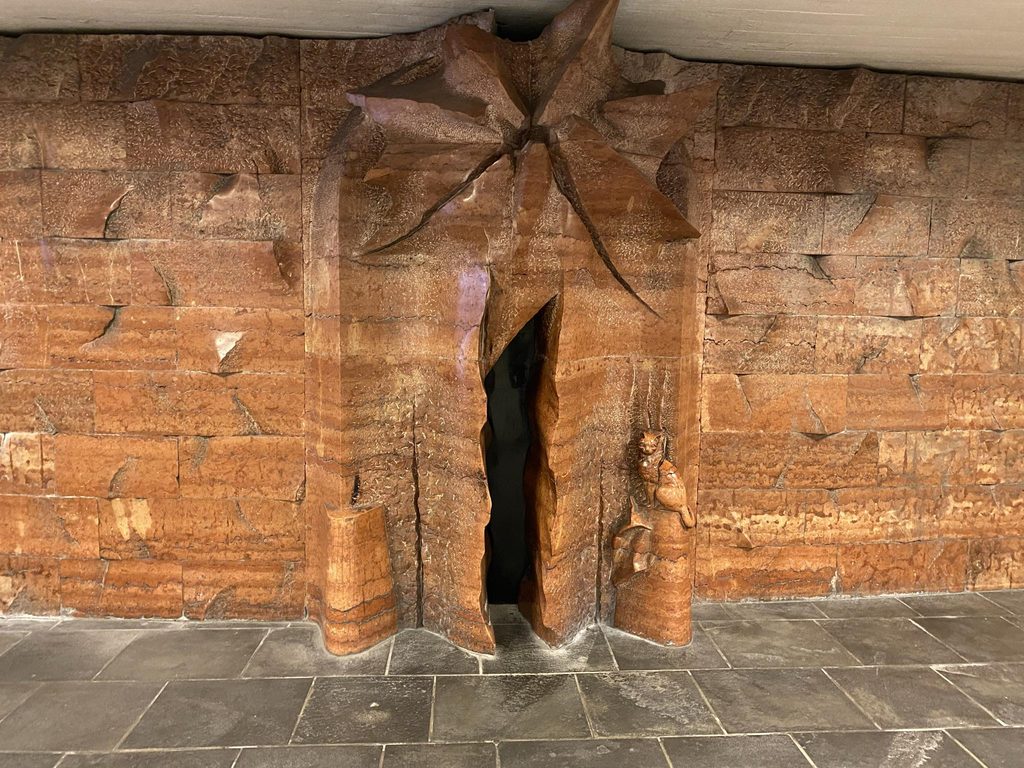
In the underground passage at Kálvin tér there is a small cat called Maci, created after the sculptor Gyula Illés’s own pet.
According to an urban legend, stroking the cat’s tail brings good luck. Once again, the polished surface makes it obvious that many people have tried it.
Unlike the previous statues, this one is not surrounded by tourists, so finding it feels more like discovering a small local secret.
📍 Where: Kálvin tér metro underpass.
A tiny lucky worm by the Danube
And finally, there is a much more modern lucky statue.
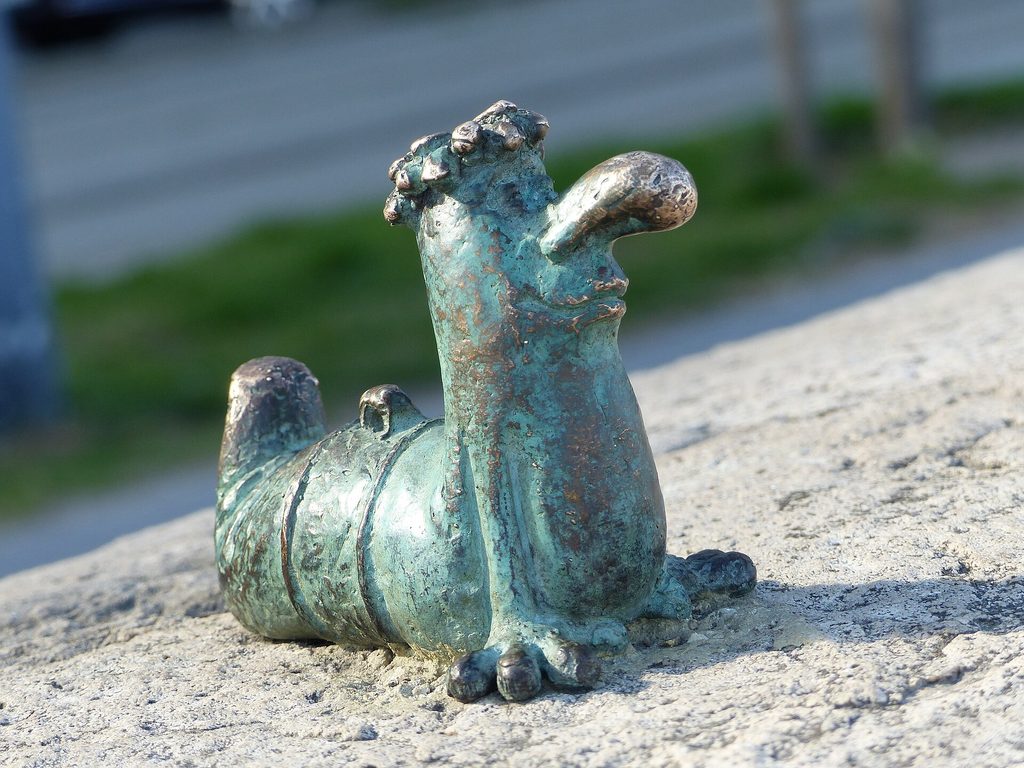
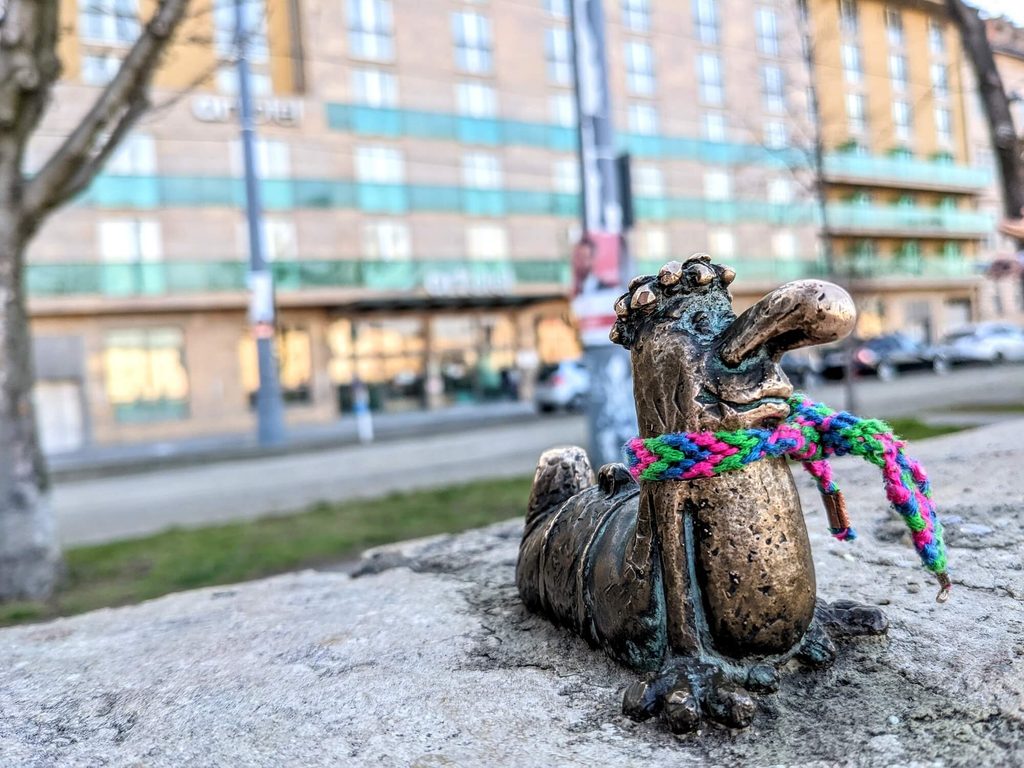
On Bem rakpart, close to Batthyány tér, you can find Főkukac, or “Chief Worm”, one of Mihály Kolodko’s famous miniature statues.
The little bronze character comes from the classic Hungarian cartoon The Great Ho-Ho-Ho Fisherman. Local tradition says that rubbing his nose can bring good luck.
The statue is only around the size of your hand, so finding it is part of the fun. From its position on the Buda riverbank, you can also photograph it with the Hungarian Parliament in the background.
📍 Where: Bem rakpart, near Halász utca.
More than simple statues
What makes these statues interesting is not really whether their magic works.
They show another side of Budapest: a city where history mixes with jokes, traditions and local legends. Some traditions started with university students, others came from books or films, and others simply appeared because people started touching the same statue again and again.
And after thousands of hands, the shiny bronze itself has become proof of the tradition.
So while exploring Budapest, look carefully at the statues around you. If one small part is much brighter than everything else, there is probably a story behind it.
And maybe… a little luck too.
Comments are closed.