
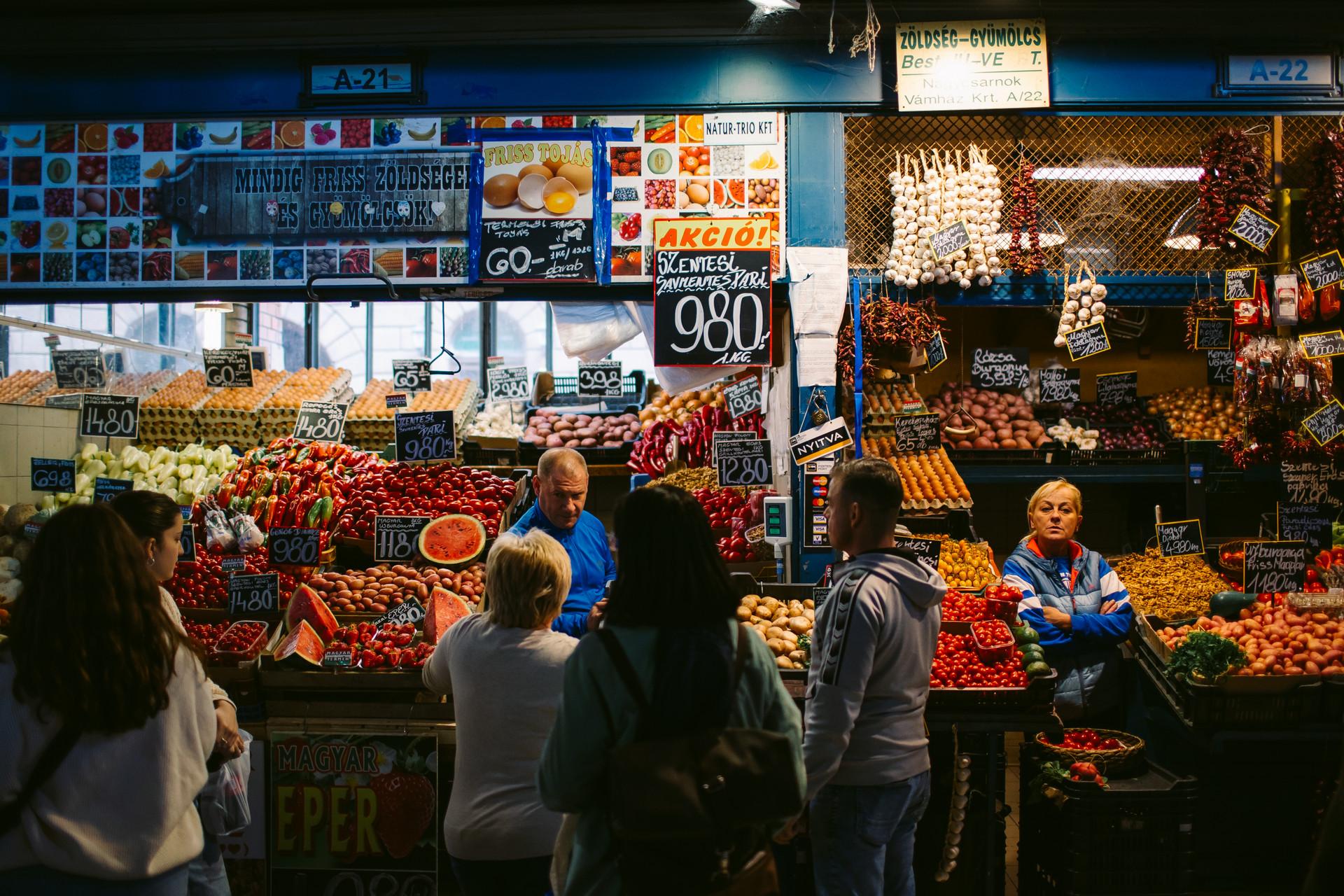
Budapest is not as cheap as it used to be, but if you know where to shop, it is still possible to live here without spending too much. For tourists or students staying for more than a few days, buying some food at the supermarket can make a big difference.
Where to do your grocery shopping
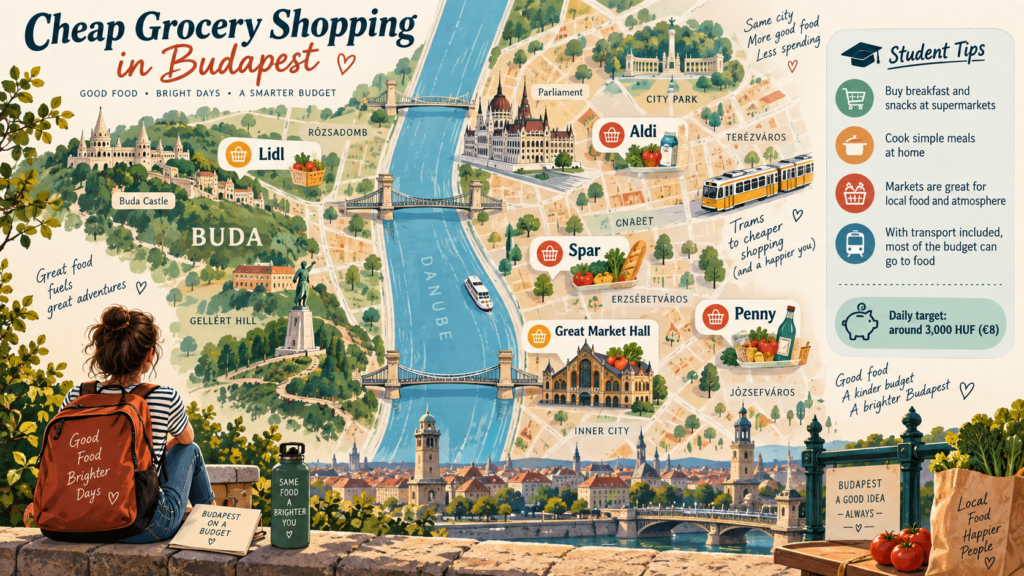
The cheapest and easiest options are usually Lidl, Aldi and Penny. They have good prices for basic food, fruit, vegetables, meat and ready-to-eat products. Spar is also very common, especially in the city centre, but prices can be a little higher.
Some typical supermarket prices are around 400 HUF (€1.10) for one litre of milk, 570 HUF (€1.55) for bread, 1,250 HUF (€3.40) for 12 eggs, 700 HUF (€1.90) per kg for bananas and around 2,200 HUF (€6) per kg for chicken breast.
For a simple breakfast, lunch and dinner bought mainly at the supermarket, 3,000–5,000 HUF (€8–14) per person per day can already be enough.
One useful tip is to bring your own shopping bag, because bags are normally paid separately.
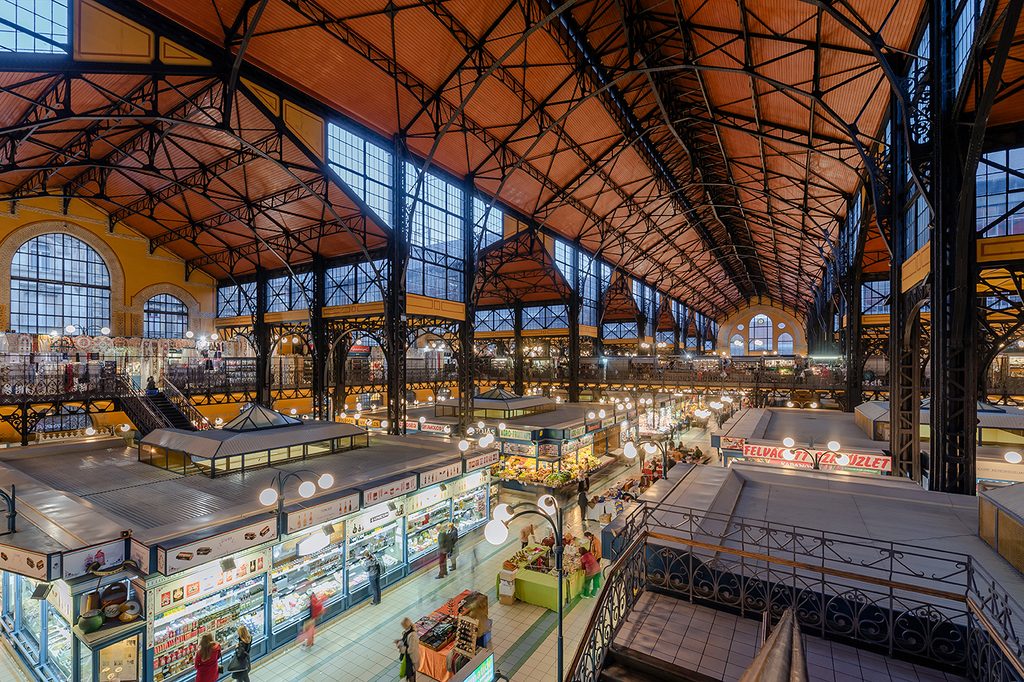
For something more local, Budapest’s markets are also worth exploring.
Eating out changes the budget quickly
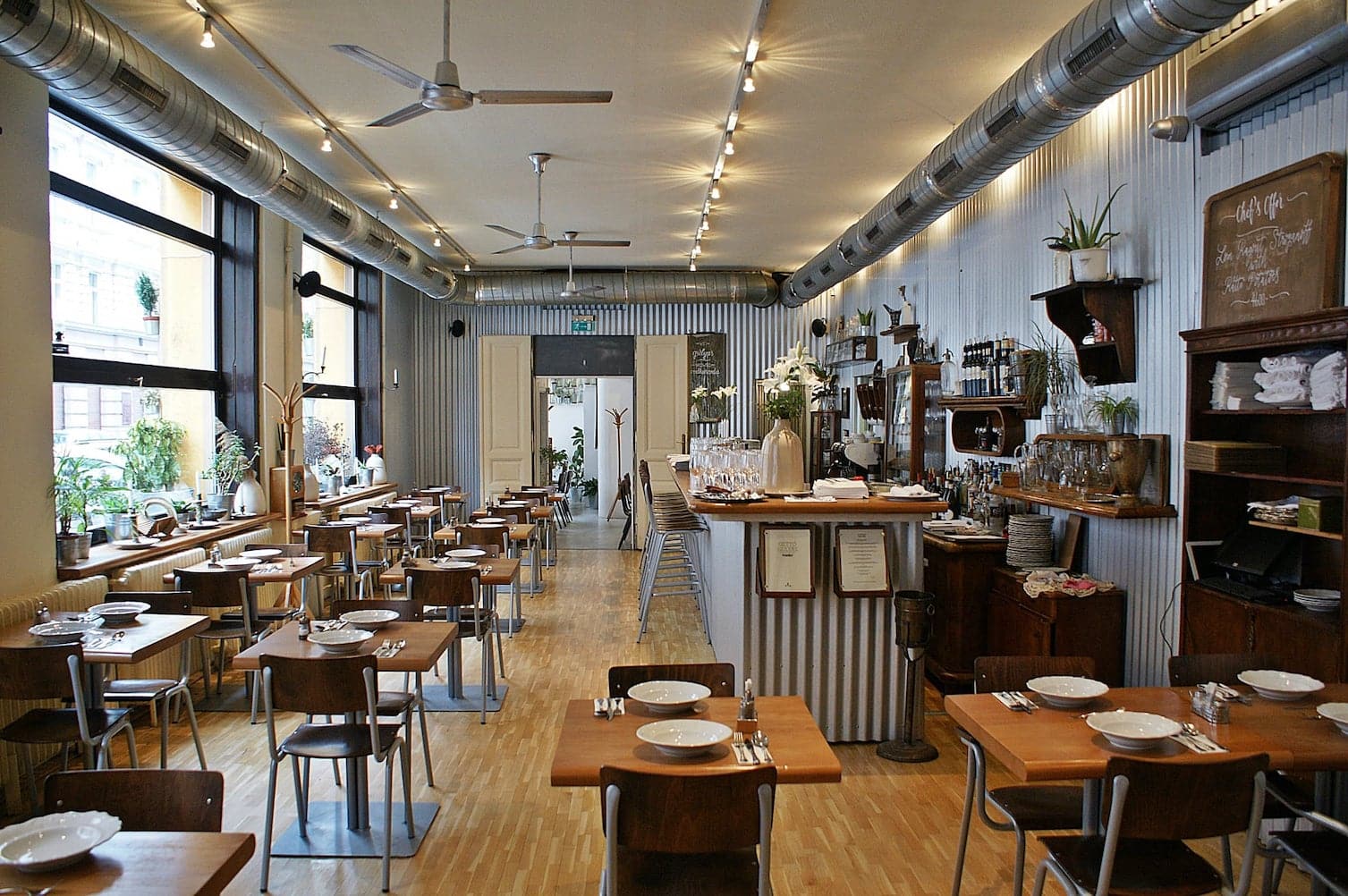
Restaurants are still reasonably priced compared with many other European capitals, but eating out for every meal can become expensive.
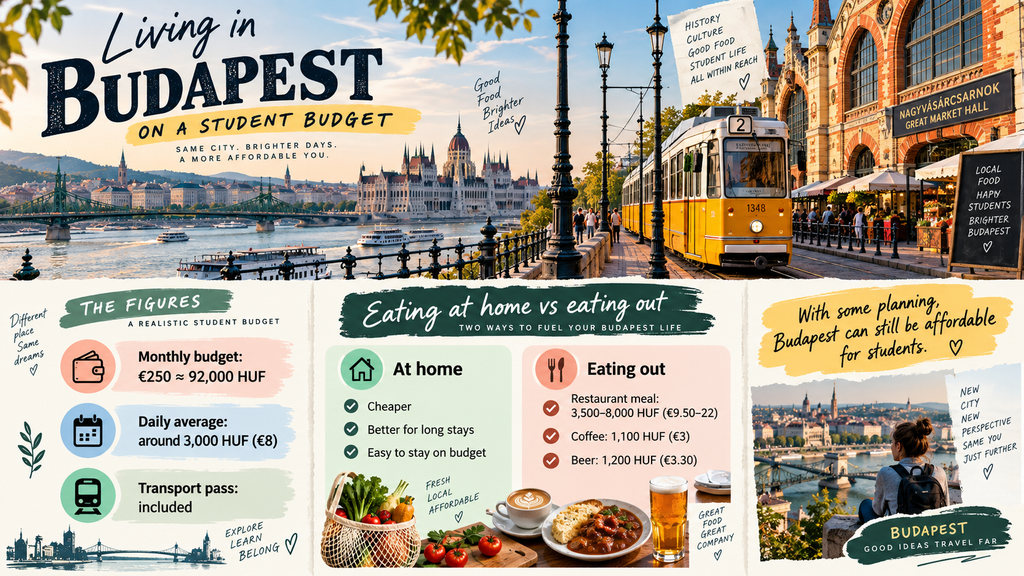
A main course in a normal restaurant is usually around 3,500–8,000 HUF (€9.50–22), while a coffee costs roughly 1,100 HUF (€3) and a beer around 1,200 HUF (€3.30).
Many restaurants also include a service charge of around 12.5–15%, so it is always worth checking the bill before leaving an extra tip.
A good compromise is therefore to buy breakfast and snacks at the supermarket and eat one proper meal outside.
So, how much does one day in Budapest cost?
For a tourist trying to save money, around 7,000–10,000 HUF (€19–27) can cover supermarket food, one inexpensive meal and some transport.
A more normal day, with a restaurant meal, coffee or drinks and public transport, is closer to 12,000–18,000 HUF (€33–49), excluding accommodation and paid attractions.
Public transport is quite affordable too. The 24-hour Budapest travelcard costs 2,750 HUF (about €7.50) and gives unlimited travel on most public transport inside the city.
Our experience as students
In our case, we have a monthly budget of about €250, around 92,000 HUF, while our monthly public transport pass is already provided. This means we can spend around 3,000 HUF (€8) per day on average.
Until now, we have managed to stay within this budget. The main reason is that we normally buy food at supermarkets and cook at home, while eating out only occasionally. Having public transport already included also makes a big difference, because almost all of the monthly budget can be used for food, drinks and small everyday expenses.
Of course, it requires paying some attention to prices, but for a student who does not eat at restaurants every day, €250 per month can be a realistic budget in Budapest.
So Budapest can still be a relatively cheap city, especially if you stay for several days and start living a little more like a local: supermarket breakfast, public transport, lots of walking and only one restaurant meal from time to time.
As a quick reference, 1,000 HUF is about €2.70, so after a few days it becomes quite easy to understand prices without converting everything.
Comments are closed.